“Visiometa’s goal is nothing less than to drive the evolution of the foundry industry through innovation and rethinking,” Dr Ralf Gerke-Cantow, Managing Director of Visiometa
- Category
- Interview
- Date
- Source
- AlCircle.com
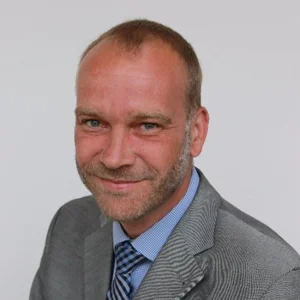
A seasoned management professional, Dr Ralf Gerke-Cantow, the Managing Director of Visiometa GmbH, has a rich background in foundry engineering, specialising in investment casting of aluminium and titanium. With 19 years of hands-on experience in the industry, he brings a wealth of knowledge and expertise to his role at Visiometa GmbH.
Ralf began his journey by studying foundry technology at the Gießen-Friedberg University of Applied Sciences, laying a solid foundation for his career. Throughout his professional life, he has excelled in various capacities, including customer advisory and calculation, research and development, and management of titanium production involving several hundred employees.
His dedication to continuous improvement is evident through his pursuit of a PhD at TU Clausthal-Zellerfeld, where he deepened his understanding of advanced foundry techniques and processes.
AL Circle: Can you provide an overview of Visiometa's software and its unique features for the casting process planning?
Dr Ralf Gerke-Cantow: Visiometa is the fruit of an exceptional interdisciplinary collaboration between engineers, mathematicians, and computer scientists. Our goal is nothing less than to drive the evolution of the foundry industry through innovation and rethinking. We want to make real-time process planning possible - for everyone.
Visiometa's diverse solutions are tailored to enhance the operations of foundries, pattern and mould makers, casting designers, and purchasing managers. Discover how Visiometa can add value to each of these companies:
Modulus calculation: Visiometa® calculates a 3D modulus field based on the casting's geometric properties. This allows the user to find isolated solidifying areas and predict the occurrence of shrinkage holes.
Gating and feeding design: Visiometa® provides a comprehensive set of parametric modelling components that help users design the gating and feeding system with little time and effort, according to robust engineering criteria.
Sculpting toolkit: Visiometa® includes a highly intuitive sculpting toolkit that can be used to tweak the shape of the casting to ensure controlled solidification and reduce the number of necessary feeders.
Constructive solid geometry: Visiometa® enables all users, regardless of their prior CAD skills, to quickly create chills, cores, or cooling channels by combining a variety of parameterized solids with simple boolean operations.
Solidification simulation: Visiometa® is equipped with a full-fledged simulation of the solidification process using thermophysical data and other process parameters while remaining amazingly easy to use.
Material database: Visiometa® incorporates an arbitrarily expandable and customizable database for materials and substances that can be used for pricing, process design and simulation.
Geometric analysis: Visiometa® can run a series of geometric algorithms on the casting to compute local wall thickness, detect undercuts, determine draft angles, and reveal the medial axis.
Plugins and scripting: Visiometa® implements an open software architecture that enables advanced users to customize their work environment and to develop their features based on our framework using the Python scripting language.
Model data exchange: Visiometa® embeds an industry-standard modelling kernel that enables data exchange via major neutral CAD file formats such as STEP, IGES, and STL, providing the best possible interoperability.
Project workspaces: Visiometa® uses the latest real-time rendering technology and a well-structured user interface to create an engaging development environment and the smoothest possible workflow.
AL Circle: How does Visiometa simplify the analysis and modification of cast parts for users, particularly those without prior experience with CAD tools or simulation technology?
Dr Ralf Gerke-Cantow: Visiometa offers unique and innovative software for planning casting processes. Users can analyse and modify the cast part quickly using intuitive techniques. Our specialised toolkit also helps design gating and feeding systems for safe mould filling and controlled solidification. No prior experience with CAD tools or simulation technology is required.
AL Circle: What is your understanding of the current state of the aluminium casting industry?
Dr Ralf Gerke-Cantow: There is room for improvement, especially in the development phase. With the help of VISIOMETA I think we could contribute to develop the parts which are then right first time with a minimum of material consumption and on the other hand ready to use.
AL Circle: What sets Visiometa apart in terms of designing gating and feeding systems for safe mould filling and controlled solidification?
Dr Ralf Gerke-Cantow: Our approach puts the user in the position that real simultaneous engineering is possible. The foundrymen can talk to the part designer, discussing and optimising the part's design for optimal castability.
AL Circle: Could you elaborate on how Visiometa's approach to process planning reduces validation efforts and enhances the efficiency of preparing delivery quotations?
Dr Ralf Gerke-Cantow: Due to its speed, development is accelerated, and direct communication with the designer is possible. This avoids multiple consultation loops and is a target-oriented approach with the customer involved.
AL Circle: How does Visiometa's calculation of a 3D modulus field contribute to predicting solidification patterns and the occurrence of shrinkage holes in castings?
Dr Ralf Gerke-Cantow: It quickly shows hot spot areas that solidify and are isolated and thus might be prone to shrinkage. The user may alter the geometry with the customer involved and do a recalculation of the modulus field to see how the castability of the geometry is improved.
AL Circle: Can you discuss the parametric modelling components provided by Visiometa and how they assist users in designing gating and feeding systems? In what ways does Visiometa's software contribute to achieving robust engineering criteria in the casting process?
Dr Ralf Gerke-Cantow: We integrated a CAD editor, which can be handled much easier than regular CAD software, so the user can assign casting system components to dots and lines. The modulus values from the casting geometry can be directly used to properly size necessary feeders, for example.
AL Circle: How does Visiometa adapt to different casting scenarios or industries, such as automotive, aerospace, or industrial machinery?
Dr Ralf Gerke-Cantow: We need to integrate the different casting processes' specialities but do not see a need to specialise in a specific customer market.
AL Circle: Looking ahead, what developments or enhancements can we expect from Visiometa in the near future to further advance casting process planning?
Dr Ralf Gerke-Cantow: We are focussing on the development of even easier-to-handle software. From a technical point of view, we want to integrate some default approaches, such as those from John Campbell or Friedrich Nielsen, to properly size the filling system.

