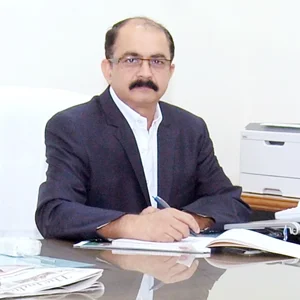
“There is no dearth of knowledge and expertise in our country to develop the indigenous technologies for aluminium, alumina and downstream sector.” Mr. Anupam Agnihotri, Director, JNARDDC
Interviewee
- Category
- Interview
- Date
- Source
- AlCrcle.com
Detail
AlCircle had the opportunity to visit Jawaharlal Nehru Aluminium Research Development and Design Centre, Nagpur, India and interact with its Director Mr. Anupam Agnihotri during the 18th International Conference on Non-Ferrous Minerals and Metals’14 organized by Corporate Monitor and JNARDDC.
JNARDDC is a "Centre of Excellence" set up in 1989 to make contributions to the technological growth of the Indian Aluminium Industry. The center has well-established facilities for the study of Bauxite, Alumina and Aluminium.
Mr.Agnihotri was working as Head Aluminium Electrolysis & Downstream Division, Scientist-V in JNARDDC before undertaking his responsibilities as the Director. He is a Metallurgical Engineer from IIT Kanpur with PG Degree in Metallurgical Engineering from the Visvesvaraya National Institute of Technology, Nagpur. He started his career in JNARDDC as a Scientist and has vast R&D experience in the field of aluminium technology, smelting and downstream areas.
He shared with AlCircle his input on the aluminium industry in India and highlighted the objectives and functionalities of JNARDDC and the rangeof R&D services it can offer to contribute to the growth of aluminium industry value chain.
Excerpts from the interview:
AlCircle: Please tell us in brief what are the main objectives and functional areas of JNARDDC.
Mr. Agnihotri: The India Aluminium Industry is now over 75 years old. Since 1935 when the first fabrication unit ‘Crown Aluminium ‘ came up at Asansol in West Bengal to produce cutlery items needed by the British Army, the whole Aluminium Ecosystem from Bauxite to alumina refining to smelting and downstream segments have come a long way using technologies acquired from different parts of the globe.
One of the main objectives with which JNARDDC was set up 25 years back was to assimilate these overseas technologies and work towards developing indigenous technologies best suited to utilize local resources of raw materials and human resource skills. The vision was to develop basic engineering packages for future alumina and aluminium plants to be set up in the country.
JNARDDC was designed to undertake research programs on fields like material characterization, environment impact studies, energy audit and consumption and to provide specialized analytical services to the industries. As the unit grew, additional objectives were taken up on industry requirements to set up and operate data banks in the areas of bauxite, alumina and aluminium production. Imparting training to the personnel employed in the Indian aluminium industry through organization of workshops, seminars and group training programs was added to the unit’s activities over last couple of years and it also extended its activities to provide technological assistance to the secondary/downstream aluminium industry.
AlCircle: In relation to the original objective of developing indigenous technology base for the Indian Aluminium Industry, how far or close do you think JNARDDC is, in achieving the same?
Mr. Agnihotri: Over the years, the Centre has put all out efforts to work in close association with Indian aluminium industry. With decontrol of Indian aluminium Industry by Government of India in 1989 and opening up of its industry to global market (change in aluminium duty structure), there was a setback for the newly setup R&D institute. The initial structure of setting up the Aluminium Regulation Fund which could financially support the aluminium R&D activities was withdrawn by Indian aluminium industry after decontrol of the Industry by Indian Government. This all led to financial uncertainty for the R&D activities and manpower was reduced from 700 to 70 and the budget was cut down substantially.
Despite all the odds, the Centre with its limited manpower took the challenge and started working in direction of applied research for Indian aluminium industry. Over a period of time the Centre has fulfilled its aim and objectives within given resources and support from Government of India and Indian aluminium industry. Of course we have not fulfilled the dream of developing Indigenous aluminium technology but to some extent helped the industries in adapting the imported technologies for Indian conditions.
AlCircle: As someone who has grown up professionally with JNARDDC what would you rate as the best achievements of JNARDDC in last 25 years? Mr. Agnihotri: It’s a pleasure informing you that JNARDDC has successfully completed 25 years of service to the aluminium and the related industries. JNARDDC is one of its only kinds of R & D Centre of Excellence in South East Asia, where the facilities for conducting research in all areas ranging from bauxite to finished product are available under one roof.The Centre has a team of highly qualified and trained manpower. We still have a long way to go but we all at JNARDDC are deeply committed to strive hard and to scale new heights of performance. We are grateful to all who have provided valuable support and guidance in our endeavors.
The Centre has excellent facilities for mineralogical physical, chemical and physicochemical characterization of materials and sophisticated software related to process modeling, heat and mass balance and techno-economic evaluation. Centre has completed more than 95 projects sponsored by all major aluminium companies. JNARDDC in collaboration with NALCO has completed an R & D project in the area of Management of Bauxite Residue project under Task Force of Asia Pacific Partnership Programme on Clean Development and Climate.
Centre has published / presented more than 300 research papers in National /International Journals/Conferences. In recent past the Centre with its collaborators has filed five joint patents. Three of them are in the area of waste (from aluminium industries) utilization. Also Centre has been nominated as Aluminium Sector Expert (by Bureau of Energy Efficiency - BEE Ministry of Power) under PAT scheme in the National Mission for Enhanced Energy Efficiency (NMEEE) under Ministry of power, Government of India.
AlCircle: How far do you think India has succeeded in developing an indigenous Alumina and Aluminium production technology and by when do you think the same would be available for setting green field Aluminium projects?
Mr. Agnihotri: To me it seems to be a dream not too far which can be achieved in coming years provided there is a will for it. This requires a constructive effort from the Indian aluminium industry, Academia, R&D institutes and Indian Government. No technology is developed without concerted efforts from various disciplines with single point focus. The Indian aluminium industry requires more cohesiveness among them to take up this task in coming years. The effort has been taken up partially what is required now is an effort to bring them together so that it can be called a technology.
AlCircle: What have been the greatest challenges and/or hurdles that need to be overcome in the path of developing Aluminium industry related indigenous technologies for primary, secondary, and downstream section in India?
Mr. Agnihotri: There is no dearth of knowledge and expertise in our country to develop the indigenous technologies for aluminium, alumina and downstream sector. What is missing here is a national level program with set of resources and timeline. For me there were no challenges in developing indigenous aluminium technology as it was never a task or aim of any of the aluminium companies in the country in last 64 years of our aluminium production. Indian government was also not very keen about this objective after 1989. With my experience in this sector for last 25 years I am sure that this is not a challenge at all for our technologist, academician and of course the people from industry. As pointed out in my previous answer it requires a consortium approach for the whole process.
I still feel that we can come together and formulate a program in association with Indian Government, Aluminium Association India, TIFAC, DST, Aluminium industry, NITs, IITs, CSIR Laboratory for Development of Indian Aluminium Technology for Primary, Secondary and Downstream Areas with JNARDDC as the nodal agency for this program.
AlCircle: Does JNARDDC have any plans of working on developing quality manpower for the Indian Aluminium industry and also for JNARDDC's own requirement for future technology development efforts?
We aim to bring about a quantum change in the working of the institute and genuinely address the needs of the Indian Aluminium industry. We are thinking of devising a curriculum for introducing Aluminium education (Its whole eco-system) into the metallurgy and engineering education in the country through a UGC directive. With the involvement of Industry and academics, we would like to organize a series of workshop for teachers of metallurgy and material science in the country to provide conceptual and industry exposure. We would like to offer organized scientific knowledge induction to the new recruitments of GETs and MTs on Bauxite- Alumina- Aluminium and downstream production technologies and conduct workshops of mid-career and senior executives on 'Technology Management'. Progressively- in collaboration with VNIT, Nagpur, we plan to start PG and Doctoral programs on Aluminium industry at JNARDDC.
AlCircle: Tell us something about the upcoming events for the Indian alumina & aluminium industry that are being organized by JNARDDC.
Mr. Agnihotri: JNARDDC is in the process of diversifying its activities in alloy development, energy and environment. The Centre with support of Ministry of Mines, Government of India is setting up facilities for alloy development in areas of automotive, construction and electrical sector. The Centre plans to upgrade its metal testing and characterization laboratory to a material development setup. The Centre is also working on upgradation and beneficiation of laterites and other low grade bauxite ores. Other than this we are also looking into future avenues of non metallurgical grade bauxite. The Centre is also researching on the production of high purity alumina out of normal route of alumina making. It is already in the process of developing guidelines for waste utilization from aluminium industry.
The Centre is also engaged in formulating guidelines in association with Bureau of Energy Efficiency for Indian aluminium industry for their energy target setting and normalization pattern.
The Centre is trying to negotiate with overseas equipment and technology suppliers to set up 'Test Beds' their equipments and technologies at JNARDDC. Like the pilot Alumina plant set up- it would be very useful if JNARDDC could also have access to a Hall-Heroult test pot. We also wish to upgrade specialty alumina R&D facilities to technology development status.
AlCircle: How do you personally see the growth of all segments of the Indian Aluminium and non-ferrous industry over the next 10-20 years?
I am not the authority on all the non ferrous metals, but, as for aluminium is concerned, I can say that the per capita consumption of Aluminium has increased from 0.5 kg a decade back to 1.3 kg presently. However, it is still miniscule as compared to the global per capita consumption of various developed countries such as Germany (38.7), Japan (34.5), Italy (31.5) etc. However, despite the positive trends on the demand front, the production of Bauxite has fluctuated over the past few years. India produced 13.95 Million Tones of Bauxite in 2009-10, which comprised of 7% of Global production of Bauxite (199 MT). Considering the capacity expansion in smelting and refining of Alumina, the country would be requiring Bauxite Production of 40 MT at the end of 12th Five Year Plan from the current level of 13.36 MT at the CAGR of 20%. Strength of Indian aluminium industry is abundant Bauxite, low labour cost, possession of captive coal blocks, globalized industry and modern new plants because of recent capacity addition. The industry still deals with hurdles like uncertain labour laws, land acquisition and environmental issues, high cost of energy and dependence on imported technology.
In spite of all the odds there are great opportunities for the industry in terms of rapid urbanization (increase in demand from electrical, automotive, construction sector) and also increasing demand for consumer durables and reduction in energy usage and greenhouse gas emissions. With new Government in place the industry can expect solution for environmental concerns and resource nationalization which will boost the growth of aluminium industry and of course non ferrous industry as a whole in coming next decade.
Disclaimer: “The information presented herein is neither intended nor implied to be a substitute for professional advice. The views and opinions shared in the interview section of www.alcircle.com are unique to the interviewees and do not necessarily reflect the viewpoint of www.alcircle.com.”
JNARDDC is a "Centre of Excellence" set up in 1989 to make contributions to the technological growth of the Indian Aluminium Industry. The center has well-established facilities for the study of Bauxite, Alumina and Aluminium.
Mr.Agnihotri was working as Head Aluminium Electrolysis & Downstream Division, Scientist-V in JNARDDC before undertaking his responsibilities as the Director. He is a Metallurgical Engineer from IIT Kanpur with PG Degree in Metallurgical Engineering from the Visvesvaraya National Institute of Technology, Nagpur. He started his career in JNARDDC as a Scientist and has vast R&D experience in the field of aluminium technology, smelting and downstream areas.
He shared with AlCircle his input on the aluminium industry in India and highlighted the objectives and functionalities of JNARDDC and the rangeof R&D services it can offer to contribute to the growth of aluminium industry value chain.
Excerpts from the interview:
AlCircle: Please tell us in brief what are the main objectives and functional areas of JNARDDC.
Mr. Agnihotri: The India Aluminium Industry is now over 75 years old. Since 1935 when the first fabrication unit ‘Crown Aluminium ‘ came up at Asansol in West Bengal to produce cutlery items needed by the British Army, the whole Aluminium Ecosystem from Bauxite to alumina refining to smelting and downstream segments have come a long way using technologies acquired from different parts of the globe.
One of the main objectives with which JNARDDC was set up 25 years back was to assimilate these overseas technologies and work towards developing indigenous technologies best suited to utilize local resources of raw materials and human resource skills. The vision was to develop basic engineering packages for future alumina and aluminium plants to be set up in the country.
JNARDDC was designed to undertake research programs on fields like material characterization, environment impact studies, energy audit and consumption and to provide specialized analytical services to the industries. As the unit grew, additional objectives were taken up on industry requirements to set up and operate data banks in the areas of bauxite, alumina and aluminium production. Imparting training to the personnel employed in the Indian aluminium industry through organization of workshops, seminars and group training programs was added to the unit’s activities over last couple of years and it also extended its activities to provide technological assistance to the secondary/downstream aluminium industry.
AlCircle: In relation to the original objective of developing indigenous technology base for the Indian Aluminium Industry, how far or close do you think JNARDDC is, in achieving the same?
Mr. Agnihotri: Over the years, the Centre has put all out efforts to work in close association with Indian aluminium industry. With decontrol of Indian aluminium Industry by Government of India in 1989 and opening up of its industry to global market (change in aluminium duty structure), there was a setback for the newly setup R&D institute. The initial structure of setting up the Aluminium Regulation Fund which could financially support the aluminium R&D activities was withdrawn by Indian aluminium industry after decontrol of the Industry by Indian Government. This all led to financial uncertainty for the R&D activities and manpower was reduced from 700 to 70 and the budget was cut down substantially.
Despite all the odds, the Centre with its limited manpower took the challenge and started working in direction of applied research for Indian aluminium industry. Over a period of time the Centre has fulfilled its aim and objectives within given resources and support from Government of India and Indian aluminium industry. Of course we have not fulfilled the dream of developing Indigenous aluminium technology but to some extent helped the industries in adapting the imported technologies for Indian conditions.
AlCircle: As someone who has grown up professionally with JNARDDC what would you rate as the best achievements of JNARDDC in last 25 years? Mr. Agnihotri: It’s a pleasure informing you that JNARDDC has successfully completed 25 years of service to the aluminium and the related industries. JNARDDC is one of its only kinds of R & D Centre of Excellence in South East Asia, where the facilities for conducting research in all areas ranging from bauxite to finished product are available under one roof.The Centre has a team of highly qualified and trained manpower. We still have a long way to go but we all at JNARDDC are deeply committed to strive hard and to scale new heights of performance. We are grateful to all who have provided valuable support and guidance in our endeavors.
The Centre has excellent facilities for mineralogical physical, chemical and physicochemical characterization of materials and sophisticated software related to process modeling, heat and mass balance and techno-economic evaluation. Centre has completed more than 95 projects sponsored by all major aluminium companies. JNARDDC in collaboration with NALCO has completed an R & D project in the area of Management of Bauxite Residue project under Task Force of Asia Pacific Partnership Programme on Clean Development and Climate.
Centre has published / presented more than 300 research papers in National /International Journals/Conferences. In recent past the Centre with its collaborators has filed five joint patents. Three of them are in the area of waste (from aluminium industries) utilization. Also Centre has been nominated as Aluminium Sector Expert (by Bureau of Energy Efficiency - BEE Ministry of Power) under PAT scheme in the National Mission for Enhanced Energy Efficiency (NMEEE) under Ministry of power, Government of India.
AlCircle: How far do you think India has succeeded in developing an indigenous Alumina and Aluminium production technology and by when do you think the same would be available for setting green field Aluminium projects?
Mr. Agnihotri: To me it seems to be a dream not too far which can be achieved in coming years provided there is a will for it. This requires a constructive effort from the Indian aluminium industry, Academia, R&D institutes and Indian Government. No technology is developed without concerted efforts from various disciplines with single point focus. The Indian aluminium industry requires more cohesiveness among them to take up this task in coming years. The effort has been taken up partially what is required now is an effort to bring them together so that it can be called a technology.
AlCircle: What have been the greatest challenges and/or hurdles that need to be overcome in the path of developing Aluminium industry related indigenous technologies for primary, secondary, and downstream section in India?
Mr. Agnihotri: There is no dearth of knowledge and expertise in our country to develop the indigenous technologies for aluminium, alumina and downstream sector. What is missing here is a national level program with set of resources and timeline. For me there were no challenges in developing indigenous aluminium technology as it was never a task or aim of any of the aluminium companies in the country in last 64 years of our aluminium production. Indian government was also not very keen about this objective after 1989. With my experience in this sector for last 25 years I am sure that this is not a challenge at all for our technologist, academician and of course the people from industry. As pointed out in my previous answer it requires a consortium approach for the whole process.
I still feel that we can come together and formulate a program in association with Indian Government, Aluminium Association India, TIFAC, DST, Aluminium industry, NITs, IITs, CSIR Laboratory for Development of Indian Aluminium Technology for Primary, Secondary and Downstream Areas with JNARDDC as the nodal agency for this program.
AlCircle: Does JNARDDC have any plans of working on developing quality manpower for the Indian Aluminium industry and also for JNARDDC's own requirement for future technology development efforts?
We aim to bring about a quantum change in the working of the institute and genuinely address the needs of the Indian Aluminium industry. We are thinking of devising a curriculum for introducing Aluminium education (Its whole eco-system) into the metallurgy and engineering education in the country through a UGC directive. With the involvement of Industry and academics, we would like to organize a series of workshop for teachers of metallurgy and material science in the country to provide conceptual and industry exposure. We would like to offer organized scientific knowledge induction to the new recruitments of GETs and MTs on Bauxite- Alumina- Aluminium and downstream production technologies and conduct workshops of mid-career and senior executives on 'Technology Management'. Progressively- in collaboration with VNIT, Nagpur, we plan to start PG and Doctoral programs on Aluminium industry at JNARDDC.
AlCircle: Tell us something about the upcoming events for the Indian alumina & aluminium industry that are being organized by JNARDDC.
Mr. Agnihotri: JNARDDC is in the process of diversifying its activities in alloy development, energy and environment. The Centre with support of Ministry of Mines, Government of India is setting up facilities for alloy development in areas of automotive, construction and electrical sector. The Centre plans to upgrade its metal testing and characterization laboratory to a material development setup. The Centre is also working on upgradation and beneficiation of laterites and other low grade bauxite ores. Other than this we are also looking into future avenues of non metallurgical grade bauxite. The Centre is also researching on the production of high purity alumina out of normal route of alumina making. It is already in the process of developing guidelines for waste utilization from aluminium industry.
The Centre is also engaged in formulating guidelines in association with Bureau of Energy Efficiency for Indian aluminium industry for their energy target setting and normalization pattern.
The Centre is trying to negotiate with overseas equipment and technology suppliers to set up 'Test Beds' their equipments and technologies at JNARDDC. Like the pilot Alumina plant set up- it would be very useful if JNARDDC could also have access to a Hall-Heroult test pot. We also wish to upgrade specialty alumina R&D facilities to technology development status.
AlCircle: How do you personally see the growth of all segments of the Indian Aluminium and non-ferrous industry over the next 10-20 years?
I am not the authority on all the non ferrous metals, but, as for aluminium is concerned, I can say that the per capita consumption of Aluminium has increased from 0.5 kg a decade back to 1.3 kg presently. However, it is still miniscule as compared to the global per capita consumption of various developed countries such as Germany (38.7), Japan (34.5), Italy (31.5) etc. However, despite the positive trends on the demand front, the production of Bauxite has fluctuated over the past few years. India produced 13.95 Million Tones of Bauxite in 2009-10, which comprised of 7% of Global production of Bauxite (199 MT). Considering the capacity expansion in smelting and refining of Alumina, the country would be requiring Bauxite Production of 40 MT at the end of 12th Five Year Plan from the current level of 13.36 MT at the CAGR of 20%. Strength of Indian aluminium industry is abundant Bauxite, low labour cost, possession of captive coal blocks, globalized industry and modern new plants because of recent capacity addition. The industry still deals with hurdles like uncertain labour laws, land acquisition and environmental issues, high cost of energy and dependence on imported technology.
In spite of all the odds there are great opportunities for the industry in terms of rapid urbanization (increase in demand from electrical, automotive, construction sector) and also increasing demand for consumer durables and reduction in energy usage and greenhouse gas emissions. With new Government in place the industry can expect solution for environmental concerns and resource nationalization which will boost the growth of aluminium industry and of course non ferrous industry as a whole in coming next decade.
Disclaimer: “The information presented herein is neither intended nor implied to be a substitute for professional advice. The views and opinions shared in the interview section of www.alcircle.com are unique to the interviewees and do not necessarily reflect the viewpoint of www.alcircle.com.”
Tagged with:

