“The sustainability goals of the Indian aluminium industry are gaining momentum, with large players deploying a multi-pronged approach to reduce emissions.” Mayank Chauhan, Co-Founder and Chief Executive Officer of LogicLadder Technologies
- Category
- Interview
- Date
- Source
- AlCircle.com
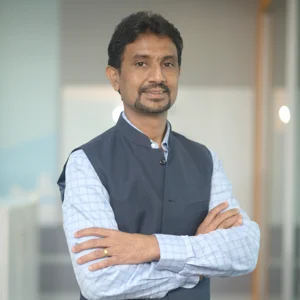
As the Co-Founder and Chief Executive Officer of LogicLadder Technologies, Mayank Chauhan is a sustainability and Net Zero leader who empowers enterprises to navigate the climate economy. From envisioning to executing innovative solutions, he has meticulously crafted the growth narrative of India’s first climate tech company, LogicLadder. Today, the company’s climate action platform, The Sustainability Cloud, is used by 1000+ customers worldwide to measure, track, and report their carbon emissions, manage ESG initiatives, and drive their sustainability goals toward a Net Zero future. In his role, Mayank strategises product development and collaborates closely with local leadership in international markets to spearhead the continuous expansion of LogicLadder.
With a wealth of experience in strategic business and leadership roles, Mayank boasts of a career driven by entrepreneurship and leadership. His specialities lie in strategic management, marketing and sales, operations, M2M, Internet of Things, energy and environment data management and law. Prior to establishing two flourishing enterprises, he served as the Managing Director at Masplantiz Technologies Private Limited and as a senior associate at Sapient. An alumnus of IIT Bombay and Delhi University, Mayank holds dual bachelor's degrees in chemical engineering and law. He is also a former Joint Secretary of the IITBAA NCR Chapter.
AL Circle: Please brief us about LogicLadder Technologies and explain how it helps aluminium companies achieve sustainability.
Mayank Chauhan: The Sustainability Cloud by LogicLadder is an advanced SaaS-based sustainability software suite that provides end-to-end solutions for enterprises to account, report, and reduce their carbon, water, energy, and environmental footprint. The platform supports ESG reporting, carbon accounting, and decarbonisation strategies, developed in alignment with the GHG Protocol. It enables companies to comply with a wide range of regulations, such as CBAM, BRSR, PCF, PWF, EPR, and Auditing & Assurance, while featuring smart workflows for disclosures under global frameworks like CDP and TNFD.
For the aluminium sector, The Sustainability Cloud equips companies with tools to track and manage emissions specific to their operations, facilitating compliance with both international and local sustainability regulations. It allows aluminium companies to calculate product-embedded emissions and product carbon footprints (PCF). The recent EU CBAM has impacted the aluminium sector. These regulations require product-embedded emissions to be calculated. The readiness of SME companies in aluminium, like die-casted auto component manufacturers, has been impacted the most. The Sustainability Cloud empowers these companies to set up digital record-keeping and calculation as per EU regulations.
By streamlining carbon management, energy efficiency, and environmental impact reporting, the platform helps aluminium enterprises transition to greener operations and meet key global targets, ensuring long-term sustainability and competitiveness in the market.
AL Circle: How does your software monitor and account for carbon emissions? Does the software also recommend solutions for reducing carbon emissions?
Mayank Chauhan: Our software, The Sustainability Cloud, offers comprehensive carbon emission monitoring and accounting by collecting real-time data from various operational sources across Scope 1, 2, and 3 emissions. It integrates seamlessly with existing systems to automate data collection, enabling enterprises to track emissions across their entire value chain, from direct emissions (Scope 1) to energy-related emissions (Scope 2) and those from suppliers and logistics (Scope 3).
In addition to monitoring and reporting, the platform supports companies that are in line with the Science-Based Targets initiative (SBTi). It enables organisations to set and track their emission reduction goals in line with the Paris Agreement’s 1.5°C target. By identifying high-impact emission areas, the software provides a decarbonisation planning tool, helping companies build a clear roadmap for achieving their SBTi goals.
While it doesn’t directly recommend specific solutions, The Sustainability Cloud gives businesses the data-driven foundation to strategise decarbonisation and sustainability efforts effectively. The Sustainability Cloud has an integrated energy management system incorporated in it, which allows aluminium companies to reduce their energy consumption and reduce emissions.
AL Circle: What are your thoughts on the sustainability goals of the Indian aluminium industry? How are digital tools transforming the efforts?
Mayank Chauhan: The sustainability goals of the Indian aluminium industry are gaining momentum, with large players deploying a multi-pronged approach to reduce emissions. They are actively working to meet global standards like CBAM by leveraging digital tools to measure, report, and reduce emissions. These tools are serving as catalysts that provide clear blueprints for decarbonisation. As the saying goes, what can be measured can be tracked, and what can be tracked can be reduced. With rising demand for aluminium, leveraging these tools will be essential for long-term sustainability.
However, digital tools have yet to penetrate beyond large enterprises. The Indian aluminium industry’s vast MSME and SME players must also embrace climate technology. Without widespread adoption, they risk falling behind international carbon regulations, jeopardising their competitiveness in a carbon-conscious global market. For the sector to truly become sustainable, SMEs must lead the way in climate tech adoption.
AL Circle: How aware are Indian aluminium companies of their role in combating climate change? How advanced are they in using digital tools and software to support decarbonisation efforts?
Mayank Chauhan: Sustainability has now become a cornerstone of the aluminium industry. In India, it has taken centre stage owing to a growing climate-conscious economy. Indian aluminium companies are increasingly aware of their role in combating climate change, which is driven by regulatory pressures and market demands for more sustainable production. We are witnessing steady efforts to transition from being coal-reliant to exploring low-carbon energy sources. However, the aluminium sector needs to look beyond merely adopting low-carbon energy to significantly reduce its GHG emission contribution.
There is a clear disparity in adopting climate tech tools between large enterprises and SMEs & MSMEs. Regulations by CPCB and state environmental boards have pushed for emission tracking, mainly for energy and effluent mapping. However, we still see instances of the mapping being restricted to Excel sheets. This trend needs to change, especially as Indian industries have yet to build a comprehensive digital infrastructure that can help them effectively map, report, and reduce their emissions on a broader scale.
The outlook remains optimistic as awareness grows and efforts to integrate digital solutions accelerate. However, bridging the gap between large and small enterprises will be crucial for the aluminium sector to fully realise its sustainability goals and contribute meaningfully to a carbon-conscious economy.
AL Circle: Which companies do you believe are at the forefront of driving sustainability in the Asian aluminium market? How do you plan to capitalise on the growing opportunities in this sector?
Mayank Chauhan: Companies in the aluminium sector are currently doubling down on their commitment to sustainability and adopting innovative approaches toward decarbonisation. From transitioning to greener energy sources like green hydrogen to incorporating electric vehicles in their operations and leveraging smart tools for tracking and reporting, they are setting new benchmarks for sustainability.
At The Sustainability Cloud, we aim to empower this momentum by providing sector-specific digital solutions that help aluminium enterprises map, track, and reduce their emissions. Our tools empower companies to navigate sustainability regulations, improve operational efficiency, and achieve their climate goals, ensuring they remain competitive in a carbon-conscious global economy.
AL Circle: Do you offer customised digital solutions tailored to specific industry needs? Are your solutions integrated with AI to lead the decarbonisation efforts a few steps ahead?
Mayank Chauhan: We understand that the sustainability needs of no two sectors or companies are the same. While some may trade products globally, others may focus on domestic markets. Depending on the scale of operations, the carbon intensity of products, or even the company's specific goals, enterprises can customise their technology suite. Our digital solutions are tailored to help companies choose the regulations they need to comply with, enabling them to efficiently map, track, and report their emissions. We are in the process of integrating Machine Learning and AI to empower companies to meet their decarbonisation targets through comprehensive and scalable solutions.
AL Circle: How does the aluminium industry respond to your certified courses? Please provide an overview of these courses and explain how they assist aluminium companies in enhancing their understanding of sustainability and climate stewardship.
Mayank Chauhan: When we introduced our first product, we noticed a significant knowledge gap in corporate sustainability. While some niche professionals were aware, most equated sustainability with just pollution and conservation. This gap led to the development of our L&D offering, Varsity, aimed at bridging this divide and nurturing future sustainability leaders.
Varsity is designed to offer sector-specific courses, including modules tailored to the unique needs of the aluminium sector. These courses will cover key areas like carbon management, emissions reporting, and energy efficiency, helping companies understand the environmental impact of their operations. Though still under development, Varsity has already drawn significant interest from industries across sectors, as companies seek not just tools, but upskill their workforce through a deeper understanding of sustainability and corporate action. This will ultimately equip them with the knowledge needed to implement more effective decarbonisation strategies and align with international sustainability standards.

