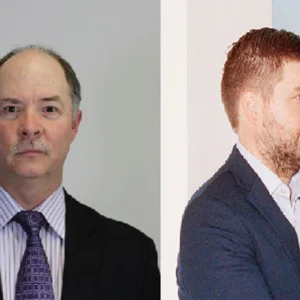
“The present enthusiasm around 4.0 has definitely opened the eyes of the industry to what is possible,” Antti Koulumies – Vice President, Aluminium Business Line, Outotec & Paul Merlin - Vice President, Sales & Business Development, Aluminium Business Line
- Category
- Interview
- Date
- Source
- AlCircleNews
- Edited By
- Beethika Biswas
Outotec develops and delivers industry benchmark technologies and life-cycle services for their customers in the mining, metal, energy, and chemical sector, helping them improve their profitability in a sustainable way. The metals and mining industry is currently influenced by several megatrends including the Industry 4.0 or the fourth Industrial Revolution. Outotec has been in the forefront of implementing Industry 4.0 in this sector through digitalization and automation. AlCircle spoke to Antti Koulumies – Vice President, Aluminium Business Line, Outotec and Paul Merlin - Vice President, Sales & Business Development, Aluminium Business Line about the implementation of Industry 4.0 framework with special reference to the aluminium sector. Here is an excerpt from the interview:
AlCircle: What does Industry 4.0 mean to the aluminium industry? How can the implementation of its framework help the industry improve efficiency and productivity at a time of economic volatility?
PM: There have been many questions, by some, around the definition of 4.0 and what it really entails including the role of Artificial Intelligence and other initiatives that are just sort of this. Anyway, the present enthusiasm around 4.0 has definitely opened the eyes of the industry to what is possible. For example, advanced data collection and analytics possibilities, significantly improve our knowledge base of what is really happening and under what conditions, which in turn makes it easier to automate, even if done in controlled stages.
AK: Call it what you may, but we do see a lot of potential in many areas. Safety is always top priority and we’re seeing good applications on this front. On the cost side, process efficiency and preventative maintenance applications are coming on many fronts in the value chain and over time, we believe this has the potential move the shift cost curves by several percent. The question is how aggressively industry wants to invest into it now to reap future benefits.
AlCircle: Industry 4.0 is disrupting traditional business models while redefining the way business will be done in future. How does it impact the aluminium industry and what are the key hurdles in the way of its implementation?
AK: As we’re still in early stages, I wouldn’t say anyone is really yet disrupting business models as aluminium is far behind even mining. The benefits will be around increasing cost curves and reducing a mount of staff in hazardous locations. You can then ask why we’re so much behind. In my view there are several structural hurdles. For one, pot line technology providers are often also competing producers meaning there may be some conflicts of interest in giving access to the latest and greatest. Then there are the more traditional problems related to big projects; many technology providers in a given project without common data processing standards, the role of EPCMs versus technology providers and the conflict between trying new things against optimizing cost and working with what is proven. Then we also see that many in the industry don’t necessarily want to automate further as there are worries about jobs.
PM: Also, recognizing that others, both inside and outside, may be trying to solve the same or similar problem and hence collaborating might be the shortest route to solutions. To begin, it would be beneficial if the different departments within the smelter, such as the Carbon Plant and Potline, collaborate and share data openly versus operating independently. This is not always the case.
AlCircle: Digitalization is at the heart of Outotec’s operations. How do you contribute to create plants of the future with your digital technology?
AK: Outotec has been looking at digitalization already for decades in different metals value chains, but not always with this name. As process knowledge has been at our core for such a long time, this also means development of process optimization algorithms which we can share between different metals – and this work is now starting to bare fruit.
PM: In aluminium specifically, we currently have a system commercialized with references in alumina for optimization of fuel consumption in calcination. In the carbon area we’re looking at a staged operation combining the entire process with specific applications for individual machines. This is building off our Anode Rod Tracking System (ARTS) which we pioneered over 10 years ago, combining it now with the latest analytical software which, to be honest, wasn’t really user-friendly enough back then for widespread use.
In the Rodshop, we are presently focusing on increasing the level of monitoring and data collection such that we know more information about the variables and actual operating conditions. This started initially with a focused on enhancing predictive maintenance capabilities but is quickly expanding to process and operations optimization. We have actually been simulating the plants for many years now but the enhanced data collection allows us to run multiple scenarios with an improved analytics output.
AlCircle: How does automation help in safe operations in an aluminium smelter?
PM: The biggest safety lever is to take people out of hazardous areas i.e. “line of fire”. Rod shop casting is a good example where we’re developing automatic pouring. Also, by having sensors in the right places, you can reduce fire hazards. Anywhere there’s hot oil combined with a lot of carbon, there’s always a fire hazard. So, the question is how we can use intelligence to predictively monitor these sensitive equipment.
AlCircle: Tell us in brief how robotics makes operations easier and safer in an anode rodding shop?
PM: We have been using robots in the Casthouse for nearly two decades with respect to automatic skimming and ingot stacking, but the rodshop has been slower to adopt, due to the wide variability of the product being processed. Just as an example, we have designed and prototyped a full scale, robotic fine bath cleaning system to enhance the automatic cleaning of the spent anode. This will provide significant benefits through minimizing the level of sodium going back in the butts stream – which eventually can have a significant impact on the potline operation. We have also looked at several other areas to improve automation. It is important to note that whether robots or simple machine automation, the objective and result should still be the same.
AlCircle: Outotec has designed and installed the twin calciners in the Al Taweelah refinery. Give us a heads up on how it would help in energy savings and emission reduction while increasing efficiency?
AK:Our latest references in Al-Taweelah and Ma’aden use our latest technology, the so-called GEN 5 calciner. This is state of the art in emissions, producing e.g. no thermal nox due to the lower furnace temperatures it allows. To improve operations of existing calciners, we’ve developed an optimizer tool called pretium. This is a multi variate optimizer that aims to improve the so called perficiency ratio of the plant, i.e. maximize output in relation to input, combined with high availability. Initial results have shown up to 10% fuel savings compared to pre-installation performance. This is significant also from a CO2 emissions perspective!
AlCircle: Use of digital techniques can assist in identifying anode effects proactively. How are the new smart smelters leveraging on it?
AK: We’re currently developing a holistic process optimization system to improve quality of our anodes and recycling processes to give more intelligence to the pot rooms and understand how the anodes bWe’re currently developing a holistic process optimization system to improve quality of our anodes and recycling processes to give more intelligence to the pot rooms and understand how the anodes behave there. There are many effects to be controlled, for example, compaction coherency, raw materials properties and variation as well as sodium content in the butts. If you don’t optimize your bath cleaning, you may end up contaminating your new anodes. We’re already leaders in bath cleaning but our new digital applications can further optimize the efficiency of bath removal. Things we’re exploring in this front are for example using machine vision to look at butts and optimize their cleaning processes.
AlCircle: Brief us on some of the latest projects by Outotec that promote Industry 4.0 framework in aluminium smelting.
PM: We have a Live reference on a rod shop digital system which we expect to commission early 2020 in China. We’re looking at further upgrading our ARTS system, in addition to the previously mentioned working references in calcining. Outotec is further a leader in digital applications in many mining and concentrator plant equipment, with which many of our alumina products share their technological back bone. This means that for example in bauxite grinding, customers can make use of our system to optimize mill relining, or rake wear in settler washers.

