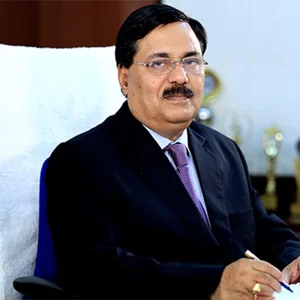
“The global rise in Aluminium prices is only a spike driven by strong market sentiments, not by market fundamentals", Dr Tapan Kumar Chand, Resident Director - Vedanta & Former Chairman cum Managing Director of National Aluminium Company (NALCO)
- Category
- Interview
- Date
- Source
- AlCircleNews
AlCircle team received a great opportunity to interview Dr Tapan Kumar Chand, Resident Director - Vedanta & Former Chairman cum Managing Director of National Aluminium Company (NALCO) following the virtual event of “Indian Aluminium Summit”.
AlCircle: What is the major reason behind the surge in the price of Aluminium globally?
Dr T.K. Chand: The surge in prices of Aluminium is a part of the general surge of metal prices in the Global Market. In the case of Aluminium, production cut in North-Western Provinces of China due to power rationing, imposition of expert tax by Russia & bullish sentiment towards commodities are primarily responsible for pushing the prices up. These supply constraints have got aggravated due to factors like one third production curtailment at Alumar Alumina Refinery in Brazil, labour strike at Kitimat Smelter, Canada & etc. On demand side stimulus package in major economies like EU announcing Euro 750 billion for next 6 years under Next Generation EU, the USA approving 1.2 trillion spent plans over 8 years etc., have built up demand for the metal.
AlCircle: Why do you think the global rise in the price of aluminium won't sustain for a long time, maybe up to December 2021?
Dr T.K. Chand: The global rise in Aluminium prices is only a spike driven by strong market sentiments, not by market fundamentals. Russian export tax and Chinese production cuts are fuelling market sentiments which are in any case temporary. Similarly, production in Alumar Alumina Refinery in Brazil and Kitimat getting affected due to factors like equipment damage and labour strike respectively may come back to normal. Bullish commodity market sentiment may win. Due to the present level of high Aluminium prices, some unviable smelters may start production making a market surplus position. All these factors militate against the sustainability of the present level of LME. It is estimated the prices of Aluminium may hover around $2200 LME during 2022.
AlCircle: Rise in the price of Aluminium is not favourable for the industry. Why?
Dr T.K. Chand: The increase in the price of Aluminium had increased the input cost for the Aluminium consuming industry putting pressure on their margins as well as an increase in their final product price. The Aluminium consuming industry is still reeling under the uncertainty over the Covid-19 re-emergence resulting in them maintaining a bare minimum level of inventory level. The high prices of Aluminium had led to an increase in usage of scrap and recycled aluminium. This increase in usage of scrap or recycled aluminium will directly impact the consumption of Primary Aluminium.
The LME prices at this high level are likely to impact Aluminium consumption, especially in the building & construction, packaging, electrical and automobile sectors due to cost-push end-product prices. This may impact the growth of the Aluminium industry which is poised to be above 8% in India in the next 5 years driven by Govt. policies on boosting the economy of the country.
Further Aluminium downstream industries in India are mainly in the MSME sector and the elevated price levels, if they last for more time, MSME units will have serious issues on raw material financing and working capital financing which may lead to affect the operations of such units.
In short, we can say Aluminium prices need to be affordable for the common man for increasing mass consumption. Affordability can only bring scalability of Aluminium as a Metal.
AlCircle: Can you please elaborate on why Russia and China are pin-pointed for the rise in the price of aluminium?
Dr T.K. Chand: Huge demand for Primary Aluminium in China with their manufacturing index at the peak had created an arbitrage in the prices at SHFE resulting in huge movement of primary metal to China.
The news of Primary Aluminium smelting curbs in China’s North-western provinces due to seasonal power rationing has also helped the prices rise so high.
Russian export tax from Aug-Dec, a temporary export duty of 15% imposed on primary Aluminium amid efforts to fight domestic inflation has added fuel to the fire. The world depends on Russian P1020 and value-add production. More so at a time when the global market is experiencing supply constraints. Russia exported 80% of its production last year as its domestic demand is less than 1 million tonnes while its production is over 3.9 million tonnes. The world has been absorbing all of it and needs more. This means Russia is the world’s most important supplier of the spot market, which at the end determines premiums and prices not only for the spot market but for the term market (annual, quarterly and monthly formulas). For all this and more the finger points towards Russia and China.
AlCircle: When can the Indian Aluminium Industry expect to have a National Aluminium Policy?
Dr T.K. Chand: Compliments to Niti Aayog who had suggested for having a National Aluminium Policy. Yes, Aluminium being the 2nd most usable metal next to steel & also the future metal of choice for new India should have a National Policy. It will help India to achieve self-sufficiency in Aluminium and realize the goal of Atma Nirbhar Bharat (Self-Reliant India).

