“The development of innovations and the introduction of new technologies and products remain the Company's top priority. RUSAL develops, tests and implements advanced technologies, materials and equipment that often have no analogues in the world”, Evgenii Nikitin, Chief Executive Officer, RUSAL
- Category
- Interview
- Date
- Source
- AlCircle.com
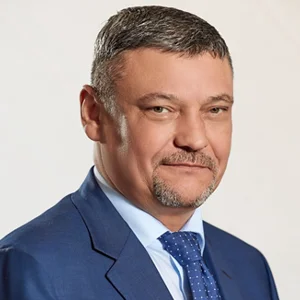
Mr Nikitin was appointed as the Chief Executive Officer of RUSAL in November 2018. Before this, he was the acting CEO of the Company from May 2018 and RUSAL’s Head of Aluminium Division from January 2014. Prior to that, he was the director of the Aluminium Division East from October 2013, while before that appointment Mr Nikitin was the Managing Director of KrAZ, one of the world’s largest aluminium production facilities. From 2008 to 2010, he was Managing Director of SAZ after beginning his career with the Group as a reduction pot operator in 1993.
Mr Nikitin graduated from the Moscow State Technical University of Civil Aviation in 1989 and from Lomonosov Moscow State University with a Master’s degree in business management (MBA) production systems in 2009.
It was a great opportunity to interview Mr Evgenii Nikitin and below remains, his envisions for the global aluminium industry in 2021:
AlCircle: How do you envision 2021 the global aluminium industry following the economic impact of the COVID-19 pandemic?
Mr Evgenii Nikitin: The pandemic has become the key driver of change in government and corporate policies, which are now, in turn, accelerating green technology shifts and amplifying the trends that have been growing within aluminium markets for a number of years. Throughout 2020, nations and key market players have committed to carbon-neutral targets, putting green investments at the centre of recovery plans.
In the automotive sector, green stimulus packages combined with a regulation push to reduce emissions over vehicle life cycles, are both incentivising and pressuring automotive manufacturers to increase EV penetration and accelerate light-weighting solutions.
Currently, we see solid orders growth across most sectors affected by lockdowns. This is related to the general recovery of the markets and end-consumer buying, supported by a different stimulus. While packaging and electrical segments went through the crisis with minimal losses, the automotive and construction industries were the most affected. With the resumption of car production, the whole supply chain to OEMs has accelerated and all suppliers started to place new orders. We believe that this recovery is sustainable, and even Capex-intensive goods will find the end-demand.
In 2021, we estimate that global aluminium demand may amount to 6% YoY, China will grow by 5%, and the Rest of the World (“RoW”) will grow by 8%.
AlCircle: What are your insights on ALLOW’s market penetration in 2021?
Mr Evgenii Nikitin: According to CRU, RUSAL's share in the global production of metal with a carbon footprint of <4 tons of CO2 per ton of aluminium according to Scope 1 & 2 is about 20%. ALLOW has a factual production carbon footprint five times the industry average, proving transformational for the industry. ALLOW's sales are growing from year to year, and we estimate that ALLOW has the largest share among competing Low Carbon Aluminium brands.
AlCircle: What is your take on the acquisition of century-old Aluminium Rheinfelden?
Mr Evgenii Nikitin: This deal strengthens RUSAL’s premium automotive offering in Germany, helping to reinforce RUSAL’s position as the supplier of choice to its international network of automotive customers. RUSAL is buying Rheinfelden out of bankruptcy, ensuring the continuity of more than 200 jobs and the continued supply of German products to German and EU consumers.
This acquisition complements RUSAL’s existing strengths and diversifies our current customer base. RUSAL is enhancing its focus on automotive, whilst Rheinfelden is focused on niche technical applications. Together we can provide innovative aluminium alloys to some of the biggest brands in the automotive sector.
Low Carbon Aluminium is the next logical step for Rheinfelden’s customers, especially in the automotive world. This is why RUSAL, with its global scale low-carbon aluminium alloy production, is ideally placed to integrate and connect Rheinfelden into its business. Together, the two businesses will be a compelling partnership, able to capitalise on the shift to more sustainable aluminium.
The Rheinfelden name and brand is renowned across the world including in Korea and Japan. RUSAL’s objective is to maintain the Rheinfelden name and brand but connect it to RUSAL, as we combine Rheinfelden’s high end, niche product and closed-loop recycling focus with our global scale low-carbon aluminium alloy production.
AlCircle: Kosei has chosen RUSAL as its preferred supplier of PFA for wheel and auto components. How do you foresee aluminium consumption in 2021 for the Global automotive sector?
Mr Evgenii Nikitin: This year, we predict that demand for aluminium in the transport sector will grow by 15-17%. This is the fastest growth across all the sectors.
The primary drivers of growth will be thanks to an increase in car production following the pandemic, growth in the share of electric cars and the growth of SUVs in the production mix.
Such structural shifts lead to an increase in aluminium consumption in terms of the "average car", i.e. aluminium consumption in the automotive industry is growing faster than the dynamics of car production.
We expect that in 2022, global car production will recover from all the losses incurred following the coronavirus crisis, and the demand for aluminium in the automotive industry will fully recover by the end of 2021.
AlCircle: Could you share RUSAL’s key focus in terms of technology up-gradation in 2021?
Mr Evgenii Nikitin: The development of innovations and the introduction of new technologies and products remain the Company's top priority. A significant share of RUSAL's R&D is taken up by projects aimed at reducing the environmental impact in the regions where we operate and developing new sustainable production technologies.
RUSAL develops, tests and implements advanced technologies, materials and equipment that often have no analogues in the world: the technology of unformed lining materials with subsequent recycling; a two-stage system for cleaning electrolysis gases with the capture and disposal of sulfur; eco-friendly pitch for anodes, halogen-free highly dispersed precipitated aluminium hydroxide (HDPAH), Sc alumina and AlSc alloys. RUSAL has developed and successfully launched pilot industrial production of metal on inert anodes. Combined with renewable hydropower, the inert anode technology ensures the lowest possible carbon footprint of the primary metal, contributing to a more sustainable and greener economy.
AlCircle: What are the major areas RUSAL plans to invest in 2021? Are there any expansion plans?
Mr Evgenii Nikitin: It is important to remember that despite everything going on from a macro perspective in 2020, we continued our investments in key development projects such as the development of the Taishet anode plant, with the 2nd stage expected in 2023. We have also continued progress for further development at the Taishet Aluminium Smelter, with the first metal of the 1st stage scheduled for 2021. We have also invested in making our business practices as sustainable as possible, completing the transition to the EcoSoderberg process at the Krasnoyarsk Aluminium Smelter.
Our investment policy is divided into two sections and this formula will be our basis for investments going forward. First, investments into development projects – decisions on these are based on the directions from the Company’s scientific and technical policies, goals of vertical integration and VAP development programme. All these tasks are facing our company, which strives to ensure the consistent strengthening of its competitive position in the market. And, second, investments into maintaining the functioning of existing facilities – these are environmental measures, programmes to improve equipment reliability, quality programmes, replacement of obsolete equipment, etc.
AlCircle: Could you please outline RUSAL’s outlook for 2021?
Mr Evgenii Nikitin: In the long-term, the acceleration of green technology trends will help drive aluminium demand over the coming years.
Our ‘green’ production strategy, which will be increasingly applicable in a new post-pandemic reality, is closely connected with promoting our ALLOW low-carbon aluminium brand, the development of “carbon-free” inert-anode technology and is aimed, among other things, at upgrading our production and implementing the best available technologies.
In addition, one of RUSAL’s key goals is to gradually increase the share of value-added products (VAPs). In 2019, the share of VAP sales in total sales was 37%, in 2020 - 44%, we aim to gradually increase the share to 60%. We are confident that the long-term market trends will not change, and the construction, automotive and packaging industries that need high-quality, innovative aluminium products and advanced technological solutions, will remain the key drivers of consumption in the aluminium industry.

