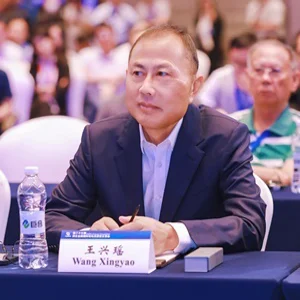
“The Asian aluminium extrusion market is steadily growing, especially in countries and regions such as China, Japan, India, and Southeast Asia.” Wang Xingyao, Founder of GLD ALLOYS (M) SDN BHD
- Category
- Interview
- Date
- Source
- AlCircle.com
Wang Xingyao is a seasoned veteran in the aluminium manufacturing industry with over 25 years of experience. He has successfully led several high-profile aluminium companies across Asia, producing various products including aluminium sheets, extrusions, and alloy wheels. Mr Wang’s expertise in supply chain management and operational efficiency has positioned him as a key player in the market. His leadership style is characterised by a keen focus on sustainability and environmental stewardship, ensuring long-term profitability while adhering to global best practices. Mr Wang’s vision and strategic acumen have consistently delivered impressive results, making him a valuable asset to the company.
AL Circle: What motivated the founding of GLD ALLOYS (M) SDN BHD in 2024, mainly focusing on aluminium extrusion manufacturing in Malaysia? Could you share the vision and strategic considerations that led to this decision?
Wang Xingyao: Superior geographical location: Malaysia is located in the heart of Southeast Asia and is an important hub connecting the Pacific and Indian Oceans. It has unique sea and air transportation conditions, making it convenient for import and export. It provides a convenient logistics channel for hard aluminium alloy extrusion factories, which is conducive to reducing logistics costs and expanding the global market.
Abundant resources: Malaysia has abundant natural resources such as aluminium ingot, palm oil, etc., providing ample raw material sources for manufacturing aluminium ingots. At the same time, abundant labour resources, relatively high labour quality, and relatively low labour costs provide stable human resource security for enterprises.
Policy incentives: The Malaysian government has been committed to attracting foreign investment and promoting domestic economic development. It has formulated preferential policies, such as tax incentives, land leasing incentives, etc., to reduce business operating costs and improve investment returns. These policies strongly support the establishment of hard aluminium alloy extrusion plants.
The market potential is enormous: With the rise of the Southeast Asian economy, Malaysia's consumer market is also constantly expanding. With a large population and diverse consumer demands, it provides a vast market space for various products. Establishing a hard aluminium alloy extrusion plant in Malaysia can quickly capture market share and maximize brand value.
Cultural Integration: Malaysia is a multicultural country with a harmonious and stable society. Running a factory here can easily integrate into the local society, establish good cooperative relationships with local enterprises and employees, and jointly promote the development of the enterprise.
Opportunities for the development of environmental protection industry: With the increasing global awareness of environmental protection, green environmental protection industry has gradually become a new economic growth point. Establishing a hard aluminium alloy extrusion plant in Malaysia can pay attention to the development trend of green and environmentally friendly industries, produce environmentally friendly products, and meet market demand.
In summary, establishing a hard aluminium alloy extrusion plant in Malaysia can not only enjoy various advantages such as geography, resources, and policies but also seize huge market potential while complying with environmental trends and achieving sustainable development of the enterprise.
AL Circle: What are the key advantages of aluminium extrusion that GLD ALLOYS (M) SDN BHD emphasises in its products and services?
Wang Xingyao: The main advantages emphasised by GLD Alloys in its products and services include:
- Aluminium recycling and casting of hard alloy aluminium bars
- Reverse extrusion ensures uniform metal flow, reduces internal stress and uneven structure of the product, improves product quality and performance, and reduces energy consumption.
These advantages make GLD ALLOYS a priority in producing high-precision aluminium profiles, especially in industries with high requirements for product quality, such as aerospace and automotive manufacturing. We are committed to ensuring that our product quality and performance always meet the highest standards.
GLD has casting billets, so we can supply special alloy products according to any special requirements and indirect press, as it enables the pressing of harder alloys (2xxx, 7xxx) and products with smaller cross-sections due to the smaller extrusion pressures.
AL Circle: Could you elaborate on GLD Alloys's product range? How would they cater to the specific needs of different industries in Asia?
Wang Xingyao: Aluminium hard alloy, 2007, 2011, 2017, 2024, 4032, 5083, 7005 and 7075, we also can prepare customized special alloy.
The Asia Pacific aluminium extrusion market size was valued at USD 59.39 billion in 2023 and is projected to grow at a CAGR of 8.7% from 2024 to 2030. This growth is attributed to several key driving factors including the region’s rapid industrialization and urbanization, coupled with increasing demand for lightweight and durable materials in various industries such as automotive, construction, and electronics. Additionally, advancements in extrusion technology and the development of high-strength alloys are further fueling market growth.
AL Circle: How does GLD Alloys ensure the quality and consistency of its extruded aluminium products? What are the critical factors in maintaining high standards?
Wang Xingyao: We have one experienced team for aluminium casting and extruding in the last 20 years and we run under the IATF16949 system. Details are as the following,
Mold design: The design of the mold directly affects the shape, size, and mechanical properties of aluminium alloy profiles. Therefore, reasonable mold design is one of the key factors in extrusion processing.
Squeezing speed and pressure: The control of extrusion speed and pressure is crucial for the quality and performance of aluminium alloy profiles. Too fast or too slow extrusion speed, as well as too little or too much pressure, can lead to a decrease in profile quality.
Cooling and straightening: The choice of cooling rate and straightening method will affect the microstructure and mechanical properties of aluminium alloy profiles. Rapid cooling and proper straightening methods can achieve better material properties.
Surface treatment and cutting: Choose the appropriate surface treatment method according to product requirements, while ensuring cutting accuracy and stability to meet the length, size, and shape requirements of the product.
Quality control: Set strict quality control points during the production process, inspect products, and ensure that every step meets standard 2.
Material testing: Testing materials before production to ensure their quality meets production requirements.
Process improvement: Continuously optimize production processes to reduce defects caused by improper processes.
Employee training: Provide regular training to employees on the production line to improve their operational skills and quality awareness.
Design review: Conduct a rigorous design review during the product design phase to ensure that the design proposal can avoid potential defects and issues.
Supplier management: Strictly manage the quality of suppliers to ensure that the supplied materials or components meet quality standards.
Continuous improvement: Based on customer feedback and market research, continuously improve the product to reduce defects and enhance product quality.
Through the above measures, enterprises can reduce the occurrence of defects to a certain extent, improve product quality, meet consumer expectations, and thus gain advantages in the fiercely competitive market.
AL CIrcle: How would you describe the current state of the aluminium extrusion market in Asia? What are the most significant trends shaping this market?
Wang Xingyao: The Asian aluminium extrusion market is steadily growing, especially in countries and regions such as China, Japan, India, and Southeast Asia. This growth is mainly attributed to multiple factors, including technological advancements, increased market demand, and support from industry policies.
Technological progress and innovation: With the continuous advancement of technology, aluminium extrusion materials' production efficiency and product quality have been significantly improved. For example, China has become a major global manufacturer of aluminium extrusion materials thanks to technological innovation and research and development investment. At the same time, Japan is also at the forefront of aluminium extrusion production technology, especially in controlling the construction of large extrusion machines, which has driven market growth.
Market demand is increasing: With the rapid development of industries such as construction, transportation, and machinery, the demand for aluminium extrusion materials is constantly increasing. Especially driven by the development of emerging industries such as new energy vehicles and solar photovoltaics, the demand for aluminium extruded materials has become even stronger, driving market growth, such as in India.
Industry policy support, particularly from governments, is a significant factor driving the growth of the Asian aluminium extrusion market. This support provides a stable and conducive environment for the industry's development, ensuring that it can meet the increasing market demand and technological innovation requirements.
The most important trend is technological innovation and an increase in market demand. With the continuous advancement of technology and changes in market demand, the application fields of aluminium extrusion materials are constantly expanding, gradually extending from the traditional construction field to multiple fields such as industry and transportation.
Meanwhile, with the increasing awareness of environmental protection, the green production and application of aluminium extrusion materials have become an essential trend in the industry's development. In addition, enterprises are also increasing their R&D investment and actively responding to environmental policies to adapt to changes in market demand and technological innovation requirements.
AL Circle: What challenges do you foresee for the aluminium extrusion industry in Asia, and how is GLD Alloys positioning itself to overcome them?
Wang Xingyao: The main challenges that the Asian aluminium extrusion industry will face are:
- Fierce market competition
- Pressure for technological innovation
- Requirements for environmental protection and energy conservation
- Challenges in digital manufacturing
To overcome these challenges, aluminium extrusion companies need to adopt the following strategies for positioning:
Technological innovation and research and development: Enterprises should increase investment in technological innovation, develop new types of squeezable aluminium alloy materials, and improve product strength, hardness, plasticity, and dimensional accuracy to meet the requirements of lightweight and high-strength. At the same time, advanced extrusion production technologies such as CNC extrusion machinery, advanced program control systems, and new extrusion molds are introduced to improve production efficiency and quality.
Environmental Protection and Sustainable Development: Faced with the requirements of environmental protection, energy conservation and emission reduction, aluminium extrusion enterprises should promote advanced technologies and concepts such as green manufacturing, energy conservation and environmental protection, reduce energy consumption and waste, and build green factories to meet global and local requirements for environmental protection and sustainable development.
Digital Manufacturing: With the development of digital technology, aluminium extrusion enterprises should actively introduce advanced manufacturing technology, improve automation, optimize production processes, reduce production costs, and improve production efficiency. This includes applying intelligent, automated, and digital technologies to improve production efficiency, quality, and cost control.
Market positioning and brand building: In fierce market competition, GLD Alloys (Malaysia) needs to gain competitive advantages through technological innovation and brand building. This includes clear market positioning and effective brand promotion strategies to differentiate from competitors and attract target customers.
AL Circle: In your opinion, what are the emerging opportunities in the aluminium extrusion sector in Asia? How is GLD Alloys planning to capitalise on these opportunities?
Wang Xingyao: The emerging opportunities in the Asian aluminium extrusion industry mainly include market demand growth, technological innovation, environmental protection and sustainable development, as well as internationalization trends.
The demand for aluminium extrusion industry in the Asian market continues to grow, especially in the fields of construction, transportation, electronics and electrical appliances, where its applications continue to expand. With the continuous emergence of new technologies and materials, the demand for aluminium profiles will continue to grow, especially in fields such as new energy vehicles and lightweight aerospace technology, where the application prospects of aluminium profiles are broad. This provides more business opportunities for aluminium extrusion enterprises.
Technological innovation is an important driving force for the development of the aluminium extrusion industry. With the development of digital manufacturing, intelligence, automation, and digital technology, aluminium extrusion enterprises should actively introduce advanced manufacturing technologies, improve automation levels, optimize production processes, reduce production costs, and improve production efficiency. The application of these technologies will help enterprises improve production efficiency and product quality, meeting the market's demand for high-quality products.
Environmental protection and sustainable development have become common goals for various industries worldwide. Aluminium extrusion enterprises should increase investment in technological innovation, promote advanced technologies and concepts such as green manufacturing, energy conservation and environmental protection, and build green factories. This not only meets environmental requirements, but also enhances the company's social image and market competitiveness.
The internationalization trend is another important opportunity for the aluminium extrusion industry. With the deepening of global economic integration, aluminium extrusion products will further enter the international market. Enterprises can expand their international market share and achieve international development by improving product quality and reducing costs.
GLD Alloys(Malaysia) needs to adopt the following strategies to seize these opportunities:
Technological innovation: Introducing advanced extrusion production technology, such as CNC extrusion machinery, advanced program control systems, and new extrusion molds, as well as high-performance aluminium alloy materials and new processes, to improve production efficiency and product quality.
Environmental Protection and Sustainable Development: Increase investment in technological innovation, promote advanced technologies and concepts such as green manufacturing, energy conservation and environmental protection, and build green factories to meet environmental requirements and enhance social image.
International Development: Improve product quality and reduce costs, expand international market share, and achieve international development of the enterprise.
Industrial chain collaboration: Form close cooperative relationships with upstream and downstream enterprises to achieve coordinated development of the industrial chain, jointly explore markets, reduce costs, and improve efficiency.
Through these strategies, GLD Alloys(Malaysia) can not only seize emerging opportunities in the Asian aluminium extrusion industry but also maintain a leading position in the fierce market competition.
AL Circle: How does the aluminium extrusion market in Malaysia compare to other Asian markets? What are the unique characteristics of the Malaysian market?
Wang Xingyao: The uniqueness of the aluminium extrusion market in Malaysia is significantly influenced by the country's geographical location. Situated in the heart of Southeast Asia, Malaysia serves as a key node connecting different markets. It is strategically positioned to connect maritime and land ASEAN, guard the Strait of Malacca, and act as a 'gateway' to the ASEAN market, as well as the Middle East, Australia, and New Zealand. This unique location facilitates the import and export trade of aluminium extrusion products.
The level of economic development and disposable income of households in Malaysia also reflect the uniqueness of its aluminium extrusion market. The stable political situation, prosperous economy, good public security, mild climate, and low incidence of natural disasters in Malaysia have combined to make it one of the preferred destinations for investors and consumers. In 2022, the average household income in Malaysia will increase. On average, the disposable income of Malaysian households accounts for 83.9% of their total pre-tax income. This situation provides market demand for the consumption of aluminium extrusion products.
In addition, the demand and preferences of the Malaysian market are also a reflection of its uniqueness. For example, Malaysia has a hot climate, but residents have a particular preference for long-sleeved clothing, which may be related to religious beliefs, skin colour preferences, and air conditioning usage in public places. This market demand has put forward specific requirements for the design and production of aluminium extrusion products, requiring the products to be able to adapt to this special market demand.
AL Circle: What role does Malaysia play in the broader Asian aluminium extrusion landscape? Are there specific market dynamics in Malaysia that impact your business strategy?
Wang Xingyao: Malaysia plays a vital role in the Asian aluminium extrusion landscape, especially in the field of recycled aluminium. Its unique geographical advantages and cultural diversity endow Malaysia with enormous development potential in the global aluminium industry.
The development of Malaysia's aluminium industry has benefited from its free trade agreements with India and China, which have enabled Malaysia to sell its products to these two major countries in a cheaper and easier way, and have attracted a large amount of investment, especially in the manufacturing industry. These agreements not only help Malaysia occupy a favourable position in the international market, but also promote economic growth. As a member of the Association of Southeast Asian Nations (ASEAN), many products manufactured in Malaysia are tax-free when sold to other Southeast Asian countries, which has greatly benefited Malaysia's international trade and economic development.
Furthermore, the Malaysian government is committed to achieving industrial upgrading through policy guidance and financial support measures, especially in the semiconductor industry, where Malaysia plays a crucial role in packaging and testing. The vision and efforts for industrial upgrading, coupled with Malaysia's development in the fields of AI and data centers, have brought a new wave of development opportunities to the country.
In the broader Asian aluminium extrusion landscape, the market dynamics in Malaysia are influenced by the possibility of global semiconductor supply chain restructuring, and more and more semiconductor companies are increasing their investments in Malaysia. In addition, Malaysia's political stability and relatively friendly investment environment, as well as free trade agreements with major trading partners, provide a solid foundation for its position in the Asian aluminium extrusion landscape.
In summary, Malaysia plays an important role in the Asian aluminium extrusion landscape, with its unique geographical location, cultural diversity, government policy support, and strategic position in the global supply chain contributing to its success and sustained development in this field.
AL Circle: How has the demand for aluminium extrusion in Malaysia evolved in recent years? What factors drive this demand, and what future trends do you anticipate?
Wang Xingyao: In recent years, Malaysia's demand for aluminium extrusion has shown a steady growth trend, mainly driven by multiple factors. Firstly, the Malaysian government encourages the development of the recycled aluminium industry through industrial policies, including increasing the production of recycled aluminium and promoting the development of resource-saving and environmentally friendly industries. For example, the government has introduced multiple industrial policies, clearly proposing to accelerate the development of the recycled aluminium industry and increase the production of recycled aluminium. It is expected that the production of recycled aluminium will reach 11.5 million tons by 2025. These policies provide clear development directions for the recycled aluminium industry and drive market demand growth.
Secondly, with the global emphasis on environmental protection and sustainable development, as well as the "dual control" and "dual carbon" policies implemented by the Chinese government, namely the control of energy consumption intensity and total energy consumption, and the goals of "carbon neutrality and peak carbon", these policy pressures have affected high energy consuming industries such as the primary aluminium industry, thereby driving a significant increase in demand for recycled aluminium market. The recycled aluminium industry has become a key industry supported by the country for its resource conservation and environmental advantages, which undoubtedly increases the demand for aluminium extrusion products.
In addition, with the gradual recovery of traditional demands such as construction, electricity, consumer goods, and machinery, as well as the new demand driven by the development of photovoltaics and automotive lightweighting, the market demand for aluminium extrusion products has been further promoted. Several listed companies have announced plans to invest in the construction or expansion of recycled aluminium production capacity, which also indicates that the demand for aluminium extrusion products will continue to grow in the future.
In summary, Malaysia's demand for aluminium extrusion has shown a steady growth trend in recent years, mainly due to the government's encouragement policies for the recycled aluminium industry, the global emphasis on environmental protection and sustainable development, and the increasing demand for aluminium extrusion products in traditional and emerging fields. It is expected that in the future, as these factors continue to drive, Malaysia's demand for aluminium extrusion will continue to grow.
AL Circle: How does GLD Alloys approach sustainability in its manufacturing processes? What initiatives have you undertaken to minimise environmental impact and promote sustainable practices?
Wang Xingyao: Aluminium processing enterprises can take the following measures to achieve sustainable development in their manufacturing process and minimise their impact on the environment:
Improve resource utilisation efficiency: Through technological innovation and energy efficiency improvement strategies, optimize production processes, reduce waste generation, and reuse waste as resources to improve the service life and recycling rate of aluminium products.
Adopting clean energy technologies: Pay attention to and actively adopt clean energy technologies, such as renewable energy (solar, wind, etc.), reduce the use of fossil fuels, and lower carbon emissions in production and operation processes.
Digital transformation: Utilising innovative technologies such as digital technology and artificial intelligence to improve resource utilisation, reduce energy consumption, and waste generation. Train employees through technologies such as virtual reality and augmented reality to enhance the overall quality and competitiveness of the enterprise.
Emphasize domestic resource development: Through independent innovation and technological progress, enhance industrial competitiveness, accelerate green development, and improve the comprehensive utilization level of resources.
Focusing on consumption iteration and upgrading: expanding the application field of aluminium to meet market demand while promoting industrial upgrading and transformation.
Building a circular economy model: The international community generally advocates for a circular economy and encourages the reduction of waste generation from the source. Aluminium, as a highly recyclable material, has enormous potential in the circular economy.
Pay close attention to policies, regulations, and industry standards: Closely monitor domestic and international policy developments to ensure compliance with environmental protection policies and industry standards.
Through the above measures, aluminium processing enterprises can effectively achieve sustainable development in their manufacturing processes, reduce negative environmental impacts, and enhance their competitiveness and social responsibility.
AL Circle: What are GLD Alloys' strategic goals for the next five to ten years? How do you maintain our competitive edge in the Asian aluminium extrusion market?
Wang Xingyao: The strategic goals of GLD Alloys processing enterprises in the next five to ten years are mainly to expand market share, enhance technological innovation capabilities, optimise production efficiency, and strengthen brand internationalisation.
The key to maintaining competitiveness of GLD Alloys processing enterprises in the Asian aluminium extrusion market lies in the following aspects:
Technological innovation and research and development: Continuously invest in technological innovation and research and development, pay attention to key technological developments in the industry, and explore important technological innovation areas that may lead the industry's development in the next five years. Through process improvement and energy efficiency enhancement, product quality can be improved while achieving energy conservation and emission reduction to meet market demand.
Market segmentation and demand forecasting: Conduct in-depth analysis of market demand in various application fields, especially the development opportunities and challenges in the construction and transportation industries. Through market segmentation, identify emerging markets and potential growth points, and develop corresponding product and market entry strategies.
Policy environment and regulatory impact: Pay close attention to government support policies and their impact on the aluminium extrusion industry, as well as regulatory changes related to environmental protection and resource utilisation. Ensure that the operation of the enterprise complies with legal and regulatory requirements, while utilising policy advantages to enhance competitiveness.
Market data and consumer insights: Conduct user demand and preference research, analyse end-user needs and satisfaction, and understand consumer behaviour and purchasing decision factors in different segmented markets. By collecting and analysing competitive intelligence, understand the market share, product lines, and technological advantages of major competitors, and provide a basis for formulating marketing strategies.
Investment Outlook: Evaluate the risks and opportunities within the industry and identify potential investment opportunities and growth points. Develop corresponding investment strategies and optimise risk management strategies based on the different stages of enterprise development to ensure that the enterprise maintains competitiveness in the constantly changing market environment.
Through the above strategies, GLD Alloys processing companies can maintain a leading position in the Asian aluminium extrusion market while addressing the challenges and opportunities of the global market.
AL Circle: How do you foresee the aluminium extrusion industry evolving in Asia, and what role do you anticipate GLD Alloys will play in this evolution?
Wang Xingyao: The development of the Asian aluminium extrusion industry is expected to be significantly influenced by Southeast Asian aluminium plants.
Malaysia has enormous development potential in the aluminium industry, thanks to its geographical advantages and cultural diversity, as well as government support and clear policy guidance. Malaysia's free trade agreements with India and China have made it cheaper and easier for Malaysia to export aluminium products to these two major countries and have attracted a lot of investment, especially in the manufacturing industry.
These agreements help Malaysia occupy a favourable position in the international market and promote economic growth. In addition, Malaysia's aluminium industry chain is relatively long, with continuous technological upgrades and optimisations. The application of recycled aluminium has optimised the aluminium industry chain, forming a circular chain. These factors work together to make Malaysia play an important role in the development of the aluminium extrusion industry in Asia.
Specifically in the aluminium extrusion industry, GLD Alloys will promote the development of Malaysia's aluminium extrusion industry by improving production efficiency, introducing new technologies, and optimising the industry chain. With the upgrading of technology and the development of society, the aluminium industry chain continues to extend and develop towards precision machining, widely used in emerging fields such as new energy vehicles, urban construction, photovoltaics, and nuclear power. Through these efforts, not only has our competitiveness been enhanced, but we have also contributed to the development of the aluminium extrusion industry in Asia.
In summary, GLD Alloys will play a key role in the development of the aluminium extrusion industry in Asia. Through measures such as technological innovation, market expansion, and industrial chain optimisation, it will promote the sustainable development and upgrading of the industry.

