The announcement of Mytilineos as GIADEC’s strategic partner for Project 3A will be the turning point for the country’s aluminium industry - Mr. Michael Ansah CEO, Ghana Integrated Aluminium Development Corporation (GIADEC)
- Category
- Interview
- Date
- Source
- AlCircle.com
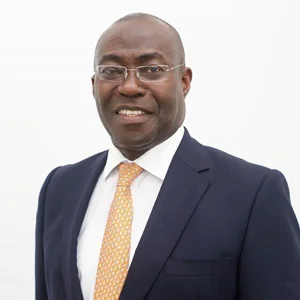
In 2018, Michael Ansah was appointed by the President of Ghana, His Excellency Nana Addo Dankwa Akufo-Addo, to lead the development of an Integrated Aluminium Industry in Ghana. GIADEC is harnessing Ghana’s 900 million tonnes bauxite reserves, its ownership of Valco, as well as its minority stake in Ghana Bauxite Company Ltd., to build and establish a fully Integrated Aluminium Industry (IAI), leveraging the full value chain of bauxite mining, alumina refining, and aluminium smelting, and giving credence to the President’s vision of a “Ghana Beyond Aid”. He holds an MBA from Cranfield School of Management, UK.
Prior to his appointment as CEO of GIADEC, Michael was Senior Vice President (SVP) at Dell Technologies, with responsibilities for Global operations across over 180 countries. In a career spanning over 30 years, he has held a number of senior executive leadership roles. He was a Director/Associate Partner at PWC Consulting/IBM Business Consulting Services. He was also Group Director at Regus Plc., a member of the IWG, and served as CEO for the Ghana Millennium Challenge Account Programme, developing a national strategy for a multi-sectoral programme to remove constraints to economic growth.
AL Circle: Could you tell us about the vision behind the Integrated Aluminium Industry (IAI) in Ghana, spearheaded by GIADEC?
Mr. Michael Ansah: Ghana’s first President, Osagyefo Dr. Kwame Nkrumah envisioned Ghana as an autonomous, modern, industrial state. With a bauxite mine, operational since the 1940’s already in existence in Awaso (Western-North region of Ghana), an integrated aluminium industry (IAI) was one of the vehicles he earmarked to achieve this vision. He secured investments to build the Volta Aluminium Company Limited (VALCO) smelter and the Akosombo Dam which was necessary to provide cheap and reliable power. The Akosombo Dam project was at the time, “the largest single investment in the economic development plans of Ghana.” It was completed in 1965 while the smelter was completed in 1967. All that was needed to make the dream of an IAI a reality was an alumina refinery. The plan was for the smelter to eventually provide the necessary funding to establish the refinery.
Unfortunately, this vision never fully materialized. Currently, all bauxite mined in Awaso is exported, and the alumina needed for the VALCO smelter is imported.
In 2017, President Akufo-Addo identified industrialisation as a major pillar for economic transformation; IAI as one of the strategic anchor industries to lead the industrialisation drive. As a result, the Ghana Integrated Aluminium Development Corporation (GIADEC) was established through an Act of Parliament-The Ghana Integrated Aluminium Development Corporation Act, 2018 (Act 976) with a clear mandate to promote and develop an IAI in Ghana.
AL Circle: There are four projects under Ghana’s IAI Master Plan. Could you share a few major updates on the progress of each project?
Mr. Michael Ansah: Through a series of engagements with Government of Ghana stakeholder organisations, GIADEC has developed a Strategic Outline Masterplan for Ghana’s IAI. The masterplan defines four key projects GIADEC is driving to develop a fully IAI in Ghana. The Masterplan also highlights key components such as infrastructure, allied industries, and the regulatory, statutory, and environmental frameworks required to support the IAI in Ghana.
Project 1 – Expansion of existing mine at Awaso and building of a refinery
Project 2 – Development of a mine at Nyinahin-Mpasaaso and a refinery solution
Project 3 – Development of a mine at Kyebi, a second mine at Nyinahin-Mpasaaso, and building of a refinery
Project 4 – The modernisation and expansion of the VALCO smelter to improve efficiency and increase capacity.
Our implementation strategy involves, investing to revamp and expand our existing businesses; and attracting investments to develop new mines and refineries.
Update on all 4 projects under the IAI
Project 1
GIADEC is working with Ofori Poku Company Limited (OPCL), majority shareholder in Ghana Bauxite Company (GBC), to enhance the stability of operations at Ghana’s only bauxite mine situated in Awaso within the Western North Region. Additionally, GIADEC is working with OPCL to explore opportunities of expanding its concession to include two (2) additional hills.
Project 2
GIADEC signed a strategic development partner, Rocksure International Limited (Rocksure) in 2021. Rocksure has since, completed and submitted the Mineral Resource Estimate Report (MRE) for a concession that covers hills 4,5 & 6 of the Nyinahin range of 10 hills. The report confirms the find of bauxite in commercial quantities. We are currently finalising agreements for the Joint Venture (JV) that will be established between Rocksure and GIADEC. The GIADEC Act, 2018 (Act 976) states a thirty percent (30%) minimum stake for GIADEC, with private participation of up to seventy percent (70%), being held by Rocksure.
Project 3
We recently announced Mytilineos S.A (Mytilineos) as our strategic partner on Project 3A - development of a mine at Nyinahin and the construction of an alumina refinery, at a brief event organised in Accra.
Mytilineos was selected through a transparent and competitive 3-Round investor engagement process that attracted interest from approximately 40 companies from across the world. Following the selection of Mytilineos and successful negotiations with GIADEC, Mytilineos has been awarded hills 7, 8 ,9 & 10 of the Nyinahin range of 10 hills, referred to as Project 3A. The project is expected to produce a minimum of Five Million Metric Tonnes (5MMT) of bauxite and about Two Million Metric Tonnes (2MMT) of alumina annually.
Mytilineos is a leading global metallurgy and energy company, listed on the Athens stock exchange. It is one of the largest bauxite producers in Europe and its aluminium plant, which is a significant player in the European union, has an annual production capacity that exceeds a Hundred and Ninety Thousand Metric Tonnes (190,000 MT) of aluminium and Eight Hundred and Sixty Thousand Metric Tonnes (860,000 MT) of alumina. In the aluminium downstream sector, Mytilineos is one of the biggest independent producers of processed aluminium.
Project 4
This Project is for the modernisation and expansion of VALCO. VALCO is currently a wholly owned subsidiary of GIADEC. The search for a strategic partner to increase the current capacity and make the smelter more efficient is underway. The smelter is currently not operating at full capacity, running on two out of its five potlines, and producing about 50,000 tonnes out of its 200,000 tonnes installed capacity of aluminium per year. Our target is to increase production gradually from the current Fifty Thousand Metric Tonnes (50,000MT) to about Three Hundred Thousand Metric Tonnes (300,000MT) per annum.
These Projects underline our overriding goal of value addition, which is at the core of what GIADEC is about. The Projects will ensure enhanced utilisation of over Nine Hundred Million Metric Tonnes (900 MMT) of bauxite reserves across three locations, Awaso, in the Western North Region, Nyinahin and Mpasaaso, in the Ashanti Region, and Kyebi, in the Eastern Region.
AL Circle: With recent significant growth and development in Ghana's aluminium industry, how does GIADEC plan to leverage this momentum for further advancement?
Mr. Michael Ansah: GIADEC is on track to delivering Africa’s first IAI and have recorded some successes along the way. We are on course with our partner on Project 2, Rocksure through a J V partnership, to secure a mining lease following the completion of MRE on Hills 4,5 & 6 with favourable results showing commercial quantities of bauxite deposits. This will pave the way for the development of a mine with a refinery solution.
The announcement of Mytilineos as GIADEC’s strategic partner for Project 3A, for instance, comes as a major boost as Project 3A is an integrated project which involves the building of a refinery. This will be the turning point for the country’s aluminium industry as it will put an end to decades of exporting raw bauxite since the country started mining bauxite in the 1940’s by the Ghana Bauxite Company. Mytilineos is expected to, first, undertake MRE on hills 7,8,9 & 10, secure a mining lease and proceed to deliver a bauxite mine and a refinery.
GIADEC currently holds a twenty percent (20%) stake in our operating Bauxite mine, GBC, and will continue to build on the successes, and advance its plans of working with its majority partner, to drive investments that will ramp up production from the current One Million Metric Tonnes (1MMT) of bauxite to Five Million Metric Tonnes (5MMT) in line with GIADEC’s Masterplan and also make concerted efforts to secure a strategic investor that will partner VALCO to inject capital needed to execute Project 4 – the retrofitting and modernisation of the VALCO smelter to increase its capacity and improve its efficiency.
Another significant development that will bode well for the aluminium industry, especially at the downstream level, is the set-up of global automobile giants in the country including Volkswagen, Toyota, Rana Motors, Sinotruck, Japan Motors, and a host of other companies who have already expressed interest to set-up operations in Ghana. This means a ready market for the increased volume of aluminium that will be produced from a retrofitted and modernized VALCO.
AL Circle: Can you discuss the strategies and initiatives being implemented to ensure Ghana's aluminium industry maintains environmental responsibility and social benefit?
Mr. Michael Ansah: Our commitment to mining with purpose, is underlined by our adherence to local and international environmental standards. We have established an environment working group to ensure compliance. Where required, important studies such as Biodiversity and Hydrology studies, and Environmental Impact Assessment studies are conducted in collaboration with relevant agencies like the Environmental Protection Agency of Ghana (EPA) to guide the development of action plans. The action plans will provide guidelines to ensure responsible mining methods are practiced, technology is leveraged, and adherence to overall best practice.
AL Circle: How is GIADEC promoting collaboration with stakeholders, both domestically and internationally, to fulfil objectives outlined in the Master Plan?
Mr. Michael Ansah: Stakeholder engagements and consultation is at the heart of GIADEC’s operations. GIADEC recognises the enormous role that key stakeholders, both domestically and internationally, will play in the development of an IAI. It is for this reason that GIADEC, at every level of its operations, has identified key stakeholders that will help drive the execution of its masterplan.
GIADEC has established working groups for Transport, Power, Industrialisation and Environment to ensure that the plans and timelines of key government agencies responsible for developing the infrastructure needed for the IAI align with our plans and timelines.
All working groups have representation from key government agencies and institutions and meet periodically to share updates on the progress of work.
GIADEC meets with key economic and environmental Civil Society Organisations (CSOs) to share updates on the development of its masterplan and take suggestions, input and alternative ideas on how these projects could be better executed.
We also collaborate and engage our mining communities, to build a partnership of trust. We have established an active presence in each community, through “19-member Committees”, with membership drawn from all sections of the communities, including traditional leaders, representative groups, and civil society organisations.
GIADEC continues to promote a healthy collaboration between key industry players in the aluminium industry and has taken advantage of forums like the Fast Markets Aluminium Conference to make presentations on GIADEC’s masterplan and how we are developing Ghana’s Integrated Aluminium Industry. Forums like that provide the opportunity for investors to learn more about what we are doing in Ghana and attract investors.
We also attend the Mining Indaba Conference in South Africa for similar reasons and that has also provided opportunities for us to meet with industry giants on how we can collaborate on a mutually beneficial course towards advancing the IAI.
GIADEC collaborates with both domestic and international media in sharing its successes and key updates with the public. The Corporation has setup a press corps that it engages on a regular basis.
The Corporation will continue to deepen its collaborations with these key stakeholders to ensure the advancement of the development of the IAI.
AL Circle: Could you elaborate on the strategies aimed at developing the downstream industry in Ghana?
Mr. Michael Ansah: In line with our masterplan which proposes to make available up to Three Hundred Thousand Metric Tonnes (300,000 MT) of aluminium for the downstream industry, one of the things we have done is to engage with key stakeholders to identify areas in which policy can create an enabling environment for investment and growth as well as to identify key sectors that can drive demand such as automotive, construction, packaging and electrical. GIADEC’s goal is to drive the consumption of a significant portion of the anticipated volumes of aluminium by the domestic market, minimizing the need for the importation of finished products.
Additionally, once the domestic market needs are met, the goal is for Ghana’s downstream producers to leverage trade opportunities such as those provided by the African Continental Free Trade Area (AfCFTA) to supply the subregion and beyond.
We have identified the automotive, construction, electrical and packaging industries as the focal points to galvanize growth in the industry.
Currently, Ghana’s downstream sector remains underdeveloped using less than Seven Thousand Metric Tonnes (7,000MT) of the about Fifty Thousand Metric Tonnes (50,000 MT) of aluminium VALCO currently produces.
A thriving Downstream Aluminium Industry will be a vibrant industrial powerhouse made up of manufacturing companies creating thousands of jobs for the teeming youth.
AL Circle: What challenges does GIADEC anticipate in executing the Master Plan in coming years, and how does it intend to overcome them to achieve its long-term vision?
Mr. Michael Ansah: With the kind of ambitious, multi-year industrial development and transformational programme we are driving, there are bound to be challenges.
A major challenge we anticipate will be delays to the delivery of infrastructure underpinning the IAI. In particular, the delivery of an efficient rail system from mine to the port in order to discourage the reliance on road as the primary mode of transportation.
Another challenge is the availability of power at competitive rates and the need to develop clean energy solutions.
To address some of these bottlenecks on the infrastructure side, we recently held an infrastructure workshop with our Power and Transport working groups to discuss ways that we can address the gaps and dependencies between the delivery of supporting infrastructure and the IAI Projects.
AL Circle: Since 2019, Ghana's aluminium industry has come a long way. What is GIADEC's roadmap for the next five years?
Mr. Michael Ansah: The next five years will be exciting times for the country as we anticipate the coming on stream of some of the key projects being executed under the IAI. GIADEC will ensure that it works within its strategic plan guided by the project timelines to ensure that Ghana’s IAI is at a significant level of development.
The IAI, when fully operational, is estimated to contribute about Twenty-Four Billion Ghana Cedis (GHS 24 Billion) to the country’s GDP. This is the overarching goal of GIADEC, to ensure that the IAI serves as the vehicle for industrial transformation that has eluded this country for decades.
The next five (5) years will thus be integral, with the foundations put in place leading to the successful development of an IAI. The opportunity for us, is to become Africa’s first I AI, to boldly diversify our national economy, deliver high value jobs, and to become a leading industrial powerhouse in Africa.
The future that GIADEC envisions across the bauxite aluminium value chain, is informed by current trends. Climate change, the energy transition, and the quest for a decarbonised future, will require an increase in global demand for aluminium, with demand for aluminium and related products set to grow significantly by 2050. The steps we are taking today, to position Ghana for success, indicate that we are on the right side of history, and we remain committed to our vision, “to be the leading integrated Aluminium Company in Africa.”

