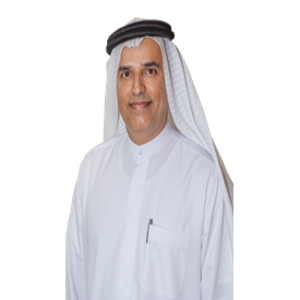
“The aluminium sector, with EGA at its heart, generates some $5.5 billion of activity in the national economy, accounting for 1.4 per cent of national GDP”- Abdulnasser Bin Kalban, Chief Executive Officer, Emirates Global Aluminium.
- Category
- Interview
- Date
- Source
- AlCircle.com
- Edited By
- Heena Iqbal
Emirates Global Aluminium is the world’s largest ‘premium aluminium’ producer and the biggest industrial company in the UAE outside oil and gas. EGA operates aluminium smelters in Abu Dhabi and Dubai, an alumina refinery in Abu Dhabi, and a bauxite mine and associated export facilities in the Republic of Guinea.
EGA achieved record cast metal production of 2.64 million tonnes in 2018. EGA ranks among the five largest aluminium producers in the world. To get more insight into the company’s strategies and outlook for global aluminium industry demand and supply in 2020, read on the interview of none other than Abdulnasser Bin Kalban, Chief Executive Officer of Emirates Global Aluminium.
AlCircle: EGA has recently marked 40 years of aluminium production in the UAE. What are the key strategies that have been helping EGA to maintain consistent growth?
Abdulnasser Bin Kalban: The first metal production at our site in Jebel Ali– then known as Dubai Aluminium – was on 12 November 1979. Our founder, the late Sheikh Rashid bin Saeed Al Maktoum, had signed a decree establishing Dubai Aluminium in 1975 as part of a vision to diversify the economy and create opportunity for people.
Since 1979 we have turned that vision into reality. EGA has grown to become the largest industrial company in the UAE outside oil and gas. The aluminium sector, with EGA at its heart, is one of the UAE’s most significant industries.
There have been many foundations to our growth. Chief among them has been our people, both UAE Nationals and talented individuals from around the world who have chosen to work in our company. Many of our employees stay with us for decades - more than 600 people have worked at EGA for more than 25 years.
Another important foundation has been our focus on continuous improvement and innovation. We began our suggestion scheme for our employees in 1981 and it is one of the longest-running suggestion schemes in the world. Just in recent decades we have received over 500,000 suggestions from staff, delivering savings of over $100 million.
We also have a scheme to engage teams in making improvements, and more than 25 years ago we started developing our own technology. Our latest technology is amongst the most efficient in the world. We have used EGA technology in every smelter expansion since the 1990s and retrofitted all our older potlines. Today technology is also a source of revenue for EGA.
The last foundation I would like to mention is our customer relationships. EGA is the world’s largest producer of value-added products, and we focus on making metal to customer specifications. We have more than 350 customers in over 50 countries, and over 75 per cent of our customers have bought metal from us for at least 10 years.
AlCircle: The GAC project in Guinea and Al Taweelah alumina refinery in Abu Dhabi are the two strategic upstream growth projects for EGA. How important are the Al Taweelah refinery and the Guinea bauxite mining project to EGA's future plans?
Abdulnasser Bin Kalban: Al Taweelah alumina refinery and Guinea Alumina Corporation both began production in 2019, and are central to our strategic expansion upstream in the aluminium value chain. These projects transform EGA into an integrated aluminium producer, secure our supplies of natural resources at competitive prices, and create new revenue streams for EGA.
On the alumina side, EGA was the only major aluminium producer without its own supply of the feedstock for aluminium smelters. As everyone in the industry knows, the price of alumina is no longer directly linked to that of aluminium, which makes it a strategic imperative to control at least a proportion of our alumina supplies.
In Guinea, we saw a significant opportunity to become a global bauxite exporter, capitalising further on the world’s demand for aluminium which is growing in the long term, whilst also indirectly securing our own supplies of bauxite for alumina refining.
We now have a significant operation in each step of the value chain from mine to metal, enabling us to serve our customers better and strengthening our company for every stage of the economic cycle.
AlCircle: EGA hosted a training session conducted by the Aluminium Stewardship Initiative (ASI) for UAE aluminium companies. What else has EGA done to improve its company-wide sustainability performance? How do you plan to continue to align yourself with sustainability in the future?
Abdulnasser Bin Kalban: In everything we do, EGA aspires to be measured amongst the world’s leading metals and mining companies in meeting our safety, environmental and social responsibilities.
We were the first Middle East headquartered company to join the Aluminium Stewardship Initiative, and alongside other industry and civil society members we participated in the creation of the ASI Performance Standards. We support the ASI approach of creating a global consensus on what constitutes best practice in the production of aluminium and its use. Our approach to sustainability is to align ourselves to these performance standards developed specifically for our industry, and we are making good progress – we were the first in our region to achieve a certification to the ASI Performance Standards, for our Al Taweelah site.
We produce an annual sustainability report that details our approach, successes and challenges, and I would like to give you a couple of examples.
The first is that we recycle all of our spent pot lining, which is a significant by-product of aluminium smelting. Spent pot lining has been a challenge for our industry for decades, but we have developed a sustainable solution by working with local UAE cement companies who can use it as a feedstock. This is the result of an effort over many years to find a productive use for this material. We are a leader in our industry in re-using this waste, and we share what we have learned with others through industry bodies such as ASI and IAI.
Another example is in Guinea, where our GAC project has created 1,000 permanent jobs in operations, which means opportunity for people and their families. We have also invested $14 million so far in social and environmental projects in neighbouring communities. Investment in education, to use just one example, has seen us build 12 schools which are now attended by 5,600 children. That is something we are very proud of at EGA.
AlCircle: What will be EGA’s focus areas in aluminium for the year 2020?
Abdulnasser Bin Kalban: We have begun production at both Al Taweelah alumina refinery and Guinea Alumina Corporation. Our immediate priority is to ramp up these projects safely and efficiently, so they deliver benefit to our business for years to come.
We are also further developing our technology. Moving forward, EGA plans to embrace Industry 4.0 - the trend towards automation and data exchange in manufacturing technologies and processes – across our business.
AlCircle: What are the impacts of falling global aluminium prices? What is your price forecast for primary aluminium in 2020?
Abdulnasser Bin Kalban: We have our own view at EGA, but we are not in the business of making public forecasts. The aluminium industry has been going through a challenging period. For much of last year, we faced higher prices for our raw materials. We are currently facing lower benchmark prices for finished metal. The long-term impact of the Coronavirus is still unclear but it is causing uncertainty now.
In this environment, all aluminium companies must closely manage their costs as well as find new sources of revenue and that is what we are doing at EGA. It is also clearly important to carefully consider margin per tonne rather than just maximising production.
AlCircle: The UAE is the fifth largest aluminium-producing country in the world. What is the contribution of the aluminium sector to the economy?
Abdulnasser Bin Kalban: EGA is the largest industrial company in the UAE outside oil and gas. Our product is the largest made-in- the-UAE export after oil and gas, and an important part of the UAE’s global trade. But over the past 40 years an entire sector has grown around us in the UAE, and today we sell about 10 per cent of our metal locally. The aluminium sector, with EGA at its heart, generates some $5.5 billion of activity in the national economy, accounting for 1.4 per cent of national GDP.
The aluminium sector supports 60,950 UAE jobs. That means 1 in every 100 people working in the UAE is employed in the aluminium sector, its supply chain, or through spending of wages by the sector’s employees.
AlCircle: What is your outlook for global aluminium industry demand and supply in 2020?
Abdulnasser Bin Kalban: In the early weeks of January, before the Coronavirus emerged as public issue, many analysts were increasing their forecasts for global aluminium demand for 2020. Positive signals included growing manufacturing confidence, progress in a US-China trade deal, and a weaker US dollar. However the Coronavirus has created considerable uncertainty.
AlCircle: Do you think growing aluminium production in Asia will put pressure on the global aluminium market in 2020?
Abdulnasser Bin Kalban: We do not yet understand the impact of the Coronavirus so it is hard to say. However, as new capacity comes online in China this puts pressure on the SHFE price. That could put pressure on the LME price, although the two are not fully-correlated. Any changes in the strength of the dollar could have more of an impact on LME.

