“The aluminium industry’s specific issues related to regulation, geopolitical risk, legal limits on the use of natural resources, have created additional challenges”, Frederic Pereira, Head of Marketing at Fives Aluminium
- Category
- Interview
- Date
- Source
- AlCircle.com
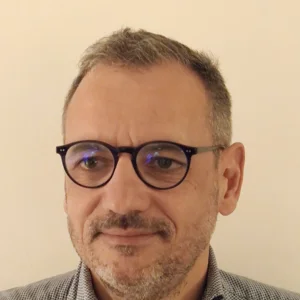
Frederic Pereira is Head of Marketing at Fives Aluminium. In this role among others, he is responsible for leading the business strategy for services and digital innovation. After studying industrial engineering in France, he started working within the automotive industry moving to the aluminium sector in 2006, joining French company ECL which now forms part of the Fives Aluminium division. He has extensive experience in engineering, project management, and business development.
AlCircle: How do you think the year 2022 will shape the demand-supply scenario of the global aluminium industry?
Mr Frederic Pereira: We can see that the demand for aluminium is set to grow at an increasing rate going forward, driven largely by a growing appetite for environmentally friendly solutions in transport, infrastructure, energy and food security.
Meanwhile, aluminium industry-specific issues related to regulation, geopolitical risk, and legal limits on the use of natural resources, have created additional challenges. Several trends will determine which types of aluminium companies will prevail in the future
Several drivers will challenge the future of the aluminium producers to improve business outcomes: such as the transition to a low-carbon economy, access to resources, big data and digitization, and development of workforce skills.
AlCircle: Do you think the Ukraine-Russia conflict will continue to cause supply concerns in the global aluminium industry through 2022?
Mr Frederic Pereira: Russia is a key player in the aluminium sector. Russia-based RUSAL, as one of the largest aluminium producers, has played an essential role in global supplies and is historically a Fives’s customer.
We closely monitor developments continuing to follow our ongoing projects and services to the Russian smelters, in compliance with the applicable laws and regulations. Although difficult to estimate at this stage, this episode will undoubtedly have a substantial impact on our activity in the region and potentially worldwide.
AlCircle: What innovative solutions are you planning to develop for the global aluminium industry in 2022?
Mr Frederic Pereira: To support our customers in their transition towards green production of aluminium we have introduced successful solutions contributing to improvements in the environmental performance of smelters.
These innovations aim to optimize CO2 emissions per ton of aluminium produced, reduce energy consumption and reduce polluting emissions while improving working conditions:
- In carbon, the Helios Advanced Firing Control System (FCS) offers clean and efficient combustion in the anode baking furnace.
- Digitalization across the whole anode production process with Amelios Suite allows optimized carbon consumption and better monitoring of anode quality. It potentially reduces the amount of CO2 emitted per ton of aluminium produced by 35 to 70 kg, whilst also reducing anode production costs by 2.5%. Consequently, our Amelios Suite solution has been selected by the Solar Impulse Foundation as one of the #1 000 solutions to change the world
- In the reduction lines, CAFD Eco2 (Crust Alumina and Feeding Device) contributes to reducing the anode effect and the compressed air consumption of the smelter. The Fives' E-GTC allows for enhancing smelter environmental performance and reducing operating costs through constant monitoring of emissions and equipment. The Ozeos filtering unit together with the Cascade feeding system offers Fives’ GTC a level of HF (Hydrogen Fluoride) emissions and energy consumption unmatched on the market.
Furthermore, our main target is to continue to develop innovative digital tools to help our customers to improve their productivity. These include easy access to operational information, everywhere at any time, preventing security concerns with their IT systems, improving operational efficiency thanks to data mining and analytics, switching maintenance from reactive to predictive, and elimination of physically demanding tasks (generating heat stress for example). We also have deployed OEM to customer interfacing tools such as the online portal Fives Connect providing privileged access to numerous digital services. We continue to expand the functionality of our Machine health monitoring system SMARTCrane which following its successful introduction continues to be connected to increasing numbers of special process cranes across smelter sites. We have recently launched SMARTVibro for the Vibro compactor unit (anode forming) within the paste plant, and developments continue on the SMART filter for GTC.
AlCircle: Do you think Industry 4.0 will continue to play a pivotal role in revolutionising the global aluminium industry?
Mr Frederic Pereira: We are focused on the full life-cycle of equipment through design, production and maintenance, and strongly believe that Industry 4.0 is a true game-changer for the aluminium production process consequently we offer a large range of connected equipment to our customers. We are also looking to push the automation of equipment further to make it more autonomous and include the development of robotic solutions.
We see Industry 4.0 as a way to help existing smelters to reach a new threshold of competitiveness and sustainability, leveraging several main drivers such as: improving asset use and efficiency, optimizing processes, cost reduction, improving safety and reducing environmental impacts with efficient energy usage. Industry 4.0 will continue to bring new tools for the data mining approach, which will help to obtain gains from improvements to process performance. As our customers around the world are relying more and more on the industrial Internet of Things, one of our main priorities is to design robust digital solutions ensuring cybersecurity.
The challenge will not be only in getting the measurements from the process and equipment, but how to handle this data efficiently and quickly so that necessary actions can be made at the right place at the right time. To meet these specific needs of operations and plant managers, we offer adapted digital architectures and practical applications tailored to each requirement.
The Industry 4.0 solutions aim to reduce the time required for data collection and analysis and to provide refined data for quicker response. Such refined data will also ease horizontal and vertical sharing across the smelter value chain, which for example can transform unproductive and time-consuming maintenance routines into a smart asset management program or optimize processes across the smelters. This is why, as experts in equipment and process, we have developed a set of proprietary digital tools, those mentioned earlier, that work across the smelter, to manage data analysis and measurement, and we can adapt it to the usage and technology of the customers.
In addition, digital transformation will require a holistic vision, examining the objectives of the different plant processes, identifying synergies, and looking at the different competencies that can be brought by the smelter organization and external partners such as OEMs.
AlCircle: Are you planning to upgrade any of your existing technologies to help aluminium companies enhance their production?
Mr Frederic Pereira: Through our product companies Fives ECL, Fives Solios and a well-established service team in subsidiaries around the world, Fives has already engaged and planned to upgrade several technologies across the smelter areas.
Anode change performance is a potline critical operation, here we have developed several technological bricks that can be integrated into the Pot Tending Machines, to automate manual sequences such as anode covering, anode crust breaking, and self-crane positioning.
Other systems designed to optimise Tapping operations through control and regulation of tapping flow rates reduce significantly excessive bath removal improving process stability and impacts through the downstream activities
When converting plants to natural gas, Fives supports its customers in the modernization of their anode baking systems by providing an optimized injection system to reduce NOx emissions at the source. The integration of the anode baking module of the Amelios suite also allows data analysis and provides key performance indicators to monitor and optimize the baking process.
AlCircle: Of all your solutions and technologies, which one do you envisage to have the maximum demand in the aluminium industry this year?
Mr Frederic Pereira: Given the drivers of our customers, which are the increase in aluminium production and the tendency to be carbon neutral, we expect an increasing demand over the next years for production “creeping” projects on existing aluminium smelters. Investment profitability, time to market and performance risks are the key drivers. In addition, the 4.0 road maps of our customers will drive the demand for control platforms, connectivity and automation. We are already in these different digital segments, with Machine Monitoring software, Online Advanced Scoring Sensors and advanced control, and a range of remote services mobilizing a comprehensive set of technologies and experts. We anticipate expanding our portfolio applications such as Virtual Reality applications for PTM training as we are also leveraged by multiple stakeholders to provide it.
AlCircle: As most of the aluminium giants are targeting net-zero emissions, have you thought of inventing any solutions to help them achieve the same?
Mr Frederic Pereira: For several years, we have been working on solutions to assist aluminium smelters in their net-zero programs, taking advantage of the following drivers:
- Treatment of pollutants in fumes: the capture of fluorinated gases, NOx, SOx, VOCs, PAHs and solid releases (fine particulate matter)
- Limitation of energy consumption (GTC, compressed air, FCS)
- Anode quality improvement with the Amelios Suite, labelled by Solar Impulse Foundation
- Limitation of resources used (scrap during the production of aluminium, and the manufacture of our equipment)
- Anode effect limitation (release of CF4 and C2F6)
AlCircle: Which industrial sector do you expect to drive the demand for aluminium in 2022?
Mr Frederic Pereira: According to CRU, transportation, construction, packaging and energy are the four key sectors that will drive demand, accounting for 75% of the total metal required. Transportation will be the fastest-growing sector in terms of absolute aluminium demand in the next decade (Consumption growing around 60%) driven by decarbonisation policies and the shift from vehicles powered by traditional fossil fuels to electric vehicles.

