Tariff Issues, New Markets, Manufacturing Development, Sustainable Growth; a conversation on aluminium with Maurizio Sala, President of Amafond
- Category
- Interview
- Date
- Source
- AlCircle.com
- Edited By
- Beethika Biswas
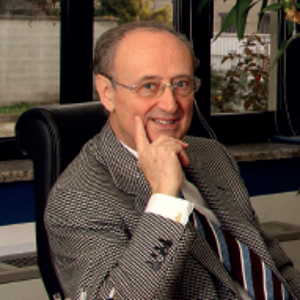
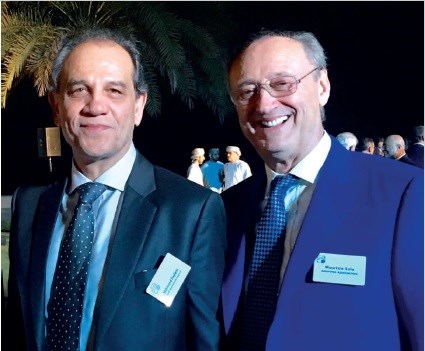
The Gala Dinner of the Gulf Aluminium Council, held in Oman on March 21st, provided the opportunity for a long conversation with Maurizio Sala, President of Amafond and of Foundry Ecocer, an excellent connoisseur of the aluminium industry and of the Middle East area.
The metal foundry segment which Maurizio Sala represents is a significant part of Italy’s manufacturing industry which is successful in the metallurgical value chain. Amafond brand can compete on international markets with excellent results in the advance sectors of metal machining and of light alloys for the automotive industry, mechanics, electronics, building and construction.
Q: Let us begin with one of the hottest topics these days, US tariffs on aluminium and steel enforced by Trump. Even before the announcement by the US President, a wide range of hypotheses had been aired regarding what could have happened following such provisions and what should be done to enact the right corrections. What is your opinion on the subject?
Maurizio Sala: As a first impression I must say that perhaps there has been too much talk, often enough inappropriate, about the US President’s action, without having ideas and knowledge on the subject. Now we know that Trump’s objective is China and the imbalance brought about in the current global trade system by the random trade activities by China, where everything has been thought of in order to sell at all costs, and certainly not the EU or other countries which over time have tried to create with the WTO a system of somewhat reliable rules. There is no doubt that the Chinese issue exists, but the right way to tackle the problem is not the commercial warfare that Trump decided to wage, probably for electoral reasons, but a greater opening of the markets.
Not everyone agrees in this respect, some European industry associations reacted to the tariffs with a somewhat high-strung alarm, and were already willing to demand protective countermeasures to favour European metal producers. They therefore once more showed the old strategy of only looking at the interests of a minority of companies in the basic metallurgy domain, rather than thinking that the symmetrical protectionist countermeasures could destroy the competitiveness of all the processing and end-user segments in the aluminium and steel industries in Europe.
Q: It is evident that you are looking with great interest at the development of the manufacturing industry and in Italy we have a rather interesting situation in this respect, but we are forced to express our excellence in a variety of segments since the domestic market is still weak. We need to become more global, but the hurdles are still high and it is not easy. Is it the only way to go?
Maurizio Sala: Certainly this is the way to go, I cannot think of any other. The quest for excellence for us is mandatory, since, we have to live with a global market where there are players whom we cannot beat. We are lucky enough to be able to do this, because we are strong in this respect, with great contents in terms of experience and of technical and managerial knowledge. This is a given fact that the foundry sector in Italy changed, and this was a very positive change. Just ten years ago, nobody would have guessed that the Italian light alloy foundry segment would have taken on a leading role in widely used production technologies for automotive sector.
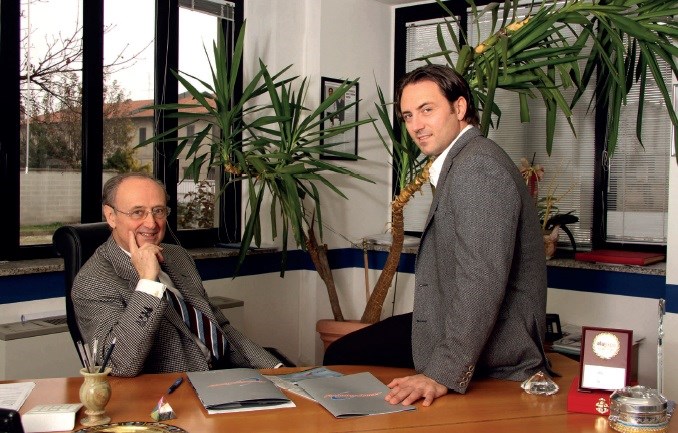
Maurizio Sala with his son Fulvio, CEO, Foundry Ecocer
Q: Let us continue to talk about the technological content of the metallurgical system in Italy, especially light alloys. You were in India a few months ago, representing as Amafond’s President the Italian industry of foundry plant technologies, along with other Italian companies manufacturing plants and machines both for aluminium processing and for advanced downstream applications. Given that these operations are definitely positive to open up relationships with new international markets; do you think we can talk about teamwork which could go beyond the innate Italian individualism?
Maurizio Sala: The experience deriving from the relationship with the Indian Aluminium Association in our January meeting was a first constructive step to establish closer relationships between two industrial light metal systems, which are so different but also very complementary. It was a significant step, to be followed by a shared working program with a well-defined series of concrete projects within a reasonable framework. There are Italian industries with great experience and well rooted in this great country who could become the leaders of projects with broad themes, where an entire network of our companies in the same value chain could be involved. I am thinking of the development of semis and light alloy products for aluminium packaging and for preserving foods, or for the production of light rail vehicles, which were discussed during our recent series of meetings. A regular follow up and a patient persuasion is required for the development of a scheduled process. Especially in the initial phase, the role of associations and their capability of promoting a greater interest of the respective governments in such processes will be essential.

Q: As an entrepreneur of this segment, do you consider any other markets to be particularly interesting in the global scenario?
Maurizio Sala: Right now we are having this conversation in Muscat, as we are taking part in an event along with the managers of the Gulf’s aluminium industry and their main suppliers and partners. The Middle East is an area which should be observed very carefully, considering its importance for the aluminium sector. For the Italian companies in this industry this is a special region because the Gulf’s metal is a great resource for processors and end users of light alloys in the EU. It is important for us to establish long-lasting relationships, not only between single companies, but also between institutions, which is actually what we did through our strategic partnership with the Gulf Aluminium Council.
Speaking as an entrepreneur, for several years now, my company has opened new lines of business in this area, especially for continuous casting for aluminium rolled products and sheets. I believe in the development of this segment and we increased our capability of taking action on international markets, thanks to top level professionals, such as Anthony Tropeano who for many years acted as a ground-breaker at a global level for this specific segment. This is a broad project, where we have been investing for quite some time. We are also carrying out a series of metallurgical studies and researches regarding the treatment of liquid metal and the mechanisms of solidification of different continuous casting alloys, as an absolute necessity.
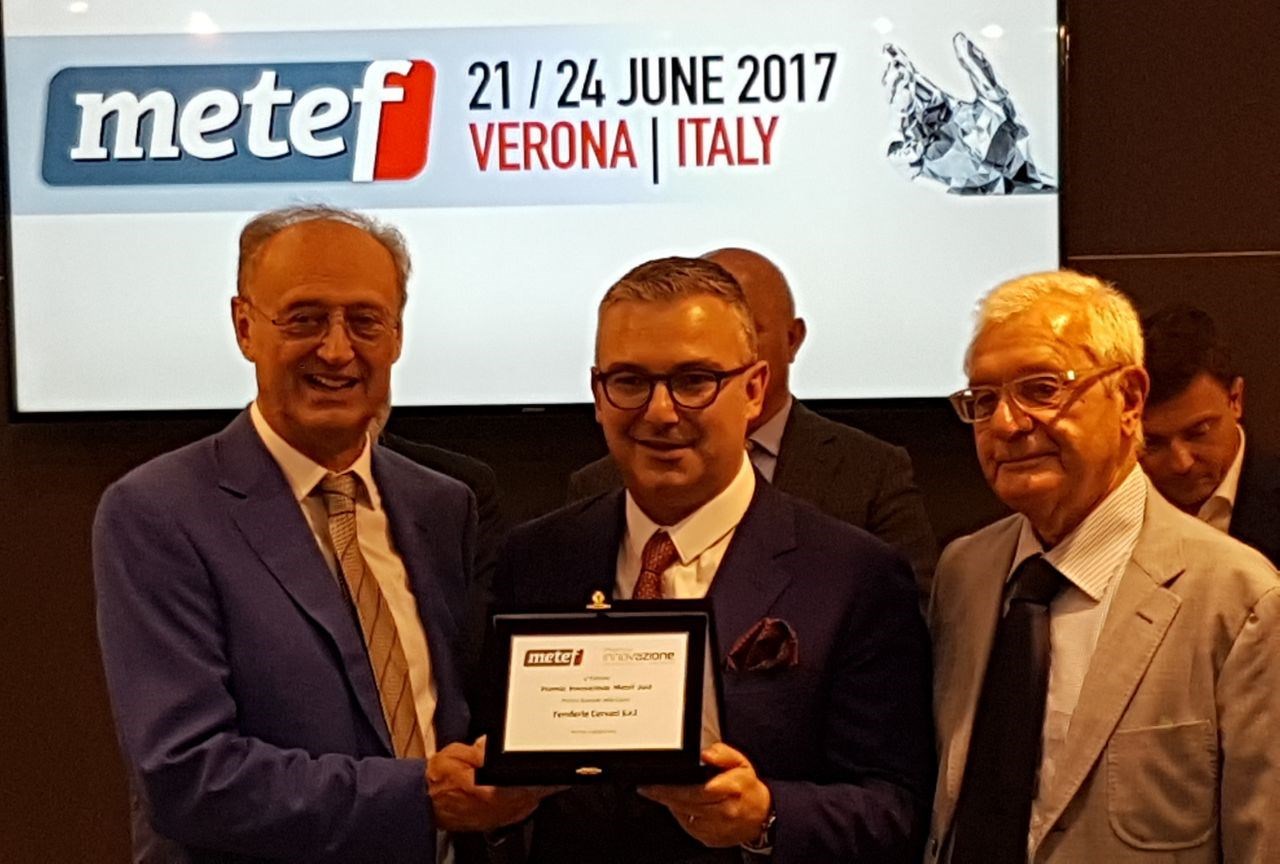
Even Russia should be the object of great attention, being another main player in the aluminium world with interesting downstream development potential. During the last Metef we began interesting relationships with the Russian Aluminium Association and Rusal. We shall therefore definitely take part, as Foundry Ecocer, in the first Russia-Italy Aluminium Forum. We should also continue to focus in the United States market through our associates who are active in that part of the world. We shall be present with METEF at the die casting congress organized by the American association NADCA on October 15th–17th.
During this brief conversation we discussed many points linked with the possibilities of development for the aluminium industry in a number of segments. How would you like to conclude our meeting?
Maurizio Sala: I believe today the real great objective of our industry is to encourage and facilitate sustainable use of aluminium through technological innovations. Great world economies like Russia and India are looking in this direction, and this has also been the objective of the Gulf States during the past few decades of the aluminium industry. Following this example we shall provide the light metal with a great future in order to achieve its essential objective. The downstream industry, the real driving force of the metal’s industrial system, will support and uphold the goal of major aluminium producers who do not just think in terms of rapid growth, but also in terms of sustainable development.
Disclaimer: “The interview is published in AlCircle in collaboration with A&L journal. The information presented herein is neither intended nor implied to be a substitute for professional advice. The views and opinions shared in the interview section of www.alcircle.com are unique to the interviewees and do not necessarily reflect the viewpoint of www.alcircle.com."

