Survey on metallurgy and transport in Russia, with an interview to Antonello Colussi, CEO of Danieli Russia by Federico Piazza
- Category
- Interview
- Date
- Source
- AlCircleNews
- Edited By
- Heena Iqbal
The aluminum industry in Russia is not catalyzed only by the presence of the giant Rusal, the world's second largest group in the primary product market. In fact Russia also boasts advanced laboratories and research centers, such as those that gather every year at the Congress "Non-ferrous metals and minerals" at Krasnoyarsk, in the mining region of Siberia. In the field of research for innovation in industrial applications, for example, the work of MISIS, the Russian National University of Science and Technology, deserves to be highlighted for experimenting new aluminum alloys (Al-Ni-La crystallization) that enable a significant reduction in weight for transport, aeronautics and automotive.
Plenty of innovation particularly regards aluminium for transports. For example, it concerns new elaborations on the issue of healthiness of interiors of railway carriages, with antiseptic air conditioning systems and carriages with AntiCovid doors and windows, as a result of special metal treatments, appliable also to aluminum, as such those engineered by the Italian specialized company Gaser.
Railway tracks with a third leading track in metropolitan railway systems is another innovative feature. Automation and sensors to increase safety are very important in rail transport. On this matter, for example, train wheel axis can be equipped with particular chip controllers capable of real-time monitoring of both wheel functioning and the state of rails. These technological innovations developed in the West have not yet been implemented in the large railway networks of Russia and India, and more generally in Asia, where large investments in the rail sector are expected. But precisely for this reason, the ongoing experiences and the debate on mobility in Russia offer a particular perspective of innovation in the transport sector in terms of scientific, technological and industrial intersection between the East and the West.
In this context, aluminum is expected to increasingly combine with steel in the field of applications for transport, especially in the rail sector. This is a great challenge for ferrous and non-ferrous metals operators, both in the primary and downstream segments. In this regard, a study on metallurgy and rail transport in the aftermath of the COVID 19 season has been started by ArtValley and IIMH, with a particular focus on the needs of the Russian market.
The big corporates operating worldwide in the steel and aluminum industries are today facing a serious social and economic depletion, caused by the pandemic crisis. Metallurgical companies around the world have been forced to downsize production and operations, and partly diversify their activities in smart working modality. However, despite the health crisis being still seriously affecting Brazil, the United States, Russia and India, industrial production has globally resumed, especially in Europe and Asia.
Russia is also preparing to revive its economy. Since Russia's leading global role in the non-ferrous metals sector is matched by the importance of its big industrial steel makers, such as Severstal, Evraz and OMK, we have interviewed a Russia-based European manager in the field of technologies for both ferrous and non-ferrous metallurgical industry. Antonello Colussi of Danieli Russia tells us about the particular adjacency between light metals and steel in this strategic country.
Based on your long-time experience in metallurgy in Russia, how do you see the outlook for the aluminum market in this country?
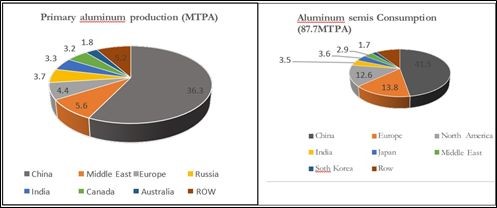
Russia is today one of the world’s largest aluminum producers, with an output of slightly more than 4 million tons of primary product by Rusal in 2019 – the equivalent of about 6% of the world’s total. Rusal is an important primary aluminum supplier for Europe, which produces only 2 million tons primary aluminium out of its around 12 million tons a year global metal consumption. And Russia alone provides over 15% of Europe’s imported 8 million tons primary aluminium.
Certainly, shrinking demand of domestic and worldwide demand in the wake of Covid-19 crisis in 2020 is affecting Russia too, but aluminium is expected to remain highly required in many sectors over the next years.
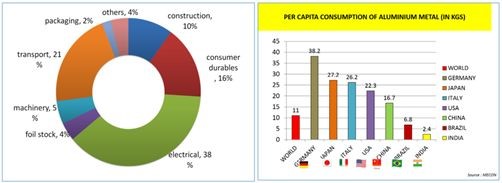
Specifically, the final destination of Russian aluminum in 2019 was in the industries of construction (26% of the total), transport (21%), electrical engineering and energy transmission (17%), and packaging (16%).
What sector do you think is going to have the highest combination of steel and aluminum?
Certainly these two metals and their special alloys will increasingly combine in the transport sector, particularly in subway and railway systems for both passenger and freight. The reason is that carriages and freight wagons require steel for load-bearing structures as well as aluminum for bodywork and food and gas containers. Industrial reseach will prove very important on this matter, and Italy being the world’s third largest industrial aluminium consumer after China and Germany will play a crucial role. For instance, foundry machinery manufactured by the Italian members of the business association Amafond, chaired by Maurizio Sala, is among the world’s most technologically advanced technology.
What’s your view on the Russian aluminum industry?
First of all, today the Russian market is being negatively affected by the pandemic, which has brought the world price of primary metal down to $ 1450 / t, with the trend only recently reversing up to above $ 1650 / t. This difficult period follows the struggles in 2018, when market restrictions imposed by the Americans forced Russia to take extraordinary measures.
The country’s industry is heavily influenced by the fact that UC Rusal is the world's second largest producer of aluminum and alumina products. With a global turnover of around 10 billion dollars and net profit of 1 billion, listed on Moscow and Hong Kong stock exchanges, and operating with production plants that employ over 70,000 workers, UC Rusal covers more than 6% of the entire world’s primary aluminium and alumina products market.
What is Danieli’s project for aluminum in Russia?
We are the world leading manufacturer of lamination and extrusion plants. Specifically in Russia, we made a first major project of electrode extrusion machinery. We are certainly moving in this direction, as we are confident that our role in the field of aluminum technologies will grow, although not at the same extent as we have done in the steel sector. For aluminum as well as for steel, we are ready to provide first-class product innovation and production flexibility comparable to our international competitors.
How is Danieli progressing in the steel industry?
In the Russian steel technology market, Danieli won 90% of the tenders for steel plants for various manufacturers in 2019. However in April 2020 Russia’s steel production slumped by 20% on March, and the trend decline is even more remarkable on the average monthly production in 2019. With an output of 4.7 million tons in April, compared to 5.8 million in March, over 6.2 million in January, and around 6 million tons month average in 2019, Russia ranks today as the world’s fifth largest producer. Far behind China, like everyone else.
What is happening in Russia’s heavy industry?
Certainly enough, the so-called "heavy industry" remarkably stands out on the overall economy of a country rich in raw materials such as Russia. Both steel and aluminum are key sectors. All the more because, among its strengths, the Russian steel industry has always benefited of lower production costs compared to other countries.
Technological innovation in the Russian steel industry is making progress, and evidence of it is the amount of underway and planned investments by the leading players in the country. NLMK, Evraz, MMK, Severstal, Metalloinvest and OMK, just to mention the main ones, buy cutting-edge technologies from abroad to produce steel for application in sector where great innovation is expected both in Russia and in the world market. And rail transport is among these top sectors.
Italy is at the forefront in providing cutting-edge technologies for Russian steel. This is going to be all the more important now after the Covid-19 crisis, with the Russian steel sector needing a relaunch in a market that will probably no longer be the same as product innovation and production flexibility will be increasingly demanded.
Particularly, Danieli has recently acquired a significant order from Evraz for its ZSMK plant in Siberia, where the first new generation thin slab caster plant is to be installed in Russia. When fully operational, this plant will have a production capacity of 2.5 million tons per year HRC, products with multiple final applications: structural, panels, pipes, molding, forming, oil & gas, etc.
What about the railway sector?
The Evraz group has recently invested also in two plants for rail systems: a new mill for the USA (Pueblo) and an important technological modernization of the Nizny Tagil-based Russian plant for rail system and sections. These contracts were signed in March and November 2019 respectively. Therefore these two projects are still through an engineering phase, and not yet ready to operate, unlike the Mechel plant that we supplied in 2012.
In Russia we are facing a new scenario in the steel sector for railways. However, our commitment for Evraz Group’s rail-related project is wider than this, since we also supply them with molds for railway wheels manufactued directly by our production plant in Russia.
In the specific case of QSP DUE, how was your approach to the Evraz Group?
The operation with the Evraz Group required over two-year-long work, at the end of which the customer realized that QSP DUE technology enabled to obtain the most advanced, flexible solution on the market for production of a very wide range of different kinds of steel and formats, at very competitive operating costs and with excellent investment-competitiveness ratio – which are the typical characteristics of thin slab caster plants.
The plant will be located in Novokutznesk in Siberia, at a 5-hour-flight distance from Moscow. The fully operational plant will have a capacity of 2.5 million tons per year HRC, with a wide variety of applications ranging from simple structural, panels and pipes, to molding, forming, oil & gas, etc.
Nowadays, in Russia the only operating plant with thin slab casting technology is installed at OMK’s Vyksa Steel Works, and was supplied by Danieli in 2008; so the one we are engineering for the Evraz Group will be the first new generation plant of this kind in the country.

