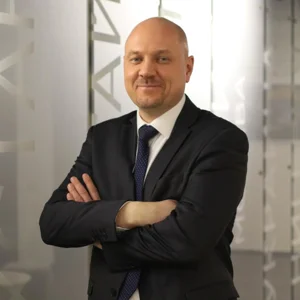
“Over recent years, the automotive industry has been the key driver for aluminium casting, and I believe that the industry will continue to keep this position”, Mr Alexander Krokhin, Director - Developments of Casting Technologies and New Materials at RUSAL
- Category
- Interview
- Date
- Source
- AlCircle.com
Alexander Krokhin graduated from the National University of Science and Technology and is a qualified engineer specialising in “Machines and Technology of Metal Processing by Pressure”.
Alexander was previously the Technical Director of the Rusal's "Moskabelmet" plant based in Moscow, which focused on the production of rolled non-ferrous metals and cable and wire products. Whilst there, he was responsible for the Company’s technological development, research, and innovation activities. He is a highly regarded individual in his field, recognised as a pioneer for technological processes and aluminium materials.
AlCircle: What are the major challenges global aluminium foundries are experiencing? What are the ways forward to overcome these challenges to sustain the aluminium foundry industry?
Mr Alexander Krokhin: Looking at the industry as a whole, it is not possible to specify any global challenges the foundries are facing, however, some specific temporary issues can be fixed one way or another. The aluminium industry, in general, shows stable development, as well as appropriate management decisions and actions which can solve any potential problem that may arise. Whilst issues (which are not unique to our industry) will remain, such as casting which will suffer from a lack of well-skilled and educated engineers and workforce, one of the solutions is the development of a succession pool directly within companies, and the promotion of metallurgy-related disciplines.
AlCircle: How will the aluminium foundry segment create opportunities ahead in 2022?
Mr Alexander Krokhin: Over recent years, we have heard a lot about Giga casting and Tesla successes in the production of structural components. The development of these technologies will continue in the coming years, however, the traditional ways of manufacturing components will also remain. Giga casting gave the industry a new momentum and lease of life for developing a new approach and different ways in the design of High Pressure Die Casting (HPDC), as well as the use of new casting alloys for this type of casting; in this case, the alloys must have good processability, show high strength without heat treatment. Altogether, it can stimulate new R&Ds, develop the machine-building sector in general and therefore give new opportunities.
AlCircle: The future of foundries is aluminium. Can you please detail us on this from RUSAL perspective?
Mr Alexander Krokhin: I represent the aluminium industry, so I am certain that the future of foundries and cast houses is aluminium. It is an advanced industry implementing modern developments, including Industry 4.0 crossing different sectors of the economy. Today, it can be said that the future of RUSAL’s aluminium business is the modernization of production, intending to reduce carbon footprint, production cash cost and to increase the efficiency in general through the maximum possible process automation and the minimum possible human involvement.
AlCircle: How technology is playing a vital role in the aluminium foundry businesses keeping in mind sustainability, low-carbon emission and workers safety?
Mr Alexander Krokhin: We are sure that recycling technology plays a vital role in sustainable development and the reduction of carbon footprints across aluminium production facilities. The background of tightening norms highlights the redistribution of supply and demand not only in the field of aluminium products but also in the consumption and competition between different materials in general. The material with the lowest carbon footprint achieved at minimum costs will win the race. Aluminium provides a possibility of almost endless recycling, so the recycling in the aluminium industry gives this metal a unique opportunity to widen the range of areas for its application.
AlCircle: What are the new technologies RUSAL is planning to adopt for its casting facilities? Any plan for expansion and investment, please provide in detail.
Mr Alexander Krokhin: RUSAL’s technical experts have developed a unique continuous technology of combined casting, rolling and drawing - called ExtruFORM. The new line produces wire-rod, and the major advantage is the OPEX and CAPEX savings. This is a joint project with SMS-Group. The line can process a wide range of alloys including alloys of electro-technical, welding and additive (3D printing) application.
AlCircle: What are the major industries that will drive the global aluminium foundries?
Mr Alexander Krokhin: Over recent years, the automotive industry has been the key driver for aluminium casting, and I believe that the industry will continue to keep this position. The possible reason for this is the fact that e-vehicles and fuel-saving trends resulting in the reduction of carbon footprint are key priorities for the industry, so the role of light metals, foremost aluminium, in the car design will gain even more importance.

