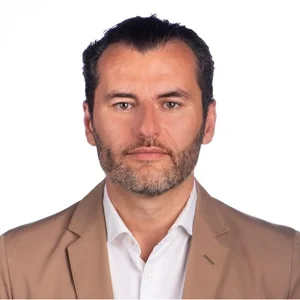
“Our low carbon aluminium is called ALLOW; a cleaner and ‘greener’ aluminium brand crafted with renewable hydropower. ALLOW comes with an average carbon footprint of 2.4 tonnes of CO2 equivalent per tonne of aluminium produced (Scope 1&2, at smelter)”, Roman Andryushin, Director - Sales and Marketing, RUSAL
- Category
- Interview
- Date
- Source
- AlCircle.com
Roman Andryushin was appointed as Director for Sales and Marketing in May 2018. He is responsible for all sales at RUSAL globally. Prior to this, between 2014 and 2018, Roman Andryushin was the Head of Russia and CIS Sales Directorate at RUSAL. He was responsible for the marketing and sales of a wide range of the Company’s products in Russia and CIS.
Roman Andryushin graduated with Honours from the Novocherkassk State Technical University, Economics and Management Department. Later he obtained an EMBA degree from Lorange Institute of Business Switzerland and an MBA from the University of Wales, Great Britain. He also holds a Ph.D. in economics.
AlCircle: RUSAL is a global leader in low carbon aluminium production. Can you share your journey?
Mr Roman Andryushin: Sustainability has always been at the heart of what we do. Climate is among the most critical elements of our sustainability strategy alongside a range of other environmental, social, and governance issues. Renewable and environmentally friendly hydro-generated electricity ensures that our carbon footprint is among the lowest in the industry.
Currently, Siberian hydropower plants source 93% of our total electricity needs and annually, we produce 3 million tonnes low-carbon aluminium which is more than 80% of our total output. As the world’s largest producer of low carbon aluminium, we are paving the way in aluminium production and setting the highest goals in the industry.
Our low carbon aluminium is called ALLOW; a cleaner and ‘greener’ aluminium brand crafted with renewable hydropower. ALLOW comes with an average carbon footprint of 2.4 tonnes of CO2 equivalent per tonne of aluminium produced (Scope 1&2, at smelter). This is in line with the evolving market requirement for low-carbon aluminium of no more than 4 t CO2 eq/t Al (Scope 1&2, at smelter), which is several times lower than the global average of around 12 t (Scope 1&2, at smelter).
This empowers our customers to reduce the carbon footprint of their products. There is an increasing desire amongst them to have lifecycle impacts assessment of products we supply, as businesses work to deliver on their corporate sustainability objectives.
RUSAL’s long-term vision is based on ESG priorities and we continue to go the extra mile to minimize the environmental impact through the investment in the modernization of smelting capacities. In January, En+ Group, RUSAL’s parent company, announced the commitment to reach net-zero emissions by 2050.
Despite this progress, there is more to be done and we are not complacent. En+ Group’s mid-term target is to reduce greenhouse gas (“GHG”) emissions by at least 35% by 2030. This ambition is one of the largest seen so far and sets the bar high for the aluminium industry going towards carbon-neutral future.
AlCircle: What are some of the barriers on the way towards carbon neutrality?
Mr Roman Andryushin: Carbon neutrality is a major challenge. No single company is capable of decarbonising alone, as we are all part of complex value chains. This is particularly relevant for the aluminium value chain, which is hard-to-abate and involves thousands of components: from bauxite mining to smelting, semi-fabrication, manufacturing of final goods, and recycling.
In this regard, partnerships are key in delivering on climate action. RUSAL partners with a number of stakeholders across the aluminium value chain to drive decarbonisation at all stages of the lifecycle of our product. We are open to collaboration with industry leaders on technological developments that can help clean up the production process.
Another important aspect of the carbon neutrality challenge is that governments commit to it: EU, Japan, South Korea by 2050, China by 2060. These commitments are coupled with evolving carbon regulation and mechanisms, such as tightening emissions trading schemes, projects for carbon-border tax. Regulatory developments are key to drive further decarbonisation of the aluminium industry.
In this regard, it is critical that we have a level playing field among the stakeholders. What could be instrumental for further decarbonisation of the aluminium industry: envisage a differentiated import duty or total elimination of it for ‘greener’ metal, in order to encourage producers of low-carbon metal’; challenge increased production of high-carbon metal from coal-powered plants, which would also help clean the skies of the smog and deliver health benefits for people.
We believe it is necessary to reduce global trade barriers for ‘green metal’, by zeroing the import duty for metal that is demonstrably ‘low-carbon’ and by creating additional mechanisms to support ‘green metal’ producers.
AlCircle: Do you think low carbon aluminium can help the world recover from the current economic disruptions caused by the COVID-19 pandemic?
Mr Roman Andryushin: Perhaps one ‘positive’ aspect of the pandemic has been the growing need recognized by all to accelerate low-carbon and circular transitions for a healthier planet and society. Among the main lessons learnt from COVID is that the world is ready to mobilise unprecedented efforts in the response to an emergency. One of the next major emergencies is climate change – low-carbon aluminium is a key material for a more sustainable economy that can support ‘green’ recovery.
As a light yet durable metal with 100% recyclability, aluminium is a key enabler in the route towards a more sustainable economic development and a post-COVID green recovery worldwide. The circular and fully recyclable material reduces the carbon footprint and emissions across a number of key sectors, targeted by the proposed stimulus measures in the ‘green’ recovery packages worldwide. For instance, in key markets such as the automotive and construction sectors, customers are increasing their scrutiny of the supplier’s carbon footprint.
We have such strong relationships with our customers. They welcome metal that comes with independently verified carbon footprint statements from the smelter of origin, enabling them to perform lifecycle assessments of their end products.
Low-carbon aluminium is a viable option for future-proof 'green' recovery and sustainable transitions across all sectors particularly automotive, packaging, construction and consumer products; examples of this include e-vehicle parts and battery cases, flat-screen TVs, pharmaceutical products or greener buildings. It is also used in renewable energy, using low-carbon aluminium in the cables and structural elements.
At RUSAL, we remain committed to developing and strengthening our position as the market leader, through the production of low-carbon aluminium, with the use of renewable energy and sophisticated technological solutions. We believe RUSAL is well positioned on the market with our low carbon aluminium ALLOW and our vision to the importance and urgency of finding new sustainable solutions.
AlCircle: What was the inspiration beyond the commencement of production of low carbon aluminium?
Mr Roman Andryushin: We launched our low-carbon aluminium brand shortly after the 2015 Paris Agreement, mindful of the growing attention to the climate action across all segments of our target markets worldwide. With ALLOW, we were among the early movers, long before ‘green’ and ‘low-carbon’ became buzz words in the aluminium world.
Today, decarbonisation is no longer perceived as an optional pathway for future strategic development among businesses. There are numerous stakeholders putting pressure on aluminium producers to turn towards a ‘greener’ future, for instance, governments, investors, regulators, consumers and industry-wide experts who are all calling for a ‘green revolution’. We welcome this call.
Industry-wide initiatives also demonstrate a trend for greater carbon transparency and decarbonisation requirements. As detailed in En+ Group/RUSAL’s ‘Green Aluminium Vision’, the Group has consistently called for more stringent emissions disclosure rules to promote greater transparency in the aluminium market, for sustainability labelling, differentiated approach to aluminium based on its carbon content, and to partnerships, particularly in the R&D that can help the decarbonisation.
As in 2015, we are confident that aluminium will remain the metal of choice for a more sustainable future.
AlCircle: What modern technologies need to be adapted towards the production of low carbon aluminium?
Mr Roman Andryushin: Technologies used in the aluminium production process require continuous upgrading and modernisation to keep up with the evolving solutions. We have been working on a breakthrough decarbonisation technology for years and began testing it last year, known as inert anode technology. This process is revolutionary because it eliminates carbon emissions from the smelting process, emitting oxygen instead.
The use of inert anodes is a key element for the low-carbon transition, and we believe that the availability of aluminium made with inert anodes will increase within the coming years. In addition, further elimination of the CO2 emissions from the electrolysis process of alumina reduction will allow for the production of aluminium with zero direct emissions at the smelter.

