“Our focus will be on continuing to progress our technology roadmap to enable decarbonization across the value chain, growing demand for our leading portfolio of low-carbon products and drive sustainable value”, Benjamin Kahrs, EVP and Chief Innovation Officer at Alcoa
- Category
- Interview
- Date
- Source
- AlCircle.com
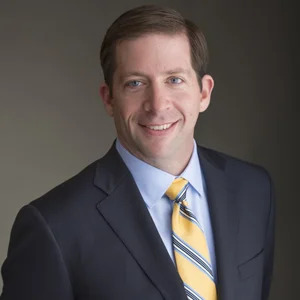
Benjamin (Ben) Kahrs, the Executive Vice President and Chief Innovation Officer of Alcoa is responsible for the American industrial corporation’s breakthrough innovation and global Information Technology and Automated Solutions (ITAS). He is also a member of Alcoa’s Executive Leadership Team, which sets the strategic direction for the Company.
Ben holds a bachelor’s degree in Chemical Engineering from Clemson University and an MBA from The Citadel plays a vital role in the company’s breakthrough innovation. He oversees Alcoa’s Technical Center, the Company’s Research and Development (R&D) facility for breakthrough smelting technology. He also administers progress on Alcoa’s technology roadmap and his responsibilities for the ITAS team focus on optimizing our global information technology systems, including advancing digitization opportunities across the business.
AlCircle: What are some key business priorities for Alcoa in 2022?
Mr Benjamin Kahrs: Alcoa is at a transformative moment. For the past several years, we’ve focused on strengthening our business commercially, operationally, and financially. We’ve optimized our portfolio of assets, driven improved profitability across our operations, and strengthened our balance sheet. Alcoa is now well-positioned for all market cycles and ready to drive value now and into the future.
This foundation allows us to turn our focus toward the future – specifically, working to realize our vision to transform the aluminium industry for a sustainable future.
With this in mind, our focus will be on continuing to progress our technology roadmap to enable decarbonization across the value chain, growing demand for our leading portfolio of low-carbon products, and drive sustainable value to our communities. Ultimately, we’re focused on helping stakeholders achieve their sustainability ambitions in a carbon-constrained world.
AlCircle: Can you tell us more about Alcoa’s technology roadmap and how that will enable decarbonization across the value chain?
Mr Benjamin Kahrs: Late last year, we announced a technology roadmap of research and development projects that have the potential to fundamentally change how aluminium is made, in turn helping drive decarbonization as well as value for our business, customers, investors and communities. This roadmap includes:
- Our Refinery of the Future project aims to achieve zero-carbon alumina refining using a host of processes and new technologies that we’re working to adapt to alumina refinings, such as mechanical vapour recompression (MVR) and electric calcination.
- Our ELYSISTM joint venture uses carbon-free aluminium smelting technology, first invented at the Alcoa Technical Center that eliminates all GHGs and produces pure oxygen as a by-product.
- Our ASTRAEATM process is a proprietary technology that can purify any molten aluminium scrap to such high purity levels that it has the potential to create an entirely new value chain. Our ASTRAEA process could take any post-consumer aluminium scrap, regardless of alloy combination, and beneficiate it up to the super-pure quality that would be high enough for a variety of applications, including aerospace.
AlCircle: We’ve seen some big announcements come out from ELYSIS recently. Can you tell us a little bit more about how that JV is progressing?
Mr Benjamin Kahrs: We’re excited about the continued progress of our joint venture and believe it is a critical lever to drive significant decarbonization of the aluminium industry. In March, Apple announced that it will use zero-carbon aluminium produced by ELYSIS in the new iPhone SE. This is the first time ELYSIS metal will be produced and sold at a large, industrial scale. This announcement builds on previous supply agreements for ELYSIS metal, which include the Audi/RONAL Group deal mentioned earlier and a previous purchase of the metal for use in 16-inch Apple Macbook Pro laptops in 2019.
We’re particularly proud of this JV, as it was born out of Alcoa’s innovation portfolio. We first developed the zero-carbon smelting process, which emits pure oxygen, at the Alcoa Technical Center in Pittsburgh. Given the progress that the technology has made, we have announced that we will only use the ELYSIS technology for any future smelters that we build in the future.
AlCircle: You also talked about delivering sustainable solutions for customers through low-carbon products. Can you tell us more about that?
Mr Benjamin Kahrs: Alcoa is also committed to continuing to lead the growing low carbon aluminium market, which is focused on aluminium produced with renewable energy. Alcoa operates across the aluminium value chain, so it gives us an opportunity to offer the aluminium industry’s most comprehensive low-carbon product portfolio through our Sustana family, which includes:
- EcoSourceTM: The world’s first and only low-carbon alumina brand. It can allow a smelter to lower its carbon footprint by simply using this smelter-grade alumina brand.
- EcoLumTM: A low-carbon aluminium that performs three and a half times better than the industry average, which includes direct and indirect emissions.
- EcoDuraTM: Made with at least 50% recycled content.
We are seeing growing demand for these low-carbon products, particularly in markets like Europe. Last year, we announced a deal with RONAL Group and Audi to supply a mix of ELYSIS zero-carbon metal and low-carbon EcoLum metal to produce the wheels on Audi’s e-tron GT flagship electric sports car. That was a major milestone for the automotive industry. We also work with a range of customers across industries to supply low-carbon metal and alumina.
AlCircle: How will you continue to maintain a low-carbon product advantage?
Mr Benjamin Kahrs: Our low-carbon product advantage comes from our sustainable operating footprint. More than 80% of Alcoa’s smelting capacity around the world is powered by renewable energy, and we are working to continue to improve that percentage. For example, we are currently working with partners in Australia to secure renewable energy for our Portland smelter.
We’re also continuing to improve the carbon footprint of our refineries around the world, leading with our Refinery of the Future project. Using a combination of technologies such as electric calcination and mechanical vapour recompression (MVR), we can significantly reduce the power requirements of an alumina refinery. In combination with renewable energy from the grid, it paves a path to a fully decarbonized refining system.
In addition to traditional aluminium products, however, we’re also working to deliver innovative products that can enable a sustainable future. For example, we’re engaged in a joint venture project to explore the commercial production of high purity alumina (HPA), which is used in products like LEDs, electric vehicle batteries, sapphire glass and others.
We’re also buildings public-private partnerships around opportunities to repurpose bauxite residue for beneficial use in construction, infrastructure, and agriculture.
AlCircle: Can you tell us more about how you’re delivering sustainable value more broadly and what it means for your different stakeholders?
Mr Benjamin Kahrs: We continue to leverage the ingenuity of Alcoans across the globe, focusing on building inclusive and diverse teams and continuously improving our operations. This includes actively engaging with our stakeholders.
We’re continuing to deliver environmental improvements across our business to protect biodiversity and support local communities. We’re finding ways to reduce water use and landfilled waste at our mines, refineries, and smelters. We’re also committed to maintaining a corporate-wide running a five-year average ratio of 1:1 or better between mine rehabilitation and mining disturbance (excluding long-term infrastructure). This includes using leading technologies to help stimulate reforestation and to promote and protect local biodiversity.
On the social side, we’re implementing a comprehensive social management system across all our locations. We’re also investing in communities worldwide through support from our Company, the Alcoa Foundation and Alcoa Instituto, protecting and preserving the environment and promoting equitable access to education and skill-building opportunities.
These examples reflect the types of actions and investments that the aluminium industry must take to enhance sustainability across the value chain.
However, we’re also focused on improving our own operations to drive long-term value for our employees and our business. We are progressing with a range of digital technology initiatives to reduce the physical requirements of some tasks with improved ergonomics and technologies, as well as leveraging technologies such as drones, crawlers and remote sensors to keep people out of dangerous environments and replace manual inspections – with the ultimate result of increasing safety, productivity, and efficiency.
AlCircle: What is your view on the outlook for the global aluminium industry in 2022?
Mr Benjamin Kahrs: There has been a structural shift in the aluminium market where we are getting back to supply and demand fundamentals. We believe markets will be stronger, and for longer. We continue to see positive GDP and industrial production across most of the world’s leading economies, which supports continued, annualized growth in aluminium demand across all major end-use sectors.
We continue to benefit from our position as a domestic supplier to the deficit markets in North America and Europe, where regional premiums remain high. On overall market dynamics, the factors supporting higher aluminium prices represent fundamental structural changes that we believe will remain in place over the next decade, supported by a drive towards more sustainable solutions.
In this context, our low-carbon leadership will continue to differentiate us – we have the industry’s most comprehensive portfolio of low-carbon products via our Sustana brand, putting us in an advantageous position to help our customers reduce their emissions.

