“KAN-NAK will continue supporting smelters in decreasing energy consumption by reducing the cell voltage and improving the cell magnetohydrodynamic status,” René von Kaenel, CEO and President, KAN-NAK
- Category
- Interview
- Date
- Source
- AlCircle.com
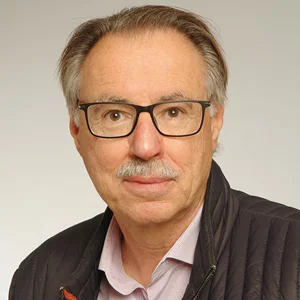
René von Kaenel received his diploma as a physicist from The Swiss Federal Institute of Technology Lausanne (EPFL) before working for International Computer Limited in London and specialising in computer science. In 1981, he joined Alusuisse and became the head of the modelling activities for smelting technology. In 2000, he received the title of Electrolysis director in the ALCAN organisation and supervised ALCAN’s R&D activities for the Hall-Héroult process. Since 1981, he has participated in many smelter modernisation projects worldwide, leading to large productivity increases and significant energy savings. He has published many articles on electrolysis cells, casting processes and inert anode technology. In 2004, he created KAN-NAK Ltd., a specialised company for the optimisation of processes, particularly the Hall-Héroult process. Between 2004 and 2008, he was President of MOLTECH Ltd, a company dedicated to R&D in the field of Inert Anodes. In 2015, he created NOVALUM SA to develop the RuC® (Ready to Use Cathode) concept, which became an international success.
AL Circe: Can you provide a brief overview of KAN-NAK's role in optimising aluminium reduction cells, focusing on energy consumption reduction and productivity improvement?
René von Kaenel: The KAN-NAK team has been active for the last four decades in optimising Hall-Héroult cells by improving the design of busbars, lining, cathode, and anode. KAN-NAK strength uses highly specialised software combining all thermal and magnetohydrodynamic effects with specific measurements. Successes at reducing energy consumption and increasing cell productivity are numerous all over the world.
AL Circle: Please brief us about the RuC® solution. How does it benefit aluminium smelters? How has KAN-NAK's collaboration with Tokai COBEX & Novarum impacted the development of the Ready to use Cathode (RuC®) solution?
René von Kaenel: KAN-NAK analysed the design of the RuC® (Ready to Use Cathode) for more than 20 technologies. Today, more than 150 cells with current ranging from 100 kA to 600 kA are in operation. The benefits are manifold. It starts with a decrease in energy consumption that depends on the customer target and technology. In best cases, up to (0 – 500 kWh/t were achieved to avoid important lining changes. It goes on with cell life increase (expected 1 – 2 years). The oldest cells are reaching 6 years, and in the coming years, the confirmation of the cell life increase will be statistically proven.
Finally, 80%-90% of the copper can be recycled at LME Cu value when relining. Besides the advantage of not having to rod the cathode (costly and dangerous process), the cell life increase and copper recovery are the main advantages when compared to copper insert solutions. KAN-NAK combined its know-how with DIE FORM Engineering to create NOVALUM. Very soon, a collaboration agreement was signed between NOVALUM and Tokai -COBEX. Seven years later, the concept was confirmed, validated, and protected by a set of Patents. In early 2023, NOVALUM was purchased and taken over by Tokai -COBEX. Today, rights concerning RuC©'s belong to Tokai -COBEX, including marketing, production, and sales. NOVALUM's know-how combined with Tokai -COBEX's know-how led to a robust solution for the smelters.
AL Circle: What sets the RuC® solution apart from conventional cathode designs, and how does it contribute to energy savings and productivity benefits? In what ways does the RuC® solution enhance the performance of aluminium reduction cells? How does the cathodic solution without rodding contribute to cost savings and increased productivity for aluminium smelters?
René von Kaenel: RuC© does not need any rodding process, allowing for much more carbon above the copper bars to extract the electrical current. The electro-erosion process needs more time to reach the copper bars, leading to an increased cell life. The very high electrical conductivity of copper compared to steel allows reducing the cathode voltage. This can be used to reduce energy consumption and/or increase the current efficiency and/or increase the current. Therefore, energy saving can be obtained together with production increase if the current is available. The increase in current efficiency can be as high as 1%.
AL Circle: How does KAN-NAK plan to introduce and promote the RuC® solution in the Middle East's aluminium industry? Are there any challenges or opportunities that KAN-NAK anticipates in this region?
René von Kaenel: The promotion of RuC© is done by Tokai-COBEX. It was very successful in China, known for pushing new technologies faster than the rest of the world. However, Canada and Europe also represent many smelters and implement more cells every year. The Middle East industry is starting slowly. Several smelters tried to develop their competitive solutions. To our knowledge, most of these projects have been abandoned or idled. With the proven track record that RuC© has established now, we hope that the Middle East will accelerate.
AL Circle: What future developments or innovations can the industry expect from KAN-NAK in the context of aluminium reduction cell optimisation? Are there any upcoming projects or initiatives that KAN-NAK is particularly excited about?
René von Kaenel: KAN-NAK will continue supporting smelters in decreasing energy consumption by reducing the cell voltage and improving the cell magnetohydrodynamic status. This also allows for increasing productivity. We have innovations in our portfolio that can be implemented in the process (like improved control on alumina feeders) as well as further modifications to the cathode. We will be presenting these to the industry in the coming years. Moreover, KAN-NAK is participating in the development of a process that will suppress CO2 with great excitement. In fact, some of us have been working since 1990 on developing inert anodes that produce O2 instead of CO2.
AL Circle: How does KAN-NAK see its role on a global scale in advancing sustainability and efficiency in the aluminium industry? Are there lessons learned from international projects that could be applied to the Middle East market?
René von Kaenel: KAN-NAK believes that small investments during the relining phase of the cells can lead to significant energy consumption reduction and an increase in current efficiency. Not all smelters are taking advantage of today. The industry should be open to taking minor risks to move faster to improved solutions. KAN-NAK is collaborating with GULF MARKET INTERNATIONAL to promote its know-how in the GCC, India, and Middle Eastern countries.
AL Circle: Can the Middle East replace Europe regarding primary aluminium production, looking at the present scenario?
René von Kaenel: Europe needs to remain independent of any other entity for strategic reasons, but KAN-NAK has no idea about the yearly tonnage involved for that purpose!

