“JS Group and later Uniseven have many firsts; in fact, it has grown with the growth of the primary aluminium industry in India,” Kamal Prakash, Director, Uniseven Engineering & Infrastructure
- Category
- Interview
- Date
- Source
- AlCircle.com
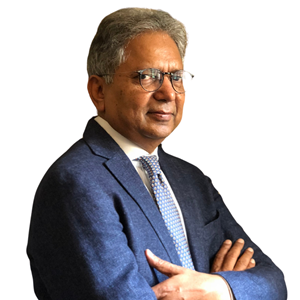
Kamal Prakash is passionate about aluminium and is the director of Uniseven Engineering & Infrastructure, part of the 124-year-old JS Group, which has been servicing the global aluminium value chain for the last 50 years. JS and Uniseven have pioneered introducing a number of technologies and technological products to the aluminium industry, helping process improvements, CAPEX and OPEX reduction, CO2 emission reduction, and enhanced recycling. Also, he is involved in the fields of education and health, especially mental health and economic and environmental sustainability initiatives, especially with an economically weakest section of society. He is also an avid gardener. He holds a degree in Business Management and brings 44 years of global experience working with partners across the world.
AL Circle: Can you briefly give overview of Uniseven Engineering & Infrastructure (Uni7) history and primary mission in the aluminium industry?
Kamal Prakash: Uniseven is part of the 124-year-old Jiwanram Sheodutrai Group, which has been servicing the aluminium industry in India since 1973. Uniseven took over the aluminium industry and EPC business of the Group about 10 years ago. Uniseven is committed to offering the most cost-effective, long-term, sustainable solution to the entire aluminium value chain, together with its global technology and product supply partners. The Uniseven team’s deep insight into the industry allows it to constantly identify areas of improvement and offer improved solutions to the industry.
AL Circle: What are the core values and principles guide Uniseven’s operations and business strategies?
Kamal Prakash: We follow the core values of JS Group, which primarily reinforce human values, i.e. TRUST, EQUITY, SUSTAINABILITY, EXCELLENCE, AND INNOVATION.
AL Circle: Can you highlight some innovative solutions and technologies Uniseven’s has dealt with that are implemented in the aluminium industry? How do these innovations enhance aluminium production's productivity, efficiency, and sustainability?
Kamal Prakash: JS Group and later Uniseven have many firsts; in fact, it has grown with the growth of the primary aluminium industry in India. It started with the introduction of Reduction Cell Lining Products using Cathodes, Silicon Carbide Bricks, and Calcium Silicate Board, followed by Indigenous Development of Process Control System to now and the introduction of state-of-the-art High Amperage Aluminium Reduction Cell Technology with very low energy consumption, Nano Ceramic Coating reducing Carbon Consumption, CO2 Emission, improved Anode and Anode Stub life, energy efficiency, New Generation of Cast House Consumables, Red Mud Upcycling, Real-Time Liquid Metal Quality Analyser in the cells, to name a few.
AL Circle: How do you foresee the aluminium industry evolving in Asia over the next five to ten years?
Kamal Prakash: Primary aluminium production in China is to stabilise between 42-45 million tonnes. Major growth is expected in Indonesia and India due to abundant bauxite and coal reserves, and consumption in these countries outside China will also grow faster. Recycling will continue to grow with improved consumption, collection, and awareness. Both countries will also have to make a strong case with the EU for CBAM exemption, citing how the production of aluminium helps decarbonisation and saves much more carbon emission during its foreseeable lifecycle besides both countries have least contribution to current climate crisis for which primarily Industrially developed nations are responsible.
AL Circle: What are the key trends and developments that you believe will shape the future of the aluminium industry in this region?
Kamal Prakash: Increased per capita income, urbanisation, energy transition, sustainable living leading to EVs, and more public transport usage would lead to higher aluminium consumption in everyday life. China, India, Indonesia, and possibly Vietnam would become the world's by far largest block of primary, secondary, and downstream production.
AL Circle: What are the biggest challenges facing the primary aluminium sector in Asia today and how Uniseven addresses them?
Kamal Prakash: With better resource utilisation, Uniseven brings the relevant technologies and technological products suited for relevant production sectors, helping the aluminium industry in each Asian region harness its full potential.
AL Circle: How are geopolitical and economic factors influencing the aluminium market in the region?
Kamal Prakash: Anti-dumping duties on Chinese aluminium products, the China Plus 1 Policy of major countries/importers, CBAM, and FTAs are some of the important elements impacting the region.
AL Circle: How does the shift towards sustainability and green production practices impact the primary aluminium market?
Kamal Prakash: Some countries are gifted with hydroelectric resources/power. Aluminium should be exempted from CBAM as its application leads to significant decarbonisation, and being infinitely recyclable, recycled metal uses only 5% of the energy hence is green. Due to this reason, primary production will continue to grow as recycling, in the best case, will continue to meet only one-third of the total world’s aluminium demand at any given point in time. In fact, aluminium should be promoted in every possible sector as a green metal.
AL Circle: What role do technological advancements play in shaping the trends of primary aluminium production in Asia? Can you share any recent technological breakthroughs that are influencing the industry?
Kamal Prakash: High-amperage, high-production cells, with relatively low energy consumption and low CAPEX, and technologically advanced low-cost Capital Equipment made in China and India, have nearly halved the per-tonne CAPEX, significantly improving investors' returns compared to Western technology and equipment-made smelters.
AL Circle: What advancements has Uniseven made in designing and manufacturing cathode collector bars for aluminium electrolysis? How do Uniseven’s cathode collector bars compare with other industry players regarding performance and durability?
Kamal Prakash: We deliver all types of collector bars, including steel, ultra-low-carbon steel, copper-inserted, and copper-onsert collector bars. We assure tight tolerances, on-time delivery, and, of course, the lowest cost for any collector bar as delivered to the customer due to efficient and Integrated Manufacturing.
AL Circle: How does Uniseven Engineering plan to maintain its competitive edge in the rapidly changing landscape of the aluminium industry?
Kamal Prakash: Our motivated and agile teams with global experts are committed to offering more value to the industry and always staying ahead in identifying and providing solutions to the Industry challenges through its global network.

