“Industry 4.0 is an evolutionary process, a journey, not a single step or an “off-the shelf” product,” Sandip Samanta, Head of Technology and Innovation, Plate & Aluminium Rolling, Primetals Technologies
- Category
- Interview
- Date
- Source
- AlCircleNews
- Edited By
- Beethika Biswas
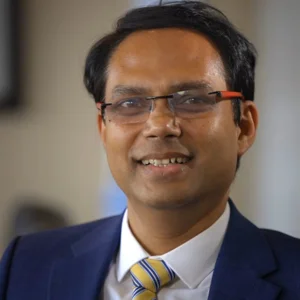
Primetals Technologies is a world leading metallurgical plant solution provider catering to both ferrous and non-ferrous sector and supplying across the entire value chain, from raw materials to the finished product. They are one of the technologycompanies who have been designing equipment and technology keeping in view the framework of digitalization, automation and data integration. Sandip Samanta, Head of Technology and Innovation, Plate & Aluminium Rolling for Primetals Technologies shared his inputs on Industry 4.0 and the metals industry with reference to the aluminium sector. Here is an excerpt from the interview.
AlCircle: What does Industry 4.0 mean to the metals industry? How can the implementationof its framework help the industry improve efficiency and productivity?
Mr Samanta: The opportunities presented by new IT technologies, Industrial Internet of Things (IIoT) and horizontal plant-wide data integration, is generally called “Digitalization” or “Industry 4.0”. This is a big lever to improve the production in terms of quality, productivity, transparency and flexibility. This can be achieved by intelligent “big data” provision and analysis tools.
These tools facilitate much more efficient analysis of correlations between the individual process steps in real time. Also, the addition of smart sensors and Condition Monitoring Systems (CMS) can help very much to improve and streamline the production process.
AlCircle: What key elements of Industry 4.0 are used in a metals plant?
Mr Samanta: Big data, through-process optimization, condition monitoring systems, production management systems, smart sensors, e-Services, artificial intelligence or machine learning, digital twins, cyber physical systems and cloud computing are all utilised in smart metals production. This has all to be underpinned by data integrity and robust security. A well-designed system is like having all your process experts watching your plant, and alerting you to issues, 24 7.
AlCircle: Primetals Technologies promote the implementation of digitalized technology in the metals industry. How do you create plants of the future with your digital technology?
Mr Samanta: This is not a purpose of its own! It has to be developed and analysed in co-operation with the producer and tailored to meet the demands of each individual plant. So we work together with our customers to create plants of the future. The process involves distilling the local knowledge of operators, maintenance crews and engineers and adding Primetals Technologies’ own considerable expertise in metals processing. This blend of depth and breadth produces the machine-based rules and key performance indicators to keep the process running optimally.
AlCircle: What are the changes brought about by digitalization in the field of metals production? Do you think the metal sector is getting ready for Industry 4.0 revolution?
Mr Samanta: Yes, to some extent it is already there as the metals industry is highlyautomated. For example, in modern rolling mills intelligent Level2 process automation systems are already implemented, which in essence is a “digital twin”. Also, other elements like CMS, surface inspection systems (smart sensors), etc. are being installed more and more. e-Service is being implemented widely in metals industry to integrate the entire supply chain.
AlCircle: Most of your automation and digital technology solutions are designed for the steel sector. What are the services you are offering to non-ferrous and more precisely to the aluminium sector?
Mr Samanta: To a large extent, solutions and services developed for the steel industry can be transferred to aluminium production and vice versa. This is especially true in downstream operations, where the rolling process has a lot of similarities in steel and aluminium. One doesn’t have to “reinvent the wheel”. Of course, it needs a deep understanding and expertise to identify the differentiators and determine where adaptations are required.
For example, in condition monitoring some of the limit warning levels for temperatures, vibration, etc. might be numerically different in steel and aluminium but the principles of failure prevention are the same.
With over 90 years’ experience in the aluminium industry this is where Primetals Technologies expertise in equipment design, Through-Process Know-How and automation really come to the fore. Our experts can identify the necessary data gathering enhancements and enable the generation of rules and key performance indicators specific to the materials being processed.
There are key differences in the metallurgy of aluminium, copper, nickel or titanium, when compared to iron. So, it is important to know which solutions for steel can be transferred directly, and which are not appropriate or need modifying. The software systems are important, to be sure, but the engineering, production and process expertise is indispensable when developing a good system.
AlCircle: Primetals Technologies supplies aluminium hot, cold and foil rolling mills to its customers worldwide. How do you aim to implement the Industry 4.0 framework in your rolling technology?
Mr Samanta: Industry 4.0 is an evolutionary process, a journey, not a single step or an “off-the shelf” product. It starts at a basic level where the implementation of suitable instrumentation and IT infrastructure allow individual plants to be prepared for the future integration. Without a solid base a further horizontal integration isn’t possible.
Primetals Technologies pave the way for this future integration with smart instrumentation and open IT architecture allowing our end users to customise the system to meet their Industry 4.0 requirements.
As with any ‘big data’ concept, benefits are available at a small scale but the real prize comes from linking all of the elements together in larger networks. Imagine if each machine has access to the cumulative data of all previous process steps, and the known or inferred values of every important product parameter. Together with its own rules, this knowledge allows operation with confidence of the best possible productivity and quality.
We develop our equipment so it can collect all the data needed to run such a system. For example, we are currently building extra diagnostic features into our market leading shape meter and spray bar products. Calibration routines also now have extensive data logging on them to monitor equipment condition. And our automation systems are designed to operate as well, or better, with ‘big data’ inputs as it does as a stand-alone system.
The implementation can be started in a single area and then spread further as confidence increases; it does not have to be done in one giant step.
AlCircle: What is the significance of integrated electrics and automation solutions in a rolling plant?
Mr Samanta: It is important that each process can capture real-time data and transport it efficiently. Stand-alone feedback control and Level 2 adaptation is important for each machine, but the major benefits come from transforming the data into knowledge of the process as a whole, and of each product that has been made, then making it available plant-wide or company-wide. That needs robust networking infrastructure as well as reliable data capture. This knowledge has many potential uses, including adjusted set-up data for subsequent process steps, reduced energy input, precise definition of scrap allowances, mechanical properties prediction, revised maintenance schedules and improved addition of new capacity, to name a few.
AlCircle: Brief us on some of the latest projects by Primetals Technologies that promote Industry 4.0 framework in metal sector.
Mr Samanta: Baosteel Zhanjiang (Part of BaoWu Iron and Steel Group Co., Ltd,) has recently ordered digitalization packages and automation and electrics for their new hot strip mill from Primetals Technologies. The target is to build an intelligent plant and the most advanced hot strip mill in the world. To achieve this, an extensive package of Industry 4.0 solutions will be implemented.
In addition, a cooperation agreement for the joint development of advanced Industry 4.0 solutions in hot rolling has been signed.
Primetals Technologies are also supplying BaoWu Aluminium Technology Ltd., a combined aluminum hot rolling mill for the production of heavy plate and strip. This is the first major investment by BaoWu in aluminium, following their acquisition of Henan Tongren Aluminium Industry Co. Ltd. and is a clear demonstration of their commitment to the aluminium sector.
The vision of Industry 4.0 is simple. At every process step, use the cumulative knowledge gained from each previous stage and of the product being produced to adjust settings for minimum energy input, minimum waste, maximum productivity and maximum consistency of properties.
This is by far the biggest opportunity facing metals producers globally and Primetals Technologies is uniquely placed to springboard them into the fourth industrial revolution.

