“India is the fastest and most promising growing economy in the world today” ~ Mr. Abhijit Pati, CEO, Aluminium Division, Vedanta Aluminium – Jharsuguda
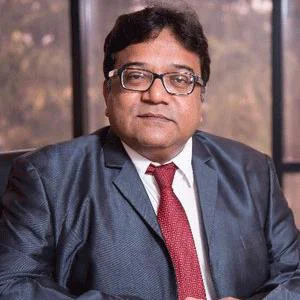
Mr. Abhijit Pati started his career as a budding engineer with Indian Aluminium Company in the year 1989. In 2008, he joined Vedanta and subsequently became Chief Executive Officer of Aluminium Division, Vedanta Aluminium – Jharsuguda, one of the largest Greenfield Aluminium cum Power complexes in the world.
AlCircle had an opportunity to interview him where he shared his strategies to raise Lanjigarh alumina refinery's capacity to 2 million tonnes in 2019 and his projection for the company as well as the aluminium industry in FY2020. If you want to know them detail, go ahead and read our brief conversation.
Q: Vedanta Limited has become the largest aluminium producer in India in FY2019, with aluminium production of 1.96 million tonnes. What is your outlook for the company in FY2020?
A: Last fiscal, Vedanta Ltd.’s Aluminium Business logged highest ever metal production at 1.9 million tonnes, becoming India’s largest primary aluminium producer. At Vedanta Ltd.’s greenfield aluminium & power operations in Jharsuguda, Odisha, we created significant milestones in 2018. Early in February, we entered the global 1 Million Tonne production club, as India’s first single-location aluminium smelter. We closed FY19 at a run rate of 1.35 MTPA, highest ever metal production till date. At 50%, our value added products portfolio is strongly growing towards our vision of 100% VAP. We crossed the 1 million mark in aluminium export volumes. Our stronghold on nearly a fifth of domestic primary market, is stable and increasing. Our export volume to the American, Asian and European markets have increased significantly between FY18 and FY19. All of these, backed by strong performance in safety and sustainability are encouraging indicators of our performance.
FY20 and onwards, our immediate plans are to operationalize the entire installed capacity of 1.75 MTPA in the next 2 years, post which we intend to ramp up to 2 MTPA production at Jharsuguda complex. On the product front, we intend to strengthen our Value Added Product portfolio, which includes strategic investments and focused research & development, aimed at tapping into the existing potential of the domestic market.
Q: Supreme Court has recently admitted NALCO’s petition for hearing on alumina sales tender to Vedanta. Do you think Vedanta will get to participate in alumina sales tender floated by Nalco in 2019?
A: The matter is currently sub-judice before Hon’ble Supreme Court of India. We are hopeful for adjudication of the issue in our favour based on merits. We believe it would not only forge avenues for utilization of India’s mineral resources inside the country, but will also contribute to economic growth and self-sustenance of the country. It would create a win-win scenario for both companies. It is our firm belief that both companies can work together and contribute to economic prosperity of Odisha and India, so we look forward to a positive turn of events soon.
Q: Vedanta expects to raise Lanjigarh alumina refinery's capacity to 2 million tonnes in 2019. How do you strategize this move?
A: Vedanta Ltd.’s Lanjigarh refinery is crucial to the company’s aluminium business at Jharsuguda and our BALCO operation at Korba. The Lanjigarh refinery currently has a peak run rate of 1.8 MTPA, and there are plans to ramp up production to 4 MTPA in two stages, with indigenous bauxite forming a significant chunk of raw material requirement. The refinery’s ramp up will play a crucial role in our plan to increase production capacity of Vedanta’s Jharsuguda based smelters to 1.75 MTPA. We believe that our refinery in Lanjigarh is not only pivotal to the growth of Odisha’s aluminium prospects but also is the harbinger to the developmental journey of Kalahandi and Odisha as a whole.
Q: What is your outlook for the aluminium industry in India for the year 2019?
A: India is the fastest and most promising growing economy in the world today. With the eyes of global superpowers and business houses on us, the time is ripe to capitalize on opportunities that can significantly boost our economy in a sustainable and holistic manner. A quick assessment of the Indian aluminium industry pegs the domestic aluminium demand for FY19 at around 4 million tonnes. The industry has grown at a CAGR of 6.3% in the last 4 years, and with growing domestic consumption, this industry will potentially grow at a CAGR of 7-8% in the coming 2-3 years. This will be supported by the govt.’s infrastructure projects, rise in housing and construction, growth in transport segment and high investment in renewable energies. Indian primary Aluminium is poised to see greater heights given that it gets due attention to be considered as ‘Core Sector’ and right policy framework is in place to nurture the domestic interest in Aluminium. With Indian Government keen on promoting Make in India, we believe things to improve for better.
Q: What are the value added strategies for Vedanta for the year 2019?
A: Our value added strategies are based on market movements. Recently, we included PFA and Slab into our product portfolio in order to capture the growing markets of Automobile, Electronics and Packaging, and they have been very well accepted by our customers. Last month we added another value added product into our line, the 10 Kg Cast Bar, becoming the first amongst Indian manufacturers to launch it. These products play a major role in extrusions, castings and rolls/foils production. In the immediate future, we intend to strengthen our value added product line, working towards our vision for 100% VAP portfolio.
Q: Do you see a deficit in global aluminium market in 2019? How do you think China will influence the market in 2019?
A: According to market intelligence reports, the global primary aluminium market is expected to be in a deficit of nearly 1.6 million tonnes, despite weaker demand growth. Even though, the World Excluding China deficit is decreasing due to aggressive ramping up of smelters like Alba and UC RUSAL, closure of Chinese smelters will keep the market in deficit.
China alone accounts for half of the world’s primary aluminium production and consumption at about 36 million tonnes each. Trade wars with China have made the global aluminium market very volatile. US-China trade tensions have weakened demand across various sectors which has, in turn, slowed down manufacturing activity and decreased aluminium demand. This has had a severe downward pressure on LME prices. The upcoming ban on metal scrap by China’s Ministry of Ecology and Environment, has induced impact on global trade flow. India is at the receiving end with huge volumes of aluminium scrap being diverted here from the US. All these factors put together make it quite evident that the global market is not likely to emerge from under the influence of China anytime soon.
Q: Did the tariffs on aluminium and sanctions on Rusal impact Vedanta’s business in FY2019? As both are lifted currently, how do you see the aluminium industry moving in 2019?
A: The sanctions put on RUSAL by the US govt. since early 2018 had created a perceived deficit in the global market which was catered to by many other primary producers including Vedanta. We were able to multi-fold our export volumes to US despite tariff hikes under Section 232 Act. However, the recent announcement of Canada being exempted from the tariff hike has put pressure on many primary aluminium producers including us. Most exempted countries are located geographically closer to the US, and therefore get an added advantage of significantly lower logistics cost along with duty exemption. We expect the US government to take positive steps towards making their aluminium market a level playing field for all exporters, as it continues to be in deficit for certain products. Our strategy in these volatile times is to keep focusing on high quality and continue to offer best in class products and services to our US customer, forging lasting relationships that stand the test of time and geopolitics, which allows us to sustain and grow in the market. Our SEZ facility of 1.2 million tonnes is dedicated specially for export of Value Added Products.
Q: Do you support a restrictive trade policy for the aluminium sector in India? How do you think the government can support the growth of aluminium sector in India?
A: Traditionally, India has always adopted an inclusive economic growth strategy which allowed other countries to explore mutually beneficial trade relations with our country for various products. However, the recent wave of trade barriers put up by major economies to boost domestic industries, has triggered concern amongst Indian producers and manufacturers who want to be protected and promoted in a similar manner. A restrictive trade policy could potentially help curb unnecessary import of products which Indian manufacturers are quite capable of producing in any form like Primary or downstream products. Such policies can also help shield India from becoming a dumping ground for scrap. Inward looking policies can significantly contribute to making India more self-reliant in meeting the demands of its populace, reducing the import-export disparity and improving our forex reserves.
In FY19, imports accounted for 58% of India’s total aluminium consumption, even though Indian producers are capable of meeting the domestic demand. With imports increasing @20% year-on-year, the situation if not addressed can become overwhelming. India ranks 5th largest in terms of its bauxite and coal reserves, which needs to be leveraged to develop a globally competitive aluminium industry of a fast growing economy. The government should support domestic players by protecting the Indian market through restriction of unnecessary imports for products for which can be produced within. The country needs to focus on attaining self-sufficiency on all possible frontiers, while maintaining the stringent quality standards of goods produced domestically and mandating strict quality controls for imported goods.
The need of the hour for Indian aluminium industry is to boost the domestic demand of aluminium, by exploring and encouraging more applications across diverse sectors. While the world per capita consumption of aluminium stands at 8 kg, in India it a meagre 2 kg. This gap is more pronounced in sectors like Building & Construction and Transportation. Bridging this gap needs support from the government as well as proactive adoption by downstream industries. As a green metal, aluminium is ubiquitous to our quest for a sustainable future. It is high time to explore the unlimited potential of this metal through intensive R&D partnering industries and academia, and channelize it for responsibly driven growth.

