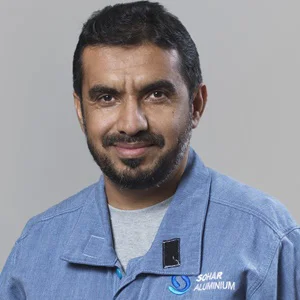
“In envisioning the role of digital transformation in shaping the future of the aluminium industry, Sohar Aluminium sees these initiatives as transformative forces,” Abdullah Al Maamary, IT Manager, Sohar Aluminium
- Category
- Interview
- Date
- Source
- AlCircle.com
Abdullah Al Maamary, Information Technology Manager for Sohar Aluminium, is at the forefront of implementing innovative changes in technology. He has twenty-two years of experience in the industrial sector, extending across a broad cross-section of functions in the oil and gas and the metal and mining industries. In his current capacity as Information Technology Manager at Sohar Aluminium LLC., Abdullah integrated strategic IT solutions to support business needs in a rapidly and constantly changing digital age. These solutions aim to increase productivity while creating value, reducing costs and improving the efficiency of the operations. Abdullah holds a bachelor’s degree in science in electrical power engineering from the Glasgow Caledonian College.
AL Circle: Can you provide an overview of Sohar Aluminium's current position in the aluminium industry and its journey so far? How would you describe the role of digital transformation within Sohar Aluminium's overall business strategy?
Abdullah Al Maamary: Sohar Aluminium continues its journey as a leading technology and innovation-driven company that has emerged as the "smelter of the future" in the aluminium industry. A superior technical foundation and operational excellence characterise the company's short history, including using state-of-the-art smelting technology, state-of-the-art production, efficiency and safety optimisation tools, and continuous evaluation of new technologies and innovations. Sohar Aluminium has implemented the tenets of the 4th Industrial Revolution to ensure its competitiveness. This involves focusing on various Industry 4.0 technologies such as mobile connections, big data, machine learning, the Industrial Internet of Things (IIoT), artificial intelligence, robotics, and industrial communication.
Sohar Aluminium's IT and Automation team is dedicated to advancing operational excellence, emphasising the crucial role of digital transformation in streamlining the company's processes. Our journey so far has been about embracing the power of technology to streamline processes, enhance efficiency, and future-proof our operations. Digital transformation isn't just a buzzword for us; it's a pivotal component of our overall business strategy. We recognise that in an ever-evolving landscape, staying competitive means leveraging technology intelligently. From optimising production processes to improving customer experiences, we see digital transformation as the catalyst for sustainable growth. We are not just digitalising for the sake of it; we are strategically integrating technology to unlock new possibilities. Whether it is harnessing data analytics to make informed decisions or implementing IoT for real-time monitoring, our aim is to create a more agile, adaptive, and innovative organisation.
This journey is not just about adopting new tools; it is a mindset shift. We are fostering a culture of continuous improvement and embracing change as an opportunity rather than a challenge. Digital transformation is the engine driving us towards operational excellence, and it is ingrained in every facet of our business strategy.
The company's overall strategy revolves around continuous improvement and promoting a robust downstream aluminium industry, aligning with strict requirements mandated by local authorities.
AL Circle: What specific digital transformation initiatives has Sohar Aluminium implemented in recent years? Can you highlight any notable successes or achievements resulting from these digital initiatives?
Abdullah Al Maamary: In recent years, Sohar Aluminium has taken significant steps to transform itself digitally, establishing its identity as a company that values innovation and technology. By integrating aspects of Industry 4.0, the company consistently reviews and assesses new technologies and advancements to improve productivity, cost-effectiveness, and competitiveness.
Our company has seamlessly integrated IIoT to connect and monitor remote machinery, presenting real-time data on a user-friendly dashboard. The implementation of condition-based monitoring ensures proactive maintenance, with instant email notifications for potential issues. Expanding our information platform through wireless networks, tablets, and smartphones has elevated collaboration and decision-making. The use of advanced analytics to quickly gain insights from time series data to optimise business outcomes has transformed how manufacturing data is utilised for faster and better business outcomes. Simultaneously, our commitment to sustainability is evident as we have successfully transitioned numerous paper processes to a more efficient and eco-friendlier paperless format. Collectively, these initiatives underscore our notable successes in achieving operational excellence through digital innovation in the aluminium industry.
Sohar Aluminium's unwavering commitment to improvement and operational excellence has been bolstered by these initiatives, resulting in establishing a standard-setting smelter operator within the industry.
AL Circle: How have these digital transformations impacted the efficiency and productivity of Sohar Aluminium's operations?
Abdullah Al Maamary: The digital transformations implemented in our company have profoundly impacted operational efficiency and productivity. The integration of IIoT to connect and monitor remote machinery has provided real-time insights into our operations and streamlined decision-making processes. The condition-based monitoring system has significantly improved equipment reliability, minimising downtime and allowing for more proactive and efficient maintenance strategies. Expanding our information platform through wireless networks and mobile devices has enhanced communication and collaboration, leading to quicker response times, and improved overall productivity. Additionally, the transition to paperless processes has streamlined workflows, reduced manual errors, and accelerated task completion. In summary, these digital initiatives have collectively optimised our operations, fostering a more agile, responsive, and productive work environment.
AL Circle: What role do emerging technologies, such as IoT (Internet of Things) and AI (Artificial Intelligence), play in Sohar Aluminium's digital transformation strategy? How has integrating advanced technologies improved safety measures and sustainability practices within the company?
Abdullah Al Maamary: The integration of emerging technologies, notably IoT (Internet of Things) and AI (Artificial Intelligence) plays a pivotal role in our company's digital transformation strategy. The implementation of IoT has enabled us to connect and monitor remote machinery in real-time, providing a comprehensive view of operations. In conjunction with IIoT data, AI has facilitated advanced analytics, allowing for predictive maintenance through condition-based monitoring.
In terms of safety measures, these technologies have significantly enhanced our ability to identify potential equipment issues preventively. The condition-based monitoring system, powered by AI, allows for predictive analysis, helping us address and rectify equipment issues before they escalate. This proactive approach has minimised the risk of accidents and contributed to a safer working environment for our employees.
Moreover, the integration of these advanced technologies has had a profound impact on sustainability practices. The efficient use of IIoT in monitoring and optimising resource utilisation has led to reduced energy consumption and waste. AI-driven analytics enable us to identify areas for process optimisation, contributing to overall sustainability goals. The transition to paperless processes made possible through these technologies, aligns with our commitment to environmental responsibility.
Additionally, the company has implemented AI data analytics solutions to increase process efficiency and safety protocols. The company's power plant excels in efficiency, dependability, and low emissions, reflecting the positive impact of digital transformation on environmental sustainability. The integration of these technologies has also played a significant role in Sohar Aluminium's sustainability practices.
AL Circle: What challenges has Sohar Aluminium encountered during its digital transformation journey, and how were they addressed? How has the organization ensured the security and resilience of its digital infrastructure amidst the evolving technological landscape?
Abdullah Al Maamary: During the course of its digital transformation, Sohar Aluminium has faced several difficulties, including integrating cutting-edge technologies, handling security issues, and guaranteeing the resilience of its digital infrastructure. Several of these issues and the corresponding fixes for them consist of:
- Plant-wide awareness meetings: To ensure that its technical workers were fully on board with the digital transformation initiative, which included using the Industrial IoT and AI, the Sohar Aluminium IT team launched plant-wide awareness meetings. This assisted in resolving any issues and made the successful adoption of these technologies possible.
- Interacting with stakeholders: The business held discussions with a number of important stakeholders about the significance of the digital transformation project and its possible effects on the long-term, safe, and profitable operations of Sohar Aluminium. Several stakeholders' support and trust were increased as a result of this strategy.
- Taking care of security issues: The business had to make sure that its digital infrastructure was secure and resilient as it incorporated new technologies. Strong cybersecurity safeguards were put in place by Sohar Aluminium to guard its systems and digital assets from possible attacks.
- Constant adaptation and improvement: To increase output, effectiveness, and safety, Sohar Aluminium's IT and Automation team constantly tests new ideas and technologies. With this strategy, the business is guaranteed to stay flexible and competitive in the quickly changing technological environment. Through the resolution of these issues, Sohar Aluminium has been able to carry out digital transformation projects that have enhanced its productivity, safety, and sustainability procedures.
AL Circle: What upcoming digital initiatives or technologies is Sohar Aluminium considering for future implementation? How does the company envision the role of digital transformation in shaping the future of the aluminium industry?
Abdullah Al Maamary: As Sohar Aluminium continues to chart its course towards technological advancement, several cutting-edge digital initiatives and technologies are on the horizon for future implementation. One notable initiative in consideration is online liquid metal monitoring, a solution designed to enhance safety and efficiency by providing real-time insights into the status of liquid metal processes. This not only ensures a safer working environment but also accelerates the monitoring process, contributing to faster decision-making.
Sohar Aluminium is set to revolutionise its operations with MPC technology, a sophisticated control strategy that utilises predictive models to optimise process variables. This innovative solution anticipates and adjusts to real-time dynamic conditions, ensuring precise control over critical parameters. By leveraging MPC, we aim to achieve unparalleled levels of production stability, energy efficiency, and product quality. This strategic adoption of MPC reflects our commitment to embracing cutting-edge technologies and underscores its pivotal role in our vision for the future of the aluminium industry.
The company envisions leveraging vision systems to automate certain processes, marking a shift towards greater autonomy in production. This initiative aims to streamline operations, reduce manual intervention, and enhance precision in various stages of the manufacturing process.
Artificial Intelligence (AI) is poised to play a pivotal role in shaping the future of Sohar Aluminium. The implementation of AI for analysis and auto-control in the metal production process is on the agenda, with the goal of optimising efficiency and output quality. This sophisticated application of AI technology ensures a level of precision and adaptability that can significantly improve the overall metal production process.
Additionally, incorporating AI for equipment health monitoring stands out as a crucial aspect of the company's digital roadmap. This initiative involves deploying AI algorithms to continuously assess the health status of equipment, enabling predictive maintenance strategies. By foreseeing potential issues and automating responses, this AI-driven approach aims to minimise downtime, enhance reliability, and prolong the lifespan of critical machinery.
In envisioning the role of digital transformation in shaping the future of the aluminium industry, Sohar Aluminium sees these initiatives as transformative forces. The integration of advanced technologies not only streamlines current processes but lays the foundation for a more intelligent, responsive, and sustainable industry. As digitalisation becomes increasingly intrinsic to operations, the company anticipates enhanced efficiency, improved safety measures, and a significant contribution to shaping the aluminium industry's future landscape. The commitment to exploring and implementing these digital initiatives underscores Sohar Aluminium's dedication to staying at the forefront of technological innovation in the aluminium manufacturing sector.
AL Circle: How does Sohar Aluminium measure its digital transformation initiatives' success and ROI (Return on Investment)?
Abdullah Al Maamary: Sohar Aluminium employs a comprehensive set of metrics to gauge the success of its digital transformation initiatives and return on investment (ROI). One key performance indicator is the reduction in downtime, a critical metric that reflects the efficiency and reliability of the implemented technologies. By leveraging digital solutions such as online liquid metal monitoring, AI-driven equipment health monitoring, and autonomous process controls through vision systems, the company aims to minimise disruptions and downtime in its operations, ensuring continuous and streamlined production.
Another crucial metric in measuring success is the reduction in manpower requirements. The implementation of digital technologies, such as AI for analysis and auto-control, is designed not only to enhance operational efficiency but also to optimise resource utilisation. As manual interventions decrease, the company expects a reduction in the need for extensive manpower, contributing to cost savings and increased overall productivity.
Time efficiency is a key focus area, and the company tracks the reduction in the time required for troubleshooting as a vital success indicator. With advanced technologies in place, including AI for analysis and auto-control, troubleshooting processes have become more streamlined and responsive. Rapid identification and resolution of issues contribute to minimising operational disruptions, improving overall efficiency, and swiftly responding to challenges.
The cost of support is another integral factor in assessing the success and ROI of digital initiatives. By leveraging technologies that reduce the need for extensive manual support, the company anticipates a decline in support costs. Whether through predictive maintenance enabled by AI or the autonomy gained through vision systems, the goal is to optimise operational support, leading to cost efficiencies and a more sustainable operating model.
In essence, Sohar Aluminium employs a multifaceted approach to measure the success and ROI of its digital transformation initiatives. From reducing downtime and manpower requirements to improving troubleshooting efficiency and minimising support costs, these metrics collectively provide a comprehensive evaluation of the transformative impact of digital technologies on the company's operations.
AL Circle: Can you share any key performance indicators (KPIs) that are particularly relevant to tracking the impact of digital transformation in the aluminium industry?
Abdullah Al Maamary: Numerous key performance indicators (KPIs) can be used to monitor the effects of the aluminium industry's digital transformation. Among these KPIs are, for instance:
1. Return on Digital Investments: This Key Performance Indicator computes digital transformation initiatives' financial impact and ROI (return on investment).
2. Employee Productivity: This KPI evaluates how the digital transformation has impacted worker productivity by lowering manual labour and raising automation.
3. Adoption & Performance Metrics: This KPI evaluates the uptake and effectiveness of novel ideas and technologies, such as the Industrial Internet of Things (IIoT) and artificial intelligence (AI).
4. Customer Experience Metrics: Using data on things like faster lead times and better-quality products, this KPI evaluates how the digital transformation has enhanced the customer experience.
5. Reliability & Availability: This KPI accounts for the reduction of unplanned downtime and the augmentation of asset uptime, as well as the impact of the digital transformation on equipment availability and reliability.
6. Cost-Benefit Analysis: Using metrics like revenue growth and production cost reduction, this KPI determines how profitable digital transformation initiatives are.
7. Energy Consumption: This KPI computes the impact of the digital transformation on energy consumption, including the amount of energy saved and the efficiency of the energy used.
All things considered, these KPIs assist in gauging the ROI and success of digital transformation projects in the aluminium sector, allowing businesses to monitor advancement and make informed decisions.

