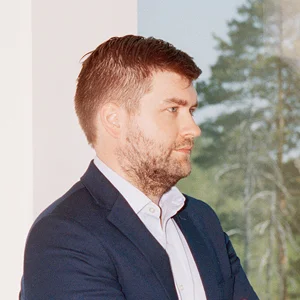
“I believe China will continue to invest but not necessarily increase its overall production”- Antti Koulumies, Vice President, Aluminium Business Line, Outotec
- Category
- Interview
- Date
- Source
- AlCircle.com
- Edited By
- Heena Iqbal
Outotec provides industry benchmark technologies and life-cycle services for their customers in metals and mining, industrial water treatment, alternative energy, and chemical sector, helping them improve their profitability in a sustainable way. Outotec possesses over a century of experience in developing technologies at its in-house R&D centers. Antti Koulumies, Vice President, Aluminium Business Line, Outotec gives an insight into the company's upcoming projects and new technologies in the aluminium sector for 2020 in the below interview:
AlCircle: As a technology provider for the metal and mining sector how has been the year 2019 for you and what are you expecting in 2020?
Antti Koulumies: The aluminium market saw a lot of turmoil during 2019 and due to the uncertainty, we saw decision making for new projects being quite slow. Therefore our team was busy delivering on existing projects, like the successful finalization of the ALBA Line 6 Rodshop, helping customers with smaller brownfield modernizations and equipment replacements, focusing on our research and development with some exciting work done on digitalization and robotics, as well as active sales work for opportunities that are still cooking so to say.
I think with all the work done in 2019, we’re in a good position to start the new year, and I’m quite encouraged to see the market activating on many fronts, mostly as overdue investments really have to get started.
The big news within Outotec was of course the news of our merger with Metso, another Finnish Minerals processing technology company that is expected to close during the second quarter of 2020. Outotec also decided to focus on a narrower portfolio of metals refining technologies, meaning that our aluminium carbon area and cast house business will be divested to a new owner. Alumina, on the other hand, will continue to be part of Outotec’s portfolio.
I’ve had discussions with most of our customers on this topic, and I believe this move will enable us in aluminium to serve our customers even better going forward. Our aluminium business has operated quite separately from the rest of the group over the last decades so there is no operative impact to be expected, while I think going to a different set up will enable us to make decisions in a more agile way. The feedback from customers has been amazingly supportive, with the key message being that the main thing is to maintain our strong technologies and our key people, regardless of whose name it is at the door. I’m also very encouraged by how our team is taking this – we have a strong spirit ongoing with the whole team remaining intact, and I’m very optimistic about what 2020 will bring!
AlCircle: Could you please brief us on the performance of the aluminium division for Outotec in 2019 and what is your projection for 2020?
Antti Koulumies: The market could certainly have been active, as very few investment decisions were made in 2019. I believe activation will happen here. On the other hand, I’ve been encouraged by the projects we did win in 2019, as all of them of course were a result of fierce competition, and also how our team has been delivering. We successfully commissioned the ALBA Line 6 Rod Shop project and were very proud to support this smelter expansion as it was done at a very high speed with tight cost control. We have also been developing our offering further in conjunction with some of our active projects going on in China, North America and the Middle East.
AlCircle: Which region according to you will be driving the global aluminium growth in 2020?
Antti Koulumies: I think the market has been in a bit of a wait and see mode in the last couple of years, as the ALBA line 6 project has been for all intents and purposes the only major expansion we’ve seen being commissioned ex-China, while in China, investments have been mostly replacement of older capacity with newer technology. Having said this, I can see investment activity currently expected in 2020 in China, where many potlines are being moved to areas with cleaner electricity, the Middle East, India as well as Eurasia. In the longer term, I believe China will continue to invest but not necessarily increase its overall production, I can see a wave of investment in India before there’ll again a period of digestion, while in the Middle East, I see a continued drive for expansion in the next 5-10 years. Investment in aluminium will happen, that’s a given, as the long term demand drivers are certainly there, but how many new projects we’ll see each year depends on the overall outlook which seems to be experiencing a period of uncertainty right now.
AlCircle: What new technologies await the aluminium sector in 2020?
Antti Koulumies: I doubt we’ll see any new ground breaking innovation hit the market ready-commercialized in 2020, as this is an industry with very long lead times for innovation. However, the market is watching both RTA/Alcoa’s Elysis as well as Rusal’s inert anode projects with great interest. They can be a great sustainability factor in the longer term future, especially in regions with a low carbon energy footprint, as we need to remember that in areas where electricity is produced with fossil fuels, the direct carbon output from smelters is only the fraction of what is caused by electricity generation. What will be key is to understand whether these technologies cause the smelter to use more or less of electricity, as this can impact the sustainability question quite a bit depending on the region.
I therefore see a definite need to also continue to improve the efficiency of existing technologies. Potlines are certainly more efficient, line by line, but we in anode and rodding technology can certainly play our part too. We’re developing digital solutions including robotics, which will help optimize the overall process, and therefore contribute to less carbon and electricity consumption in the potlines. Robotics will also make for example rod shops safer places to work.
AlCircle: How do you think energy economy and sustainability will drive the aluminium sector in 2020?
Antti Koulumies: I think the drive is certainly there, but the big question is how quickly customers will start paying a premium for aluminium with a lower carbon footprint. There is talk of introducing new commodity classes on the exchanges based on the CO2 intensity, as well as about different forms of carbon taxes, either based on consumption or importing of semi-finished goods. Either way, the environmentalist in me is very encouraged by the heightened focus on these topics in our industry, as well as the seemingly quick adoption of e.g. the aluminium stewardship initiative of ASI. On the other hand, even with existing technologies, the specific CO2 footprint of aluminium could be brought down by at least 10-20 % if all best available technologies were adopted globally, and I would hope that the industry would more quickly start renewing its installed base. I think over time, regardless of taxation, pressure will grow for this to start happening.
AlCircle: Please brief us on the key upcoming projects by Outotec in the aluminium sector towards digitalization and automation
Antti Koulumies: We’ve been focusing quite a bit on further demanning the rodshop from manual labour which can be quite hazardous, with the use of robots. We’ve also been working further on our digital applications particularly in predictive maintenance by using advanced sensors. Our first references in this field will be commissioned at customer sites this year. Going forward, we’ll be integrating our latest and greatest in digital applications in all our new plant projects, as our systems architecture is based on cloud-based, open solutions, meaning our data can talk to practically what evern automation platform our customers use.
AlCircle: What is your view on Chinese smelting technology? How is it going to influence the industry in 2020?
Antti Koulumies: At Outotec, we’re neutral in terms of potline technology – our green anode and rodshop technologies work with all potline technology providers. What we can see, however, is that innovation in the potlines has gone quite far in China with some very interesting numbers being shown particularly on energy efficiency. China has the added benefit of having commissioned many new potlines over the last years, providing local technology with a good real live test bed for new innovations. On the carbon side, however, we’re proud to be a very relevant player in China and many customers have chosen our rodshop technologies or e.g. vibrocompactors to complement their smelter investments. There’s a saying, if you’re competitive in China, you’re competitive everywhere, and I certainly believe this. It’s very important for us to be active in the Chinese market as keeps us constantly on our toes, finding new ideas to develop our technologies while also developing our cost competitiveness.

