“EGA plans to build a 150,000 tonnes per year aluminium recycling facility, which will be our first and the largest of its kind in the UAE”, Abdulnasser Bin Kalban, CEO of Emirates Global Aluminium
- Category
- Interview
- Date
- Source
- AlCircle.com
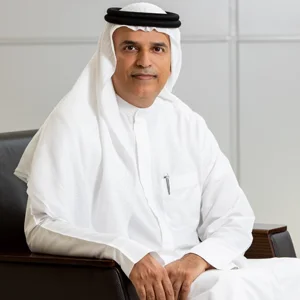
Abdulnasser Ibrahim Saif Bin Kalban is Chief Executive Officer of Emirates Global Aluminium (EGA). Before he was appointed CEO in 2020, Mr Bin Kalban had served as an Alternate Board Member of EGA since May 2017. He is a member of EGA’s Technical and Project Committee and its Finance and Commercial Committee. However, he also sits on the Board of Guinea Alumina Corporation (GAC), EGA's bauxite mining subsidiary.
As Chief Executive Officer, Mr Bin Kalban is responsible for managing EGA’s ongoing operations and business and reports to EGA’s Managing Director. Mr Bin Kalban joined DUBAL in 1996 and worked in both Major Projects and the Power and Desalination Department. (DUBAL merged with EMAL to form EGA in 2014). In 2014, Mr Kalban left his position as General Manager of Power and Desalination at EGA to become CEO of Dubal Holding LLC, EGA’s 50% shareholder.
Mr Kalban has a bachelor’s degree in Electrical Engineering from Western Michigan University in the United States and has completed Strategic Management and Leadership Courses at INSEAD Business School, France and Harvard Business School.
AlCircle: How do you forecast 2022 for the global aluminium industry and also in consideration of EGA following the Covid pandemic?
Mr Abdulnasser Bin Kalban: Our view, in general, is that the long-term outlook for aluminium is very strong because it is an essential material for the development of a more sustainable society. In the shorter term, strong market conditions have continued into 2022. Of course, there are various potential headwinds and tailwinds from interest rates tightening, to geopolitical issues, to the strength of the recovery from COVID-19.
As we have shown during COVID-19, Emirates Global Aluminium is robust throughout the economic cycle. With regards to detailed public forecasts, we leave that to analysts.
AlCircle: Could you please brief us on EGA’s performance for 2021 and how you envision 2022?
Mr Abdulnasser Bin Kalban: In 2021, EGA delivered the best financial performance in the history of our company. Our adjusted EBITDA more than doubled in 2020 to $2.5 billion, and our net profit saw a 1,140% increase to $1.5 billion.
Throughout the value chain, we delivered a solid operational performance with higher production and sales in every commodity. Cast metal saw an increase from 2.52 million tonnes in 2020 to 2.54MT in 2021, alumina from 1.9MT to 2.3MT, and bauxite from 9.7MT to 12MT.
In 2021, we delivered robust returns to our shareholders, significantly deleveraged, and made bold steps toward sustainability, including becoming the first company in the world to make aluminium commercially using the power of the sun, which we market under the product name CelestiAL.
Strong demand is continuing into 2022, but we will update on our performance after the first half and then at the end of the year.
AlCircle: Could you please elaborate on EGA’s initiative toward building a pilot plant to convert bauxite residue into environment-friendly soil?
Abdulnasser Bin Kalban: Industry experts estimate that at least 150 million tonnes of bauxite residue are produced worldwide each year, with less than two per cent currently put to productive use. At EGA, we have a long-term aspiration to send zero process waste to landfills. We have already made very significant progress on challenging waste streams for our industry such as spent pot lining.
Bauxite residue is a waste stream from alumina refining, and industrial activity we began in the UAE in 2019, so this is a waste stream we must address.
Following five years of R&D into economically-viable uses of bauxite residue, with the University of Queensland’s School of Agriculture and Food Sciences, we will begin the construction of a pilot plant to convert this residue into soil products that can be used for greening and other purposes in the UAE.
Due to its arid climate, the UAE has insufficient naturally-occurring soil and imports large quantities of soil products each year for greening and agricultural purposes from as far afield as Europe.
We call this manufactured soil, Turba (the Arabic word for soil), and it enhances plant growth while using less water and fertiliser than local sandy alternatives.
Our Turba process is a huge breakthrough for the productive use of bauxite residue and our pilot plant, which we expect to be operational in 2023, will enable us to learn how to apply it on a large scale.
Our R&D team has developed other potential uses for bauxite residue, and you will hear more about some of these soon.
AlCircle: What was the intent that drove EGA to market recycled aluminium under the product name EternAL?
Abdulnasser Bin Kalban: I am thankful you brought up this question on recycling. Currently, more than 50 per cent of aluminium scrap generated in the GCC is either disposed of or exported.
As the end-users of aluminium, from car manufacturers to beverage makers, are committing to net zero in response to societal expectations, we too are taking steps to provide low carbon metal for our customers around the world. One of these steps is developing our business in recycling.
We plan to build a 150,000 tonnes per year aluminium recycling facility, which will be our first and the largest of its kind in the UAE. We intend to market recycled aluminium under the product name EternAL.
Production of aluminium through recycling of course requires a fraction of the energy consumed to produce new primary aluminium.
AlCircle: What are the latest power developments undertaken by EGA to decarbonise aluminium production?
Abdulnasser Bin Kalban: We recently announced a major initiative that would unlock significant further development of solar power generation capacity on the national grid and decarbonise EGA’s aluminium production in the UAE.
For more than 40 years, EGA has had its gas-fired power plants. Under this initiative, we would now source grid power for our energy needs, including an increasing proportion of clean energy procured by the Emirates Water and Electricity Company. This would enable us to become a leader in the global aluminium industry’s drive towards net-zero by 2050.
The scale of the solar power expansion as a direct result of this initiative is expected to be greater than the current total installed solar generation capacity in the UAE.
EGA expects to utilise this new solar power once connected to the grid, which would enable us to vastly increase the proportion of our CelestiAL solar aluminium production and other low carbon aluminium products.
We are taking another historic step towards achieving net-zero greenhouse gas emissions by 2050 through these power developments. At the same time, we are also assuring that EGA’s global competitiveness will strengthen over the decades ahead, not only as the world’s largest ‘premium aluminium’ producer but also as one of its most environmentally responsible.

