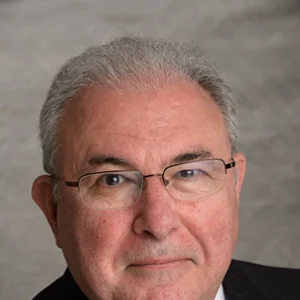
"By lowering our own emissions, increasing recycling and helping our customers develop products that enable CO2 savings; we aim to make carbon neutrality a reality." Mr. Alberto Fabrini, Executive Vice President - Head of Bauxite and Alumina, Hydro, Brazil
- Category
- Interview
- Date
- Source
- AlCircle.com
Brazil is Hydro's main source for bauxite and it employs more than 6,000 people in the country for their business in the aluminium value chain. Hydro extracts bauxite in Paragominas and Trombetas and refines bauxite to alumina at the world's largest alumina refinery, Alunorte. AlCircle had an opportunity to talk to Mr. Alberto Fabrini, Executive Vice President - Head of Bauxite and Alumina, Hydro, Brazil and he shared a few crucial aspects of Hydro’s aluminium business in Brazil.
AlCircle: Brazil is Hydro's main source for bauxite with two large mines at Paragominas and Trombetas. Please share with us the current bauxite situation in Brazil.
Mr. Alberto Fabrini: The bauxite situation for Hydro in Brazil is quite satisfactory. As a result of our ‘from B to A’ improvement program, we have gradually been increasing production levels at the Paragominas mine. Paragominas has a nameplate capacity of 9.9 million tons of annual production. In Q4 2014 we were producing at an annualized speed of around 10.2 million tons, 0.3 million tons above nameplate capacity. This came somewhat down in Q1 due to maintenance, but is now back at high levels again following the maintenance period.
We are extremely pleased with having a long position in bauxite these days. The Chinese producers are short of bauxite, and following the Indonesia export ban of bauxite, the Chinese producers have been importing bauxite from all over the world, including Brazil. That results in opportunities for our commercial division realizing increasing margins.
AlCircle: Hydro’s Alunorte refinery in Brazil contributed considerably towards Hydro’s improved earning in 4th quarter 2014 as well as the 1st quarter 2015. Please brief us about the present alumina business of Hydro.
Mr. Alberto Fabrini: As previously announced, Hydro experienced some operational problems at Alunorte in 2013, due to two external power outages. This resulted in low production levels and depressed earnings. However, through 2014 operations have stabilized at a higher level and the refinery is now producing around 6 million tons on an annual basis. We are aiming to lift production to 6.3 million tons (nameplate capacity). This has also been reflected in the margin development, which for the first quarter in 2015 was around USD 75 per ton sold, up from USD 10 in the start of 2014. An additional significant contribution to this development, apart from prices, is the efforts being delivered through the ‘from B to A’ improvement program. We have delivered NOK 700 million, but still have NOK 300 million to deliver in 2015. In addition, it is important to remember our contract portfolio. We are gradually selling more and more volumes on index, as opposed to the historical percentage of LME, and thereby further improving margins. In 2014 we had approximately 25% of sales volumes available for index, while in 2015 we are looking at around 30%.
AlCircle: What is your view on the rising opposition against mining around the world? Is it also affecting Hydro’s bauxite mining business in Brazil?
Mr. Alberto Fabrini: We are conscious about the challenges related to bauxite mining. We are working with the authorities, adhering to our licenses to operate and we are using new technologies with lower impact. Through international aluminium and mining associations, we are discussing and are accessing best practice in the field. We have started a cooperation with universities in Pará, Brasil, as well as in Norway to ensure that we are in the forefront of developing the ways we operate. As an example, we are currently well underway in a biodiversity project, which aims to maintain and improve biodiversity where we have our operations. The reforestation project at Paragominas has been running for several years, and has good progress. While we perform reforestation, we are at the same time studying and developing new methods.
AlCircle: How is Hydro’s business contributing to the economy of Brazil?
Mr. Alberto Fabrini: Our operations in Brazil are contributing significantly to the economy of Para and Brazil. We employ more than 7000 people in our plants. Additionally comes all the workers that are supplying goods and services to our operations. We are also supporting the diversification and domestic business through supply of primary metal to downstream businesses, locally in Pará and elsewhere in Brazil. These all support the local and national economy.
AlCircle: Considering the power crisis in Brazil how is Hydro tackling it in its refineries and smelters?
Mr. Alberto Fabrini: Hydro’s Alunorte refinery is not very dependent on electricity as an energy source. The refinery produces the main part of its power through co-generation using an energy matrix composed by electricity, coal and fuel oil. However, the Albras smelter uses power from the grid. Albras has a long-term power contract with Eletronorte, and is therefore not exposed on the cost side to the high power prices in the balancing market. In addition Albras is situated in the “Norte” region where the hydrological situation has not been as constrained as in other regions. However, if a national rationing situation was to take place, we do not know how it might impact our operations; if it would be a nationwide or regional rationing. So this remains an area of risk, which we keep a close eye on.
When it comes to power security at Alunorte, then we have made significant improvements to the infrastructure following the power outages of 2013. We are now able to keep operations at sufficient levels to avoid serious operational problems if an external power outage were to take place, as a result of backup diesel power generators and better infrastructure.
AlCircle: What are the sustainability goals that Hydro is targeting at present?
Mr. Alberto Fabrini: Our objective is to have a zero carbon footprint by 2020. By lowering our own emissions, increasing recycling and helping our customers develop products that enable CO2 savings; we aim to make carbon neutrality a reality. We have activities along the entire value chain of aluminium: from bauxite mining, alumina refining, aluminium production and recycling to research and cooperation with customers to deliver the aluminium solutions they need to save energy and reach their carbon targets. We have developed a coherent strategy for our business with measures in three key areas to ensure carbon neutrality:
• Production: we can lower emissions in our own production
• Recycling: we can increase our share of the recycling market
• Use phase: we can work closely with customers to deliver the aluminium and develop the solutions they need to achieve carbon savings
AlCircle: Do you think that the current market condition for aluminium is favourable to the primary producers? What is your take on the falling aluminium premium in the major markets?
Mr. Alberto Fabrini: After many years of over-capacity, 2013 and 2014 started showing signs of improvements, as large producers started curtailing capacity and at the same time demand continued to grow. This resulted in a situation where demand exceeded production by around 1 million tons in the world outside China, which lifted the all-in prices for aluminium. This situation is still present, however has become somewhat more uncertain due to exports of metal out of China. This is also in our view the reason as to why premiums have come down to the extent that they have.
AlCircle: Give us your input on the recently announced first quarter 2015 results of Hydro.
Mr. Alberto Fabrini: Hydro's underlying earnings before financial items and tax increased to NOK 3,208 million in the first quarter, up from NOK 2,886 million in the fourth quarter of 2014. The results reflect higher sales across the value chain and a stronger US dollar.
Underlying EBIT for Bauxite and Alumina further improved in the first quarter reflecting higher alumina sales volumes and the strengthening USD. Results were also supported by cost and revenue improvements relating to the "From B to A" improvement program. Negative effects of lower LME-linked alumina prices were partly offset by an increase in alumina index based sales volumes. The extended maintenance at the Paragominas ball mill is completed and the bauxite mine is now back in full production.
Primary Metal underlying EBIT improved slightly in the first quarter influenced by a further increase in realized aluminium prices and premiums measured in Norwegian kroner. Positive developments were partly offset by higher costs for alumina and power, reflecting higher prices, and negative currency effects.
For Metal Markets, underlying EBIT declined substantially compared to the fourth quarter. Results were impacted by negative results from sourcing and trading activities as a result of a decline in standard ingot premiums. The negative results were partly offset by improved results from remelt operations due to higher product premiums and seasonally higher sales volumes in Europe.
Rolled Products delivered higher underlying EBIT compared with the fourth quarter of 2014, mainly due to seasonally higher sales volumes, higher operating margins and currency gains on export sales.
Underlying EBIT for Energy increased slightly compared to the fourth quarter due to higher production, partly offset by lower prices and increased production costs.
Underlying EBIT for Sapa increased compared to the previous quarter, due to higher seasonal demand, continued strong growth in North-America and the positive effects of improvement programs.
Disclaimer: “The information presented herein is neither intended nor implied to be a substitute for professional advice. The views and opinions shared in the interview section of www.alcircle.com are unique to the interviewees and do not necessarily reflect the viewpoint of www.alcircle.com.”

