“BALCO has been an early adopter of smart technologies for heightened operational efficiencies, which further bolsters the culture of energy optimization, safety, and productivity that we have meticulously fostered across the organization”, Abhijit Pati, CEO & Director of Bharat Aluminum Company Limited (BALCO)
- Category
- Interview
- Date
- Source
- AlCircle.com
Bharat Aluminium Company Limited (BALCO) was established in 1965 as a Public Sector undertaking in Korba, Chhattisgarh. After its disinvestment in 2001, the Vedanta Group has taken over its management. The plant is hailed as one of India’s greatest disinvestment turnaround success stories, with a massive production capacity of 575,000 tonnes from its initial production of 100,000 tonnes when Vedanta acquired a 51% stake in the plant.
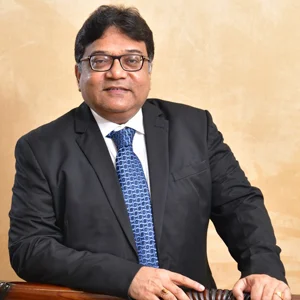
Mr Abhijit Pati is the Chief Executive Officer (CEO) and Director of Bharat Aluminum Company Limited. Mr Pati is a name to reckon with the Aluminium Industry for the past three decades and he has joined BALCO after a long stint as Chief Executive Officer of Vedanta Limited’s, Jharsuguda unit, which is one of the largest single location smelters in the world, outside China. He has rich experience and an illustrious career spanning over 30 years in the Aluminium Industry. In this interview, Mr Pati reveals the new plans and strategies of Balco designed for 2022.
AlCircle: How do you conceptualize 2022 for the global aluminium industry following the Covid economic impact, rise in the price of aluminium and the military conflict between Russia-Ukraine?
Mr Abhijit Pati: The global Aluminium consumption has been driven majorly by India and China having a growth rate of approximately 10% till pre-COVID times. The last decade has seen India’s consumption almost double from 2.2 million tons in FY-11 to about 4 million tons in FY-19. India’s Aluminium demand is estimated to double again by the year 2025 with the current resilient GDP growth rate driven by increasing urbanization and push for boosting domestic infrastructure, automotive, aviation, defence, and power sectors. Talking about Chhattisgarh, the state is already in an advantageous position in terms of industrial development, the need of the hour is to undertake requisite policy measures to support the downstream Aluminium industries which will further create numerous employment opportunities. Also, the supply of large scale processed Aluminium from Chhattisgarh to neighbouring states and worldwide will only lead to an escalation in the revenue figures.
AlCircle: Could you please brief us on BALCO’s significant contribution to supporting India in the journey of becoming self-reliant?
Mr Abhijit Pati: India is a leading player in the global Aluminium industry with the second largest Aluminium production capacity of about 4 million tonnes per annum (MTPA) of which around 55 per cent is produced by the Vedanta group constituting 15% of production by BALCO.
BALCO, India’s iconic Aluminium producer has not only set new benchmarks in the field of production, productivity, research and development, quality et al but has also positively impacted society through its various flagship projects. These significant contributions of BALCO through its 56 years long developmental journey have led to the development of state and nation at large, thus, supporting India in its journey of becoming ‘self-reliant’.
In its stride toward contributing to nation development, BALCO continued with its business operations by adhering to COVID safety protocols during the testing times of pandemics. Though the organization was also affected by the COVID induced worldwide economic challenges but the resilience of BALCO employees and its business partners drove the production process. It can be affirmed that India is gradually waking up to the potential of its minerals and metals industry, which ensured that the wheels of the economy kept running, despite the ravages of the pandemic. India’s mining GDP increased from INR 739.90 billion in the fourth quarter of 2020 to INR 913.03 billion in the first quarter of 2021, as per data from the Ministry of Statistics and Programme Implementation (MOSPI).
Aluminium is a metal of significant strategic importance to India, critical to almost all sectors of significance to modern life and essential to building a sustainable tomorrow. BALCO is playing a crucial role in introducing Aluminium as a potential alternative to other metals in various sectors such as in the power transmission industry. BALCO has been an early adopter of smart technologies for heightened operational efficiencies, which further bolsters the culture of energy optimization, safety, and productivity that we have meticulously fostered across the organization. Our primary focus is delivering the value of the highest standard to our stakeholders. We are constantly motivated towards improving our costs and our quality of production in each of our businesses through a culture of best practice benchmarking.”
AlCircle: How is BALCO coping with the shortage of coal supply to the captive power plant?
Mr Abhijit Pati: We are continuously having discussions and deliberations with the concerned government officials and the officials of SECL. We have also raised our concerns and issues related to the shortage in different fora and we are certain that requisite measures will be undertaken by the government to resolve the issue. Chhattisgarh constitutes around 18 per cent of the national coal reserves which means that 56 billion tonnes of coal are present in the state. More than 250 industrial units in Chhattisgarh are dependent on Captive Power Plants for their smooth business operations and require around 32 million tonnes of coal annually which is around 19 per cent of the total production of SECL. The inadequate coal supply can lead to the closure of several industrial units in the state creating unemployment on a large scale eventually giving rise to huge social unrest
AlCircle: Could you detail to us in regards to Balco’s planning to put effort towards sustainability and the environment in 2022?
Mr Abhijit Pati: We at BALCO are committed to ecosystem restoration and nurturing conservation efforts across all our areas of operations using new-age technology and our continuous disruptive thinking. We are conscious of our responsibility towards building a stronger and sustainable tomorrow for our future generations through our continuous environment preservation actions. Our commitment to safeguarding the ecosystem is embedded in our vision, corporate objectives, production processes and the way we conduct our business.
BALCO is focused on the concept of sustainable manufacturing by focusing on the economic, environmental, and social aspects of metal manufacturing activities. BALCO’s sustainability strategy is focused on evolving production processes to become more efficient with the increased use of green and clean technologies. BALCO has always been aligned with its vision to achieve Zero Harm, Zero Waste and work for conserving the natural resources and protecting the planet.
Over the years, BALCO has been proactively working for environmental protection and energy conservation; and in that direction, BALCO has taken up Energy Saving and Green House Gas (GHG) reduction as its topmost agenda and has been working dedicatedly towards it. BALCO’s Specific energy consumption has been one of the lowest in the Aluminium Industries across the country. BALCO has also brought down its specific water consumption today by 170% from its previous specific water consumption levels, which is also one of the lowest amongst its peers. Approximately 40,00,000 saplings have been planted to date in different operational areas of BALCO. These figures are a testimony to BALCO’s spirited endeavours toward environment and energy conservation which contribute to a greener and better planet.

