“As India grows and evolves, it will have higher consumption patterns across all sectors, and aluminium consumption will also hence grow” – Abhijit Pati, Chief Executive Officer, Bharat Aluminum Company Limited
Bharat Aluminium Company Limited (BALCO) was established in 1965 as a Public Sector undertaking in Korba, Chhattisgarh. After its disinvestment in 2001, the Vedanta Group has taken over its management. The plant is hailed as one of India’s greatest disinvestment turnaround success stories, with a massive production capacity of 575,000 tonnes from its initial production of 100,000 tonnes when Vedanta acquired a 51% stake in the plant.
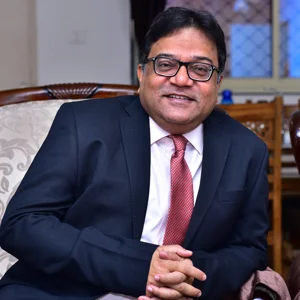
Mr. Abhijit Pati is the Chief Executive Officer of Bharat Aluminum Company Limited. Mr. Pati is a name to reckon with the Aluminium Industry for the past three decades and he has joined BALCO after a long stint as Chief Executive Officer of Vedanta Limited’s, Jharsuguda unit, which is one of the largest single location smelters in the world, outside China. He has rich experience and illustrious career spanning over 30 years in the Aluminium Industry. In an interview with Mr. Pati, he reveals his outlook on the Indian Aluminium industry, demand, current and future plans of BALCO.
AlCircle: Congratulations on becoming the CEO of Bharat Aluminium Company Limited! Could you please tell us your key agendas for 2020 relating to Aluminium operations?
Abhijit Pati: At the time of disinvestment in 2001, BALCO had a capacity of 1 lakh tonnes of aluminium and 270 MW power generation. Over the two decades, we have enhanced the capacity to 5.70 lakh tonnes per annum. In 2 to 3 years we aim to take it higher to 10 lakh tonnes and in subsequent years to a level of 30 lakh tonnes annually.
With the road to innovation and R&D going strong for BALCO, we believe that we are positioned well to cater to the needs of the Aluminium Industry with the best in class products and facilities in the coming years.
AlCircle: As BALCO is playing a crucial role in introducing aluminium as a potential alternative to steel in construction and copper in power transmission industry, do you expect aluminium to completely replace these two metals in the upcoming years?
Abhijit Pati: Aluminium consumption in India at 2.5 kgs per capita is much below the global average of 11 kg per capita. In China, it is 25 kgs per capita. More developed countries have even higher per capita consumption of aluminium. For example, Germany has 42 kgs of per capita aluminium consumption.
It’s a very challenging & exciting time for the business, as the construction industry uses nearly 25% of the world’s total production of aluminium. Aluminium has very important characteristic features which make it preferential as builder’s choice. It is abundantly available, recyclable, and require very minimal maintenance. For being light, the metal requires less energy for its transport and handling, it is strong, corrosion-resistant, and has a long life, which makes it environment-friendly. The use of aluminium is growing in building solar panels, door and window frames, roof covers, partitions, ceilings, stairs, etc. The usage of aluminium gives us more usable space and reduces the weight of any structure. It helps in speeding up the construction. Thus, its use in the construction industry is growing manifolds & that day is not very far when it will emerge as a potential alternative to steel in the field of construction.
Aluminium is also a cheaper alternative to copper for conductors. Aluminium has many advantages over copper in the power transmission industry and thus, makes it a favorite. The demand for copper is variable and the price fluctuates considerably, whereas the price of aluminium is much more stable. For this reason, aluminium is preferred for large-sized cables and for cables for overhead power distribution. Moreover, aluminium is lighter.
Aluminium is replacing copper wiring in vehicles also, reducing the weight of cars by nearly 12 kgs on average. We, as an industry, are very excited about the upcoming initiatives of the Govt. like smart cities, power for all, and indigenous space programmes which will further increase aluminium consumption.
Aluminium is being widely used in construction, as well as in the power transmission industry. So, its increasing usage will somewhat replace steel and copper in the coming years. Therefore, as India grows and evolves, it will have higher consumption patterns across all sectors, and aluminium consumption will also hence grow.
AlCircle: Which industrial sector, according to you, will drive the growth of the aluminium demand in 2020?
Abhijit Pati: India’s total aluminium consumption in FY19 was approximately 4 million tonnes, and that is also the total installed capacity of aluminium production in India. So, India is fully capable of catering to its aluminium needs domestically. Exports have increased from 1.7 million tonnes in FY18 to 2 million tonnes in FY19.
The usage of aluminium has seen exponential growth in a number of sectors like construction, power transmission, automotive, building, infrastructure, and packaging. Aluminium has been growing steadily at 7% to 10% over the past few years and will continue to grow at similar levels with applications rising at a fast pace in various sectors. In developed countries, aluminium has over 3,000 applications, whereas it is limited to only 300 applications in India. But there is an enormous scope to enhance usage as the country’s per capita aluminium consumption is a measly 2.2 kg as against the world average of 10 kg and 25 kg for China with comparable population. Germany ranks first with per capita aluminium, followed by Taiwan at 33.3 kg.
Building & construction sector is seen as one of the next biggest growth driver, as aluminium with its light-weight quality finds enhanced application. Further, the Government of India’s push for ‘Make in India’, especially in the defence sector is expected to open up a gamut of opportunities for the white metal. Aluminium is widely used in defence equipment like military aircraft, ammunition hardware, and missiles in the form of sheets, forgings, and extrusions. Aluminium will also be used for rural electrification and electric vehicles in the automobile sector.
India’s trade exports in the downstream sector are also showing positive trends. As per the data by Ministry of Commerce and Industry, the Aluminium exports have risen between 2015 and 2018.
AlCircle: BALCO currently has a smelting capacity of 570 ktpa. Do you have any plans to expand it shortly?
Abhijit Pati: In the last two decades, we have enhanced the capacity to 5.70 lakh tonnes per annum. We are working on making BALCO a 1 million tonnes capacity plant in the near future, as the growing market of aluminium consumption makes it a lucrative opportunity.
AlCircle: Which country ex-China do you expect to lead the aluminium production growth in 2020?
Abhijit Pati: Present world capacities of leading aluminium manufacturers are (in million tonnes/annum) China – 36.7, India - 3.3 Canada – 3.2, UAE- 2.6 and Australia- 1.5.
Markets in European Countries and China have reached a saturation point with the latter having grown phenomenally. All the Top Asian countries will prove to be the biggest drivers in the growth of aluminium production in 2020 and India will play a pivotal role in this regards. India is expected to be amongst the leaders of aluminum producers in India.
AlCircle: The US-China Trade War has pushed aluminium scrap imports to India affecting domestic primary producers. What according to you would be the best measure to combat this?
Abhijit Pati: The trade war between China and India has created a difficult situation where India has been made a dumping ground for aluminium scrap. China has already put a duty on US Scrap and is planning to ban the import of all aluminium scrap in 2020. In other aluminium producing countries, the governments are protecting the domestic industry and so Indian Industries will also like to be protected. In 2019, India surpassed China to become the largest importer of aluminium scrap in the world. It’s a very challenging time for Indian manufacturers. The revenues are being lost, as imported scrap is much cheaper than primary aluminium. The need of the hour is to increase import, institutionalize tax-friendly laws, anti-dumping charges, and other protective measures to support producers of primary aluminium. Niti Aayog has recommended a National Aluminium Policy and a core status for aluminium. Both are expected to protect domestic producers. The basic customs duty on primary aluminium needs to be looked into from time to time so as to protect the industry favourably. Similarly the basic customs duty on aluminium scrap also needs to be revisited so as to dissuade end users to rely on cheap scrap from outside.
AlCircle: Who do you consider your main competitor in the domestic market for 2020?
Abhijit Pati: Being the largest producer of aluminium in India, we are focusing on creating higher benchmarks of our own milestones and improving every parameter of the business.
AlCircle: Balco is always known to have adopted state of the art technology in its smelting and mining proceses, so can we expect any new innovations in 2020?
Abhijit Pati: BALCO is a world-class organisation and this we can say for sure as we have the best of technology, processes, and people. Our group believes in the best on all fronts. We are working on multiple technologies in the field of digitization, increasing our rolled products & we are in touch with new trends and adopt whatever suits our organization to stay ahead in the competition.
AlCircle: Leveraging on your rolled products market, give us a heads up on BALCO's downstream strategies for 2020.
Abhijit Pati: Balco has emerged as a very strong player in Value Added Products and we will continue to invest in line with evolving trends. For example, last year we had put up 90 KTPA State of the Art line to produce preferred Alloy Ingots needed for automobile segment. Similarly, we have developed some niche products for steel industry and further evaluating to put up a modern Rolled Product line.

