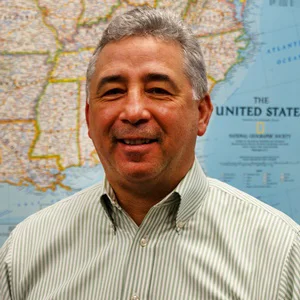
“Any time an Inductotherm furnace replaces or is installed instead of a fossil fuel furnace, we contribute to reducing emissions and energy consumption”, Michael Nutt, Vice President and General Manager - Sales at Inductotherm Corp
- Category
- Interview
- Date
- Source
- AlCircle.com
Michael Nutt started at Inductotherm Corp. in Rancocas, NJ 1988, working as a Field Service Engineer, servicing, commissioning, and troubleshooting Inductotherm induction melting and heating equipment.
In 2012, Michael was promoted to Senior Sales Manager, overseeing the District Manager team covering North America. He then became the Director of Sales and Inductotherm Corp. Board of Directors member in 2016. While in this position, he managed capital sales for domestic, inter-company, and international territories. Currently, Michael is Vice President and General Manager of Sales. He is responsible for the development and implementation of sales and marketing strategies.
Mike actively participates in the American Foundry Society (AFS), Ductile Iron Society (DIS), International Precious Metals Institute (IPMI), and Non-Ferrous Foundry Society (NFFS).
AL Circle: Could you please briefly overview Inductotherm and its role in the aluminium industry?
Michael Nutt: Inductotherm Corp. is an industry leader in designing and manufacturing technologically advanced systems for virtually all metals and materials, including aluminium. From start to finish, Inductotherm’s aluminium technology works. Converting alumina into pure aluminium and ultimately into useful aluminium alloys is an energy-intensive process, which is why energy-efficient furnaces manufactured by Inductotherm have proven their value in aluminium plants worldwide. Inductotherm’s induction furnace technologies can compete with more conventional methods such as fossil fuel and resistance furnaces. Induction is practical for all aluminium melting, holding, alloying, and heat-treating applications and offers many advantages over conventional aluminium melting and heating technologies.
We are proud to say we play a role in practically all areas of the aluminium industry, including primary aluminium production, alloy making, extruding, forging, sheet and foil, casting, and recycling. Basically, all phases of the aluminium life cycle.
AL Circle: What are the different types of systems provided by Inductotherm? Out of those, which one do you think is mostly used and which one do you think takes the bigger market?
Michael Nutt: Inductotherm Corp., along with the 40 companies that make up the Inductotherm Group, offers many systems for thermal processing in the aluminium manufacturing market, including melting furnaces, alloying/stirring furnaces for master alloy production, aluminium chip/swarf recycling systems, Hybrid™ furnaces for aluminium billet and slab cast houses, Direct Electric Heat (DEH) furnaces for aluminium die casters, investment casters and foundries, billet heating system for extrusion operations, and on-demand aluminium melting.
With Inductotherm’s wide variety of products and technology offerings to the aluminium industry, it would not be easy to point to the most used one. Due to the drive to reduce carbon footprint, many aluminium operations are pursuing greener alternatives, such as induction. This has resulted in Inductotherm systems being considered more often, where they perhaps may not have been in the past. This includes upgrading existing fossil fuel furnaces with induction boosters to reduce fossil fuel consumption. We believe the initiative ‘Go green’ has led many, if not most, cast houses to investigate induction technology for both large and small melting and casting furnaces. Inductotherm is already a leading manufacturer of induction melting, heating, holding, and pouring equipment for the metal casting industry, like foundries and investment casters.
AL Circle: What are some of the key innovations and technologies that Inductotherm has introduced in aluminium melting and heat treatment?
Michael Nutt: Some of our key innovations and technologies for aluminium melting would be our Acutrak® and Hybrid™ furnaces.
Our advanced Acutrak® Direct Electric Heat (DEH) System was designed to be a cleaner, more efficient alternative to a conventional gas-fired crucible furnace. With over 90% efficiency, it provides faster melting at reduced cost and cleaner melting and holding of aluminium compared to gas-fired furnaces. This technology is well suited for die-casting operations, permanent mold castings, and melts shops. This technology's unique feature is its high efficiency since there is no need for water cooling as with typical induction melting and heating systems.
Inductotherm's Hybrid™ Melting Furnace provides a combination of a coreless inductor and channel furnace uppercase. This makes it ideal for melting, holding, and casting large amounts of aluminium for options such as cast house-producing aluminium billets. This system offers the aluminium casting industry clean, proven, coreless induction technology as the heat source, along with the benefits of large holding capacity to allow for greater alloy flexibility and refractory life.
AL Circle: What are the primary advantages of using induction heating over traditional aluminium melting and heat treatment methods?
Michael Nutt: Efficiency: With induction, the aluminium, or the crucible (if applicable), is the heat source. There are no thermal losses from exhaust or losses in transferring heat from another heat source to the aluminium.
Greener, Environmentally Friendly Technology: Induction does not directly consume fossil fuels and, therefore, as a stand-alone system, has a zero-carbon footprint.
Metal Quality: Stirring is an inherited feature of induction melting. Additionally, today’s technology offers desired stirring levels.
For example, induction or master alloying furnaces may choose to have high stirring. In contrast, a metal caster may have minimum to no stirring to reduce exposure to oxygen and hydrogen.
Metal Recovery: Induction furnaces have proven to have 1 to 2% better metal recovery than fossil fuel furnaces, as there is no associated oxidation from burning fuel.
AL Circle: Sustainability is a growing concern in the aluminium industry. How does Inductotherm address sustainability and environmental impact in its products and processes?
Michael Nutt: Inductotherm designs and manufactures energy-efficient products which help our customer reduce their carbon footprint. We strive to meet and exceed our goals and green initiatives daily. Our objective is to contribute to a sustainable society as a supplier, and we value our suppliers and customers who do the same. We address sustainability by following the five R’s:
REDUCE waste, consumption, and pollution.
REUSE for optimum use and minimal scrap.
RECYCLE everything we can.
REMIND through policies and communication.
RECRUIT participation by everyone.
AL Circle: Are there any initiatives or technologies developed by Inductotherm that contribute to reducing energy consumption and emissions during aluminium melting and heat treatment?
Michael Nutt: Any time an Inductotherm furnace replaces or is installed instead of a fossil fuel furnace, we contribute to reducing emissions and energy consumption.
Our focus has been to develop more technologies and furnace systems designed for the aluminium industry, such as our Acutrak® DEH Furnace, Hybrid™ Furnace, and Alumiline™ furnace systems, as well as Automated Diecasting Cells featuring on-demand melting, as well as high-efficiency melting and holding.
AL Circle: What current trends and challenges do you see in the aluminium industry, particularly in heat treatment and melting? How does Inductotherm stay ahead of the curve regarding technology and innovation to address these industry challenges?
Michael Nutt: The current trend is companies wanting to reduce their carbon footprint. One of the challenges we see for both the aluminium industry and Inductotherm is the industry embracing induction for their operations due to unfamiliarity. For many operations, induction is new and requires education, training, and adjustments to existing charging and casting processes and practices. It will require fundamental changes in furnace technology to substantially reduce carbon footprints, which may meet with some resistance. However, we have confidence that as more operations embrace induction, others will follow the technology and take advantage of the benefits.

