An AlCircle exclusive interview with Dr Mario Conserva, President of the International Aluminium Exhibition METEF
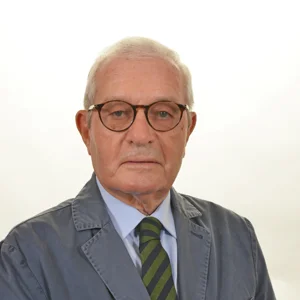
AlCircle is honoured to have had an opportunity to interract with Dr Mario Conserva, who is associated with the aluminium sector since 1963. He is currently the President of the International Aluminium Exhibition METEF, General Director of the International Magazine A&L Aluminium & Alloys, and General Secretary of FACE, Federation of Aluminium Consumers Europe. Dr Conserva has shared with us about how the metal markets are being affected by the COVID-19 pandemic and what prospects we can expect for the aluminium sector this year. He has also shared his insightful thoughts on how to overcome this delicate moment.
So, here is an excerpt from the interview:
AlCircle: How have the metal markets been affected by Covid -19?
Dr Conserva: Covid - 19 is an epochal tragedy that has fallen unexpectedly on the vast majority of humanity, has so far had devastating effects and it will change a lot of our future way of life. At the end of April, the number of people being affected by the virus was over 3.2 million in the world with 240 thousand deaths, of which 140 thousand in Europe and over 28 thousand in Italy. The pandemic has hit all the markets, including the global aluminium sector, which accounts for 1% of the total world GDP, or about $ 800 billion. At the current state of affairs, the Covid -19 effects could lead to a reduction in value of the segment estimated at around 5%, provided that the pandemic ends within a short time. As it all started from China, the impact on raw materials was immediate, China is the world's leading producer of primary aluminium and the main importer of copper, zinc and nickel. The prices of copper on the London Metal Exchange LME went from $6300/t in mid-January to $4850/t, and HG aluminum dropped from $1800/t to $1450/t. In Europe, only two producers announced last March production cuts between 15% and 20%, as the low LME prices have obviously created difficulties for many smelters. At least, 13 of these European plants with a capacity of over 1.8 million tonnes of primary aluminium could risk production cuts or closure. On the global aluminium scenario, China last year produced 36 million tonnes of primary metal, out of the world’s total output of 64 million. But now, the Covid -19 emergency poses many unknowns: China will continue to produce primary aluminium, even if it can absorb much less than before, considering a drop in Chinese industrial production of more than 13%? If the answer is positive, will China invade the market with avalanches of raw material, a high carbon footprint aluminium, just when big world producers such as Rusal, Hydro, Rio Tinto, and Alcoa are focusing on green low carbon production, and many large final users are inclined to enhance greener aluminium? And finally, will China also keep the production of aluminium semi-finished products full alive, which can only be absorbed to a small extent in the internal market, thus, continuing to flood the planet with products at prices below cost? There is no doubt that the China problem is cumbersome, it returns out from all sides, in primary production, with a high carbon footprint metal, in the trading of semi-finished and finished products, such as aluminum profiles and wheels for vehicles sold underground, in the scrap market, the precious raw material for the recycling of aluminium, which they import from Europe with commercial behavior always at the limit and beyond.
AlCircle: Could you please brief the estimated impact of the Covid-19 on the aluminum market in Italy?
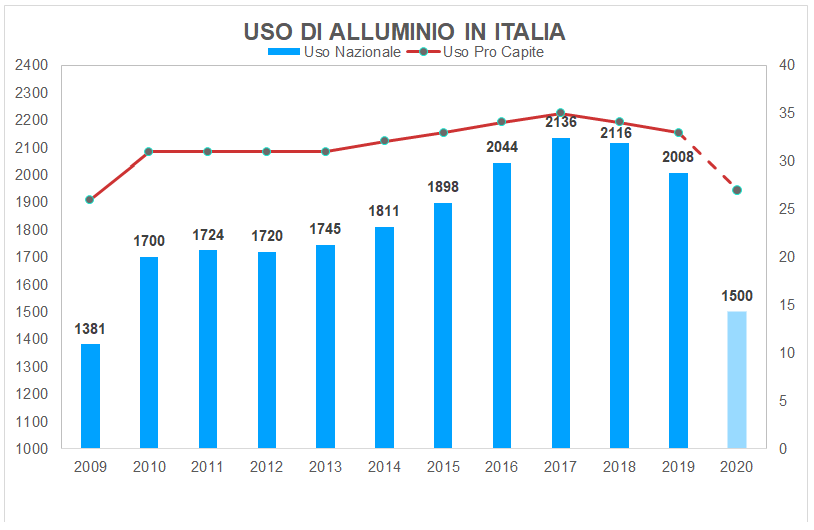
Dr Conserva: It is clear that Covid -19 has a considerable weight on the Italian aluminium industry. Italy has been one of the cradle of the first developments of light metal since the end of the 19th century and is the second largest aluminium market in Europe behind Germany, with an overall use of over 2 million tonnes in 2019, which means an annual per capita consumption of metal over 34 kg, among the highest in the world.
The aluminium chain in Italy is worth more than thousand direct companies, for a turnover close to 13 billion euros in 2019. More than 90% of the value chain is made up of small to medium-sized companies that make a fundamental contribution to the entire Italian production system, from public health to the food sector, from electronic instrumentation to the means of communication, transmission and distribution of energy to the transport sector.
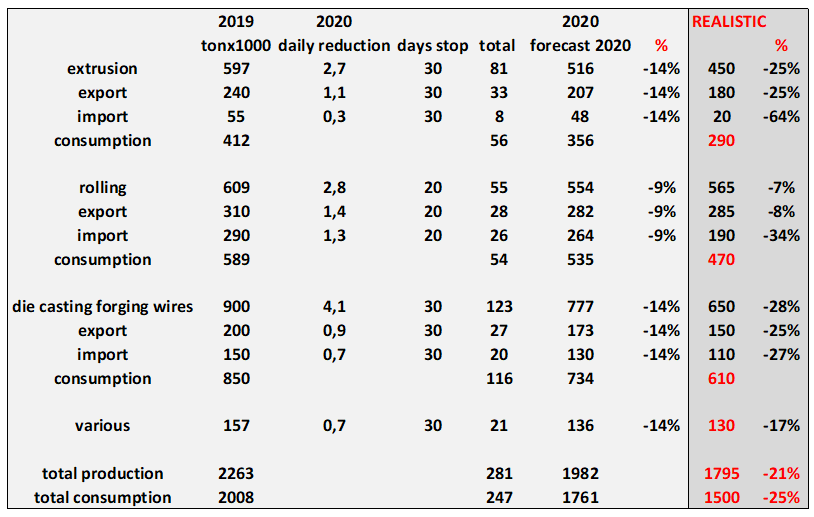
The lockdown imposed by the Italian government on production and commercial activities with the exception of a few vital restraints, has produced big damages to the whole economy in general. In the most critical period of the "quarantine" days, we monitored the aluminium segment by questioning company managers to understand the situation. Initially, included among the activities considered strategic; metallurgy was instead excluded at the last moment in the government's choices. Only some sectors, mainly related to the pharmaceutical sector, remained in business. Many companies expressed the belief that the aluminum chain should be considered essential and that most of the aluminium production sector, foundries, extrusions, rolling plants, castings and die castings production, downstream processing, could and should remain always in operation. However, a large number of companies in the aluminum industry resumed production, perhaps partially, in mid-April, with all the necessary precautions for operator safety. Abroad, the situation has been interpreted differently than in Italy. Some countries have not adopted a complete lockdown of the entire aluminum production chain, probably due to a different contingent health situation, so that many Italian entrepreneurs have stressed the concept of loss of asymmetric competitiveness at European level. Our analysis shows that the temporary lockdown of the supply chain, expected to end in the first week of May, will contribute heavily to the economic results of the companies. Beyond the temporary production stop, operators fear the uncertainty on the recovery of demand for the automotive, construction, aeronautical construction, furniture. The drop in activity reported by over 50% in the period by surface treatment operators and foundry castings producers was significant. Many question marks on the prices of raw materials and the scrap market. However, it is clear that the drop in raw materials has heavily contributed to the devaluation of inventories, with a drop currently estimated at around 20%. Other damages derive from the declared difficulty of the collections of the credits that also in this case depends on the typology of customers. Appreciated the various financial instruments prepared by the government, which, however, will take time to bring adequate liquidity to the system and will not solve the economic problem of many companies that need grants and not just loans. According to estimates to date, the consequences of Covid-19 should result in a significant impact on Italian production and final aluminium consumption, as in the shown in the following diagram and table.(Elaboration by Alberto Pomari from Centroal-Assomet data, publication in progress in A&L N°3 - 2020).
Final comments
According to our analysis, the overall aluminium consumption in Italy this year could be between 1.5 and 1.6 million tonnes, bringing it back by at least 10 years. The situation across Europe should more or less reflect the Italian trend. The general comment that we can hazard today is that beyond the serious contingent situation caused by a completely extraordinary event, our material continues to be characterized by a very solid future. It is a champion of sustainability and continues to be projected in the near future marked by a total use in any form of over 150 million tonnes. In addition, the aluminium industrial system now has the opportunity, at least looking at Europe, to start again by choosing to become stronger in the spirit of a circular economy that respects the environment, having as its pillars a secure supply of energy and raw materials with low carbon imprinting and competitive market conditions as envisaged by the GREEN DEAL, which will be a central point of the Recovery Fund managed by the European Commission. Personally I hope and trust that after the global drunkenness of the myth of globalization, we come back to more rational industrial strategies of common sense, in which we return to give the right importance to local markets and productions, in particular, where there are excellent competitive skills such as in Europe and in Italy in our aluminium sector.

