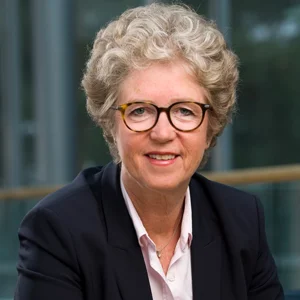
“Although higher aluminium prices may add to the financial bottom line in the short run, we must also remember that aluminium as a material competes with other materials, so artificially high prices over time will also have a potential downside”, Hilde Merete Aasheim, President & CEO at Norsk Hydro
- Category
- Interview
- Date
- Source
- AlCircle.com
Hilde Merete Aasheim is the President & CEO of Norsk Hydro. A Norwegian aluminium and renewable energy company, Norsk Hydro ASA is headquartered in Oslo. It is one of the largest aluminium companies worldwide, with operations across 50 countries. Starting from bauxite and alumina, Hydro produces low-carbon aluminium, extruded profiles, building systems, precision tubes, rolled products, and casthouse products. Besides, the company has reckoned a name in the industry by offering a variety of services with unmatched capability and knowledge. It currently has 16 ASI certified extrusion and fabrication facilities.
We are grateful to have Hydro with us in our flagship e-magazine LeaderSpeak 2022, where the company’s President and CEO have shared the new plans and strategies for 2022 and also the futuristic view for the time to come.
AlCircle: How close are you to your ambition of delivering the first commercial volumes of near-zero carbon aluminium in 2022?
Ms Aasheim: We have defined three pathways toward zero-carbon aluminium, including carbon capture and storage, and the development of a zero-emission electrolysis process called HalZero, which are longer-term ambitions. Our fastest pathway to carbon-free aluminium is through recycling, and our ambition is to deliver the first commercial volumes of near-zero carbon aluminium already in 2022, based on 100% recycled post-consumer scrap. The quality of the end-product is important and so is industrializing a cost-effective process. The main challenge is on the sorting side to avoid too much content of other alloying metals in the end-product, and we are getting closer by the weeks. I am confident that we will be able to deliver the first commercial volumes of near-zero carbon aluminium based on 100% recycled post-consumer scrap as promised this year.
AlCircle: How do you think the increasing demand for green aluminium will shape the industry business in 2022?
Ms Aasheim: We experience a specific pull in the market for low-carbon aluminium products, on top of the more general decarbonization, electrification and circularity trends supporting aluminium demand in sectors like automotive, building and construction, consumer durables and renewable energy infrastructure. Over the past years, our customers have demanded lightweight aluminium to substitute other materials to reduce carbon emissions in the use phase. Now our most forward-leaning customers also demand a low-carbon footprint of the material itself, and we are happy to stretch to be able to deliver.
We already have a world-leading footprint due to a high share of renewable energy and low emissions from electrolysis. Now we are planning a fuel switch in our raw material production which will cut greenhouse gas emissions further and we are planning to move from natural gas to green hydrogen as a heating source in our aluminium plants. Our aluminium will become greener, and I believe that increased sales of our greener products will contribute to our profitability going forward in a world that is increasingly turning words into action in responding to climate change.
AlCirle: Please share your views on the Russia-Ukraine conflict and its impact on the global aluminium industry.
Ms Aasheim: We are deeply shocked and saddened by the devastating situation playing out in Ukraine. Hydro fully supports the sanctions imposed on Putin’s regime and will not enter into new contracts with the Russian counterparts. The war and the sanctions add to the inflation pressure, energy crisis and supply chain disruptions and lead to tighter markets both in energy and materials, including aluminium.
AlCircle: Do you think the ongoing LME aluminium price rally will help the smelters generate record earnings in 2022?
Ms Aasheim: Aluminium production is pretty much a cost game, and with relatively low LME for more than a decade, producers have cut costs. This means that higher LME has a significant impact on the earnings in the short run and supports the financial results in 2022. But don’t forget that raw material and freight costs have come up.
Although higher aluminium prices may add to the financial bottom line in the short run, we must also remember that aluminium as a material competes with other materials, so artificially high prices over time will also have a potential downside.
AlCircle: How do you anticipate your Hydro CIRCAL and Hydro REDUXA to drive the market given the increasing demand for low-carbon aluminium?
Ms Aasheim: The idea behind these brands of recycled and low-carbon aluminium, is that while aluminium has inherent properties that make it a part of the solution to curb greenhouse gas emissions, it is not indifferent to how the metal is produced. The metal can look the same, but the carbon footprint of producing it can vary enormously. More and more customers care about the footprint and are willing to pay a premium for products that are produced responsibly and sustainably, based on renewable energy and low direct emissions. In 2021, we sold three times the volume of our low-carbon brands Hydro REDUXA and Hydro CIRCAL compared to the year before, and the trend continues. We invest in strengthening our position in low-carbon aluminium because we believe it may contribute to profitability, but also because we believe that by shaping the markets, we are strengthening aluminium’s role as part of the solution to climate change.
AlCircle: What new aluminium products do you plan to launch in 2022?
Ms Aasheim: We continuously work in close partnership with our customers to develop new alloys and designs. For instance, we recently partnered with Swedish electric car maker Polestar to explore how aluminium can contribute to realizing the Polestar 0 project with an ambition to create a truly climate-neutral car by 2030.
Developing the near-zero carbon aluminium based on 100% recycled end-consumer scrap will be a notable launch this year that I am looking very much forward to.
Hydro recently launched HyForge, a new high-quality forge stock that can be used in a new low-pressure casting (LPC) technology and can be delivered with a certified low carbon footprint (Hydro REDUXA 4.0). It’s ideal for car manufacturers that use closed die forging to make parts for example wheel suspensions.
AlCircle: How do you think the European aluminium industry should deal with the energy supply crisis in 2022 and beyond?
Ms Aasheim: There is only one viable long-term solution to the energy crisis, and that is for Europe and the world to heavily increase investments in more renewable energy generation. In Hydro we will do our part with an ambition to transform from net-consumer to net-producer of renewable energy, based on our demand and beyond. Based on 116 years of experience in hydropower development, we will use our energy and project competencies to develop hydropower, solar and onshore- and offshore wind, especially in the Nordics and Brazil, and we have the ambition to develop green hydrogen projects related to our network of aluminium operations throughout Europe to replace our use of natural gas for heating, which can also be offered to external customers in marine and road transportation. While the energy transition will be challenging, it also represents business opportunities
AlCircle: Could you please share your business expansion plans for 2022, if any.
Ms Aasheim: It is now more important than ever to maximize the benefit and minimize the footprint of our aluminium production – and all industrial production. That’s why sustainability is an integrated part of our path to profitability – and why our strategy is to pursue opportunities where we have competitive advantages. We are now investing along two pillars: 1) To strengthen our position in low-carbon aluminium and recycling and 2) To grow and diversify in new energy solutions, like renewable energy projects, hydrogen and energy storage, like batteries. We are maturing several projects along these lines, alone and with partners, and I am confident that they will contribute to both profitability and sustainability – for Hydro, our stakeholders and society.

