







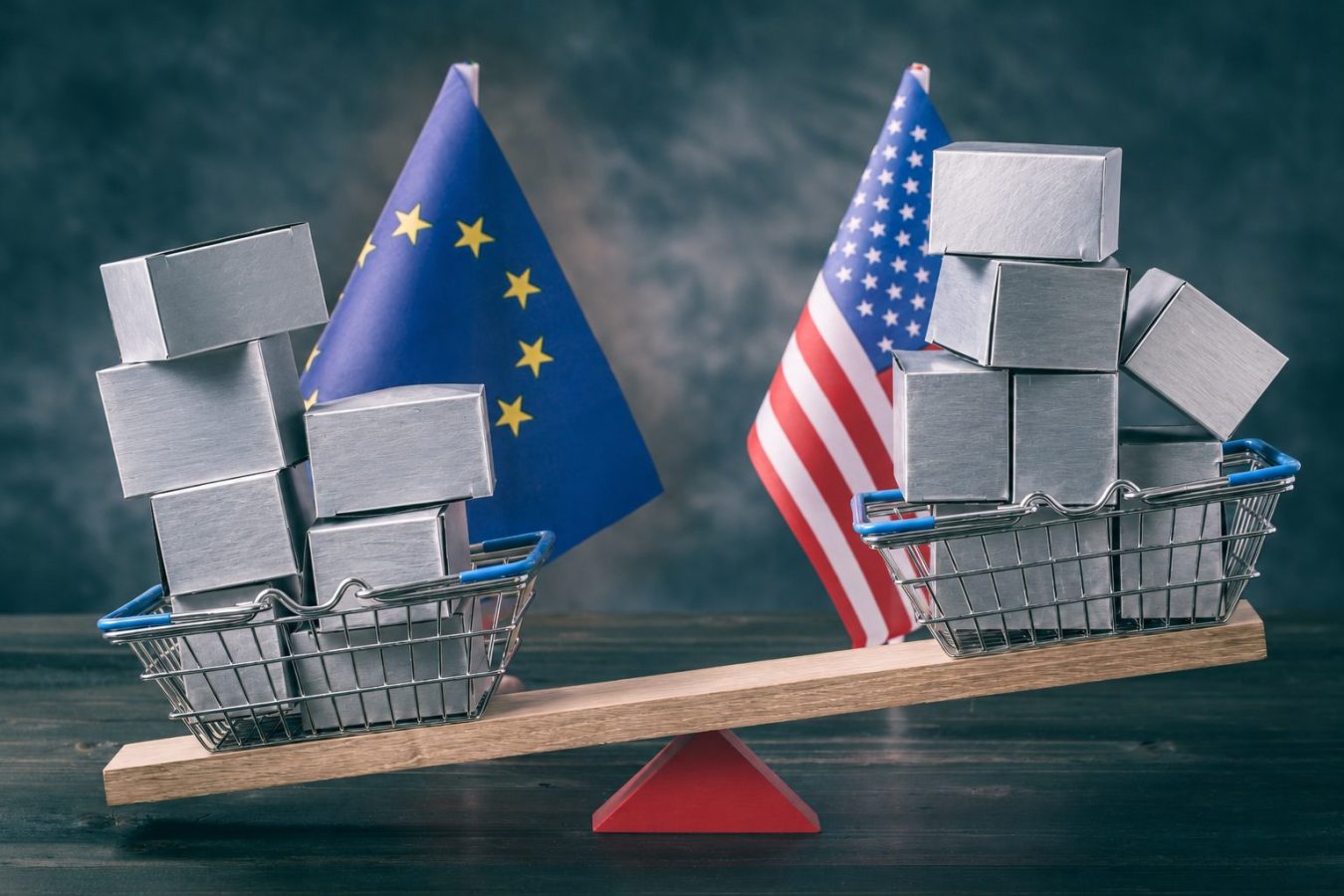
The latest EU-US trade agreement has been presented as a welcome return to stability after years of tariff disputes and transatlantic trade tensions. By establishing a 15 per cent tariff ceiling across most traded goods, both Brussels and Washington have sought to restore predictability for businesses that have struggled with shifting trade rules since the first Trump administration.
The importance of what is left out
Yet beneath the headlines lies a notable omission. Steel and aluminium, the industries that originally sparked the modern tariff conflict, remain largely outside the agreement. Rather than resolving one of the most contentious issues in transatlantic commerce, the deal effectively postpones it, leaving manufacturers, recyclers and metal producers facing continued uncertainty.
The exclusion is significant because these metals are no longer viewed simply as industrial commodities. They have become strategic materials underpinning defence, energy infrastructure, electric vehicles and the wider green transition. Governments increasingly see domestic production capacity as a matter of economic security rather than purely commercial competitiveness.
The United States continues to maintain Section 232 national security tariffs of 50 per cent on many steel and aluminium products while negotiations continue over future quota arrangements. Although the trade agreement envisages closer cooperation to address global overcapacity, particularly from China, it does not immediately remove the tariffs that European producers argue continue to distort trade.
For European steelmakers and aluminium producers, this is more than a symbolic issue. The United States has traditionally been one of Europe’s most valuable export markets for high-quality specialist metals. Industry estimates suggest the higher tariffs have already reduced European exports substantially while disrupting supply chains serving sectors from automotive manufacturing to construction and engineering. Rather than waiting for Washington to change course, Brussels appears increasingly willing to use its own trade instruments to protect strategic industries. Nowhere is this more evident than in the European Commission’s emerging policy on aluminium scrap.

Scrap is taking centre stage
The European Commission is preparing legislation that would introduce a 15 per cent export duty on aluminium scrap. This represents the first time the European Union has imposed a tax on exports rather than imports. Although the proposal still requires approval from member states, it represents a remarkable shift in European trade policy.
The rationale is straightforward. Europe exports record volumes of aluminium scrap to markets including India, China and increasingly the United States, where demand has surged and buyers often offer higher prices than European recyclers can match. As a result, European smelters frequently find themselves short of recycled feedstock despite large quantities of scrap being collected within the Union.
From the European Commission’s perspective, this represents a strategic vulnerability. Aluminium recycling requires only a fraction of the energy needed for primary aluminium production, making scrap essential for Europe’s climate ambitions as well as its industrial competitiveness. Retaining more material within Europe could reduce dependence on imported primary aluminium, lower emissions and strengthen domestic manufacturing.
Industry groups have argued that Europe possesses sufficient recycling capacity but lacks access to the raw material because too much valuable scrap leaves the continent. According to supporters of the proposal, export restrictions would help create a more resilient circular economy while supporting investments in low-carbon manufacturing.
Not everyone agrees, however. Scrap merchants and international recycling organisations warn that export taxes interfere with global markets and may ultimately reduce incentives for collection and recycling. They argue that open markets generally ensure materials flow to their highest-value use, encouraging investment throughout the recycling chain. Artificially restricting exports, critics contend, risks lowering domestic prices, reducing profitability for recyclers and potentially weakening Europe’s own circular economy.
There is also a diplomatic dimension. Trading partners that rely heavily on European scrap are already expressing concern. India, one of the largest importers of EU aluminium scrap, has sought exemptions from the planned restrictions, warning that tighter controls could disrupt production and complicate broader trade relations. Taken together, the unresolved metals dispute and the proposed scrap export duty illustrate a broader transformation in international trade policy.
From economics to politics
For decades, governments generally sought to reduce barriers and encourage global supply chains based on comparative advantage. Today, economic security, industrial resilience and strategic autonomy increasingly shape trade decisions. Critical minerals, semiconductors, batteries, rare earths and industrial metals are no longer treated simply as tradable commodities but as strategic assets that governments seek to secure.
The proposed aluminium scrap duty reflects this changing philosophy. Rather than focusing solely on finished products, policymakers are increasingly attempting to retain access to the raw materials that underpin future industrial capacity. Similar debates are emerging across a wide range of strategic resources as countries compete to build resilient supply chains for advanced manufacturing and clean technologies.
The EU-US trade agreement therefore represents both progress and limitations. It reduces uncertainty across much of the transatlantic economy and helps prevent a broader escalation in tariffs. Yet by leaving steel and aluminium largely unresolved, it also demonstrates how difficult it has become to separate trade policy from industrial strategy and national security.
The real test of the agreement will not be whether tariffs on consumer goods remain stable, but whether Brussels and Washington can eventually establish a common framework for metals that balances competitiveness, security and sustainability. Until then, aluminium and steel will remain the unfinished business of transatlantic trade. Indeed, Europe’s proposed export tax on aluminium scrap suggests that policymakers are no longer content merely to respond to trade disputes. They are beginning to reshape global markets themselves: Using trade policy not simply to regulate commerce, but to secure the industrial foundations of the next economy.


 Voyagerman Technology


