“Vestre’s commitment to becoming the world’s most sustainable furniture brand led us to seek Hydro and their CIRCAL, the 75% post-consumer scrap range” Øyvind Bjørnstad, Chief Sustainability Officer, Vestre
- Category
- Interview
- Date
- Source
- AlCircle.com
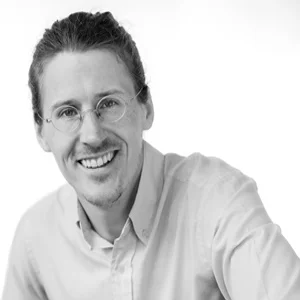
Coming from a finance & strategy background, Øyvind has been the chief architect behind Vestre’s corporate strategy, which has put sustainability front and centre, aiming to become the world’s most sustainable furniture company. After almost seven years in the company, he has acquired detailed knowledge of all aspects of the business, from raw material to production and the use phase to the end-of-life and re-uses potential that’s becoming increasingly important.
AlCircle: Could you share Vestre’s journey to the world of aluminium furniture? What exactly inspired Vestre to make furniture with low-carbon aluminium?
Mr Øyvind Bjørnstad: Most of Vestre’s furniture today is steel, but we have some ranges that are based on aluminium. A big reason is its comparatively lower energy percentage to re-melt and recycle aluminium, although it has a higher initial footprint. The opportunities within recycled material are currently much higher with aluminium, as it doesn’t require hot-dip galvanisation, which again requires a very specific alloy that is hard to replicate with post-consumer steel scrap. Vestre’s commitment to becoming the world’s most sustainable furniture brand led us to seek Hydro and their CIRCAL, the 75% post-consumer scrap range.
AlCircle: Who is your supplier of low-carbon aluminium? How do you measure the aluminium you receive for furniture production is low-carbon certified?
Mr Øyvind Bjørnstad: We currently purchase low-carbon aluminium from Hydro. The requirement is a minimum of 75% post-consumer content, but thus far, the batches have, by and large, been above 80%. We get confirmations on the exact content of each batch from Hydro.
AlCircle: What green initiatives have Vestre taken as a responsible manufacturer?
Mr Øyvind Bjørnstad: We continually strive to reduce our emissions and improve the quality of our products. Vestre took a significant step in 2022 when The Plus, the world’s most environmentally friendly furniture factory, was opened. With this structural change, we control over 90% of our value chain. Still, more than 99% of our emissions come from scope 3. To mitigate these emissions, Vestre has for over ten years purchased high-quality verified offsets. However, we see that this is no longer enough, so in line with our Science Based Targets verified as one of the first five companies in Norway to take action, we are scoping out and executing concrete initiatives which will reduce our absolute emissions. We even use parts of the money we would have purchased offsets with to fund such initiatives in the value chain – we call these insets. Our materials represent ~90% of emissions, so we take care to source with the lowest possible impact, often locally, and scope out new technologies that can lower that further, like CIRCAL aluminium. We offer the best guarantees in the business and provide spare parts for all the products we’ve created – we call this Vestre Vision Zero. In general, we maintain a firm belief in quality as a precursor for sustainability and look at products from a lifecycle perspective, both in terms of cost and environmental impact.
AlCircle: What will be Vestre's message to the world as a sustainable product maker?
Mr Øyvind Bjørnstad: Sustainability is a derivative of quality. The time aspect of products and materials needs to be taken into account. In general, we need to use those materials for a longer time to reduce our excessive material consumption and keep them in a closed loop.
AlCircle: What percentage of Vestre’s product is now made of aluminium? Do you think aluminium can be a game changing metal in the furniture world?
Mr Øyvind Bjørnstad: Less than 5% of Vestre’s revenue comes from aluminium today, but that’s primarily due to the legacy of design in steel. Aluminium has slightly different qualities and will significantly complement the steel portfolio in the coming years. With the potential of reaching even higher recycling grades than we see today, the material becomes almost more precious for each iteration of recycling.
AlCircle: What more low-carbon aluminium initiatives is Vestre taking up this year? Please let us know your customer feedback on your low-carbon aluminium products.
Mr Øyvind Bjørnstad: Vestre is working actively to track the materials of our Folk series through digital product passports together with blockchain-based startup Empower. This way, we will have an overview of our deployments to ensure that aluminium can be retained and kept in the overall global stock of aluminium. We’re also working with Hydro to see whether we can get the recycled content even higher than the current 75%.

