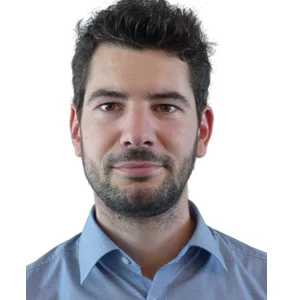
“The ambitious staffs of Ad Rem is putting in all possible effort to maintain Ad Rem’s position as a front-runner in the industry”, Jelle Saint-Germain, Sales Engineer, AD REM
- Category
- Interview
- Date
- Source
- AlCircle.com
In 2013, Jelle Saint-Germain earned his degree in chemical engineering from the University of Ghent and immediately embarked on his career as a project engineer at Valvan. Shortly after completing his studies, he embarked on a professional journey as a project engineer at Valvan, the leading company within the Valtech Group. Valvan specializes in designing and manufacturing baling presses and textile sorting machines.
After accumulating three years of technical experience, he was offered a transfer to Ad Rem, a subsidiary of the Valtech Group, where he began his role as a sales engineer in 2016. As part of his responsibilities, he had the opportunity to travel to Sweden for an 8-week period. During this time, he played a vital role in the launch of Europe's largest flotation plant, overseeing the installation's various tests and commissioning processes.
Furthermore, he actively participated in a study to optimise material flows in recycling procedures. His expertise was valuable in developing new plants to separate aluminium and other non-ferrous metals from automotive shredder residues and incinerated bottom ash. These initiatives demonstrated his strong commitment to advancing sustainable practices within the industry.
AL Circle: Can you briefly overview AD REM and its core business areas? What about its role in the aluminium recycling industry?
Jelle Saint-Germain: Ad Rem is a Belgium-based joint venture of Group Galloo, one of Europe’s leading recycling companies of ferrous and non-ferrous metals, and Valtech, a holding containing 15 niche market engineering and construction companies that are mainly active in or closely connected to the recycling industry.
Based on the technological experiences of Group Galloo, Ad Rem has developed a range of equipment for separating shredder residues. The heart of the process consists of a patented dense media separation system (sink–float). This process enables the production of clean aluminium that can be sent directly to a smelter.
AL Circle: What specific recycling technologies and solutions does AD REM offer to the aluminium industry?
Jelle Saint-Germain: The Ad Rem flotation process enables the recovery of up to 100% of the aluminium present in a scrap metal mix. As opposed to dry sorting techniques, this process is suitable for big throughputs and delivers a clean end product. Sizes of 4mm up to 150mm can be treated all together at a rate of up to 50 tonnes per hour. Because of an integrated water treatment process, any pollution in the shredder residue can be removed and concentrated in a single sludge output.
What’s more, the cleanliness of the aluminium coming from the sink-float plant enables new technologies such as XRT, XRF and LIBS to work better, since the surface of the material has no detectable obstructions anymore. This is why we see our customers excel at sorting different aluminium alloys effortlessly.
AL Circle: Sustainability and environmental responsibility are crucial in today's world. How does AD REM incorporate these principles into its operations and products?
Jelle Saint-Germain: Aside from the obvious fact that our technology contributes to a sustainable world by enabling the recycling of aluminium and therefore helping to eliminate up to 95% of CO2 emissions, our plants are also built to last. At our parent company Galloo, our oldest still-running plant was commissioned in 1989!
AL Circle: Could you share some success stories or case studies where AD REM has significantly impacted the aluminium recycling sector?
Jelle Saint-Germain: In 2016, Ad Rem built the largest flotation plant in the world for Stena Recycling in Halmstad, Sweden. This plant has been extracting clean aluminium from over 200.000 metric tonnes of heavy automotive shredder residue every year since, saving literally millions of tonnes of CO2 output.
Stena is renowned for its excellent quality of aluminium, just as Galloo is. At Galloo, we not only produce aluminium from automotive shredder residue. We also recover aluminium from incinerated bottom ash. Galloo processes the metal residue from about a quarter of Europe's IBA through our sink-float process. This was only possible with the heavy focus on water treatment, as IBA is notoriously dirty.
Other references solidify Ad Rem's position in the aluminium market. For example, the Refial refinery in northern Spain gets its aluminium scrap from our newly built sink-float plant at Deydesa (Grupo Otua).
AL Circle: Innovation plays a vital role in the advancement of recycling technologies. How does AD REM foster innovation within the organization?
Jelle Saint-Germain: At Ad Rem, we are deeply committed to continuous innovation. Approximately 30% of our engineering efforts are dedicated to Research and Development (R&D). We actively collaborate with universities and technological partners to explore new separation techniques and enhance existing technologies.
An illustrative example of our R&D accomplishments is a recent research project completed in 2020. In partnership with KU Leuven, we successfully developed a numerical model for performing Computational Fluid Dynamics (CFD) analysis on our Dense Media flotation drum. This cutting-edge approach allowed us to gain valuable insights into the drum's performance and refine its design. As a result, we achieved an impressive separation accuracy of nearly 100%, significantly enhancing the efficiency of our process.
AL Circle: How does AD REM ensure the quality and reliability of its recycling machines and equipment? Are there any certifications or quality standards that the company adheres to?
Jelle Saint-Germain: The technology offered by Ad Rem results from a close collaboration with our parent company, Group Galloo. At Galloo, our Dense Media systems operate around the clock, with only one weekly shift allocated for cleaning and maintenance. The continuous operation of these systems underscores the critical importance of their reliability, as any failure can significantly impact production capacity.
We apply the same rigorous standards when building systems for external companies. Our approach includes continuous logging and monitoring of process parameters, enabling us to detect failing components at an early stage. This proactive approach helps us minimize downtime and ensure optimal system performance.
We prioritize preventive maintenance and timely component replacement by implementing robust logging and monitoring practices. This proactive stance ensures the smooth operation of our systems, minimizing disruptions and maximizing production efficiency for our valued customers.

