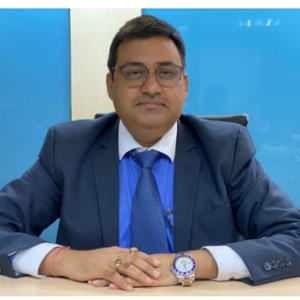
"The aluminium companies must undertake supply chain due diligence irrespective of its position in the value chain", Gangaa C. Sharma, Managing Director & CEO, CETIZION Verifica.
- Category
- Interview
- Date
- Source
- AlCircleNews
Gangaa C. Sharma serves as the Managing Director and CEO of CETIZION Verifica, a prominent global advisory and audit company. With an extensive career spanning over 27 years, he brings a wealth of experience across diverse sectors and geographies, including India, Asia Pacific, China, the Gulf, and the EU. Sharma's expertise encompasses manufacturing, environmental health and safety, CSR, biodiversity, climate change, social and labour issues, as well as ethics and governance. Notably, he is a distinguished member of the Global Sustainability Standard Board under the auspices of the Global Reporting Initiative (GRI), a leading global sustainability and climate change initiative, and an advocate for ESG reporting frameworks. Recognised as a worldwide expert in Aluminium Sustainability, Sharma has undertaken over 25 engagements, solidifying his position as a thought leader in sustainability and corporate responsibility.
AL Circle: Can you please elaborate on the supply chain due diligence concept specific to the aluminium industry?
Gangaa C Sharma: The supply chain engagement is getting more prominence in current organisation behaviour as part of stakeholders' and market regulators' expectations. From the "impact" perspective, the supply chain contributes maximum both in terms of positive or negative impact on organisation sustainability performance across social, environmental and governance pillars.
Both national and international sustainability initiatives expect companies of all sectors, including Aluminium, to carry out supply chain due diligence and make public disclosures about their supply chain commitment, performance, and challenges e.g. SEBI as Indian Stock Market regulator for listed companies, London Metal Exchange (LME) responsible sourcing requirements, Aluminium Stewardship Initiative-a global sustainability performance certification program and many more.
Therefore, the aluminium companies must undertake supply chain due diligence irrespective of its position in the value chain (bauxite mining, alumina refinery, smelter, cast house, rolled product, downstream, etc.).
AL Circle: Can you please share the fundamentals of due diligence?
Gangaa C Sharma: Organisational supply chain due diligence should be developed and implemented to remain an active process which is:
- Ongoing: Integrated into management systems and regular processes.
- Proactive: Implemented to identify risks and mitigate them to prevent adverse impacts.
- Reactive: Able to respond promptly to actual and potential risks.
- Risk-based: Designed to a level of detail and effort that matches the severity and likelihood of risks in your supply. chain.
- Improvement over time: While initially, there may be a low understanding of supply chain risks, knowledge and systems should be improved over time.
AL Circle: Can you please share the focus area of due diligence for the aluminium sector?
Gangaa C Sharma: In the case of the aluminium sector, special emphasis should be provided to the Conflict-Affected and High-Risk Areas (CAHRA).
Conflict-affected and High-Risk Areas (CAHRAs) can be a region, a country, an area within a country or an area that crosses one or more national boundaries. Companies that operate in, or source or use minerals from CAHRAs are not necessarily complicit in conflict – in fact, they can play an important role in supporting livelihoods, economic growth and prosperity in these areas when supported by a responsible sourcing program anchored in due diligence.
The nature and extent of due diligence that is appropriate for a company will depend on individual circumstances and be affected by factors such as the size of the enterprise, the location of the activities, the situation in a particular country, and the sector and nature of the products or services involved. Due diligence should be undertaken in good faith with reasonable efforts.
The focus of due diligence is on identifying and assessing risks related to Conflict-Affected and High-Risk Areas (CAHRAs) under three broad categories:
- Conflict: Areas in a state of conflict, including international conflict, wars of liberation or insurgencies, civil wars, or any other armed aggression
- Governance: Areas with weak or no governance or security, characterised by political instability or repression, institutional weakness, Insecurity, collapse of civil infrastructure, widespread violence, violations of national and international laws
- Human rights: Areas affected by widespread human rights abuses and violations of law, including torture or cruel and degrading treatment, forced and child labour, sexual violence, war crimes, crimes against humanity, genocide.
AL Circle: Can you please share the related ASI requirements and OECD guidelines and how they should be used for supply chain due diligence within the aluminium value chain?
Gangaa C Sharma: The Aluminium Stewardship Initiative (ASI) performance standard version 3.0 criterion 9.8 requires upstream and downstream companies to carry out due diligence of their supply chain. The supply chain activity determines the responsibility and process for conducting due diligence following the OECD five step framework. It means it will be different for smelter and downstream companies in terms of scope and extent.
To avoid involvement in armed conflict or human rights abuses, the entity shall exercise risk-based due diligence over its Aluminium supply chain by the OECD Due Diligence Guidance of Minerals from Conflict-Affected and High-Risk Areas (OECD Guidance) in ways appropriate to its size and circumstances, including, as a minimum:
- Establish strong management systems, including a supply chain policy, responsibilities and resources, information gathering and supplier engagement (Step 1)
- Identify and assess risks in the supply chain (Step 2)
- Design and implement a strategy to respond to identified risks (Step 3)
- Undergo audit of due diligence practices (Step 4)
- Report annually on supply chain Due Diligence (Step 5)
AL Circle: What benefits does supply chain due diligence bring to aluminium industries?
Gangaa C Sharma: As per the old saying, knowing something in advance and the correct way is half the job done and provides the right starting point to address any challenges.
Considering supply chain activities' contribution and/or impacts on overall organisation performance (technical, commercial, environmental, social, governance). It is a good idea to know your supply chain following the OECD due-diligence five-step framework.
On the one hand, it will help organisations better understand and respond to the global supply chain status quo and challenges as critical success factors for business resilience. Additionally, it helps the organisation fulfil market, customer, and regulators' expectations, such as London Metal Exchange (LME) responsible sourcing requirements, to continue trading metal using the LME platform, ASI Performance standard certification requirements, which support companies to enter global markets.
AL Circle: How can CETIZION Verifica help aluminium companies carry out supply chain due diligence as per OECD guidelines and LME, ASI compliant?
Gangaa C Sharma: CETIZION Verifica has global expertise and skills to support aluminium producers in better understanding and complying with supply chain due diligence requirements, including third-party audits of “Red Flag” suppliers.

