“The aerospace market is going to take some time still to recover from the pandemic and we expect demand to remain muted in 2021 due to lower consumer air travel”, Sachin Satpute - President of Novelis Asia and SVP of Novelis Inc.
- Category
- Interview
- Date
- Source
- AlCircle.com
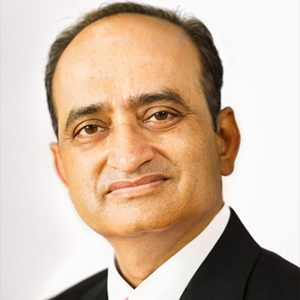
Sachin Satpute is President of Novelis Asia and Senior Vice President of Novelis Inc. since 1st June, 2016. In this role, he is responsible for leading the overall business strategy and P&L of Novelis’ Asia Pacific business, which includes sales to the automotive, beverage can and specialty product markets. He also has oversight responsibilities with Ulsan Aluminium, a joint venture between Novelis Korea and Kobe Steel, Japan.
Prior to being named to this position in June 2016, Sachin served as Chief Marketing Officer, Hindalco Industries Limited. Before joining in his role with Hindalco, he held roles of increasing responsibility within Novelis including Director, Business Development & Strategy for Novelis Asia; Vice President, Sales, Marketing & Technical Services for Novelis Asia; and Managing Director of Aluminium Company of Malaysia Berhad (ALCOM).
Mr Sachin has nearly 30 years of experience in the aluminum industry, having started his career at INDAL, which was a subsidiary of ALCAN, Canada. He holds a degree in mechanical engineering from Pune University and MBA in marketing from Mumbai University. He is a graduate of Novelis’ inaugural Global Leadership Program and was named an Aditya Birla Fellow in 2016.
AlCircle is fortunate to have an opportunity to interview Mr Satpute and come to know his projection for the aluminium market in 2021. Here is an excerpt of the interview:
AlCircle: How do you foresee the aluminium flat-rolled products market in 2021?
Mr Sachin Satpute: Broadly speaking, we believe the positive global demand trajectory for aluminium products will not be significantly impacted by COVID in the long-term. The many favorable benefits associated with using aluminium across product categories - not the least of which is its sustainable attributes as a lightweight, infinitely recyclable material – continue to drive long term global demand for aluminium FRP approximately 4-5% pa.
Aluminium FRP market in Asia: Aluminium flat-rolled products demand in Asia is expected to approach pre-Covid-19 level in 2021, thanks to the strong growth in China. Chinese rolled product demand grew by 3% YoY in 2020 mainly due to Covid-19 impact during Q1 CY2020, and we forecast an annual growth of 6% in 2021.
Can showed resilience in 2020 in the face of global pandemic and we expect the demand to remain strong in the medium term. Can shipment in some regions such as Southeast Asia suffered due to the lack of tourism. However, this is offset by the beverage can consumption boosted by the lockdown as home consumption has increased and environmental protection (green campaign).
Auto body sheet (ABS): Demand is robust, driven by the strong sales of EVs and premium vehicles. The China 14th Five-Year Plan will boost Chinese ABS demand over this period. As detailed in the plan, China aims for New Energy Vehicle sales to account for 20% of overall new car sales in 2025 from the 2020 level of around 5%. More importantly, China’s strong ambition to reach carbon neutrality by 2060 and a peak in emissions before 2030 will encourage automobile manufactures to adopt low-carbon materials such as aluminium.
However, there are uncertainties in the market, such as Covid-19 resurgence and the ongoing semiconductor shortage globally. The implementation of the vaccination plan of each country and efficacy against Covid-19 variants will be the key to mitigate the risk and uncertainty.
In terms of capacity, we did not see significant investment to increase FRP capacity across the world, which will support the healthy conversion premiums.
AlCircle: Do you think packaging industry will primarily drive the demand for aluminium FRPs in 2021?
Mr Sachin Satpute: The prolonged COVID-19 situation has increased the consumption of beverage cans at home in the Western world, leading to higher demand for Aluminium Can stock. However, there has been adverse impact on beverage can consumption in South East Asian countries due to lower travel and tourism. Also, the event-based consumption is lower in some of the Middle East and South East Asian countries. However, in the longer term, aluminium can has a big potential in the packaging mix as it offers sustainable packaging solution.
Currently, many can makers in Asia are producing and shipping cans to North America to meet the growing consumption, which has raised Aluminium Can stock demand from these can-makers in Asia.
Consumers are looking for sustainable packaging against single use plastics which cause huge plastic waste issues. Infinitely recyclable aluminium is a perfect answer for sustainable packaging material and aluminium demands will continue to grow.
The COVID-19 pandemic has influenced the consumer preference towards private mobility, which has helped automotive demand. The global trend of vehicle light weighting is also driving the demand for aluminium in Asian Automobile market.
We are seeing a big change as countries put a focus on fuel consumption. Government legislation is now helping automotive manufacturers to move towards lighter solutions, and aluminium is the perfect answer to that.
Beside packaging and automotive, electronic gadgets are important segments for the aluminium FRP market. They are tablets, notebooks and smartphones, which many people now find essential. Working remotely or from home during the pandemic has only emphasized this. Novelis sees huge potential in this sector for aluminium and new applications are surfacing constantly.
In coming years, “Recycling and sustainability” are going to drive aluminium consumption. Aluminium is infinitely recyclable, highly durable and retains its properties indefinitely, making it the perfect candidate for a circular economy.
AlCircle: Do you expect aerospace industry to bounce back and contribute to the demand for aluminium flat-rolled products in 2021?
Mr Sachin Satpute: The aerospace market is going to take some time still to recover from the pandemic and we expect demand to remain muted in 2021 due to lower consumer air travel.
Airbus has announced their build rates increase to 43 in 2021 from 40 shipsets per month in 2020 and gradually moving to 45 towards the second half of 2021; however, due to the huge stock (both metal and parts) in the supply chain and soft demand, we believe we will not see a flat demand over the year in 2021,
Fortunately, we saw Boeing B737MAX resumed flight towards the end of 2020 and they have announced a monthly build rate of 10 shipsets in the first half of 2021 and 17 shipsets in the second half; however, there are still more than 400 planes parked for shipment and demand is still soft globally
For both Airbus and Boeing, the demand for twin-aisle and jumbo programs continue to be soft due to the limited inter-continental air travel
AlCircle: Do you plan to bring in any new advanced technology to your rolling and recycling facilities?
Mr Sachin Satpute: In collaboration with many of our automotive customers, we have established sophisticated closed-loop recycling systems in North America and Europe that allow us to take back as much aluminium scrap generated during the manufacturing process as possible. We then insert it directly back into the supply chain. Based on the success and experience of global partnerships with Ford, JLR, etc., we plan to cooperate with automobile customers in Asia to develop closed loop recycling systems in China.
Collaboration is key to address the product's full life cycle. Working with all of our customers, we see tremendous opportunity in expanding the use of lightweight, infinitely recyclable aluminium to create more sustainable, recyclable and promote circular economy.
Novelis will use the latest State of the Art technologies in its rolling facilities. Those technologies will be deployed for gauge & flatness control, automation, emission control, and overall system efficiency. With regard to recycling, we are looking into installing recycling furnaces similar to what currently being used in Europe. Those furnaces are the most advanced in terms of fuel efficiency per tonne of output with zero fugitive emission. The furnace has a built in Pyrolysis unit to destroy any VOC (volatile organic compound) generated during the melting process.
AlCircle: How do you foresee the transport sector, including electric vehicles, bus, truck, car body, passenger railway and freight coaches, to evolve and become an important driver of FRPs business?
Mr Sachin Satpute: The prolonged COVID-19 pandemic has influenced the consumer preference towards private mobility, which has helped automotive demand. The global trend of vehicle light weighting is also driving the demand for aluminium in Asian Automobile market.
We are seeing a big change as countries put a focus on fuel consumption efficiency and CO2 emission reduction. Government legislation is now helping automotive manufacturers to move towards lighter solutions, and aluminium is the perfect answer to that.
Within automotive, electrification is a very important emerging trend. As the automotive industry moves toward electrification and consumers demand more in-vehicle content, lightweight solutions will enable automakers to improve getting the maximum driving range. Also, aluminium is highly ductile and formable, as well as having good energy absorption and predictable folding, which are very advantageous properties for making EVs.
And Novelis is attempting to capitalize on the growing use of aluminium for EV batteries.
OEMs continue to adopt aluminium components to lightweight vehicles, resulting in robust demand for automotive aluminium FRP. Global demand forecast remains unchanged despite the COVID challenges at a ~10% CAGR from FY20-25 driven by closures and in the later years, by battery enclosures. Alongside, we are projecting an increase in mileage from last-mile deliveries (as e-commerce increase).
The October 2020 IHS forecast update is marked by noteworthy upward revisions that reflect improved demand and production conditions across regions. Importantly, the mix of vehicles that is selling well across regions includes SUVs, pickups, EVs and luxury models – all which favor aluminium usage.
AlCircle: What percentage of growth do you particularly expect from the new energy vehicles to add to the aluminium flat-rolled products market in 2021 and beyond?
Mr Sachin Satpute: BloombergNEF in its 2020 “Long-term Electric Vehicle Outlook” report outlines that EVs will grow from 3% of global car sales today to 10% in 2025 and rising to 58% in 2040. BEVs have stronger need for lightweighting to improve range, and aluminium material can be used in both the body of the car & on the battery.
According to the latest Ducker Study, an average BEV has 100lbs of additional aluminium (than ICE, or ~645lbs per vehicle in 2020), with ~30% as sheet, including the battery enclosure system.
China is the largest producer of Electrical Vehicles (EVs) in the world, with the expected annual growth rate of 28% (Source: IHS Dec. 2020 LV Production). Driving range per charge is an important aspect in Electrical Vehicles. That’s where aluminium offers even better solutions.
Of the estimated 2 million metric tons of global automotive aluminium sheet demand this year, Asia accounted for about 20 percent, or about 400,000 metric tonnes. Asia is growing at fastest pace and expected to exceed European demand by 2024. The total global demand will reach 3 million metric tonness and Asia will be expected to have one third of the total by 2025.
According to Canalys, 3.1 million EVs were sold in 2020, 4.7% of new passenger cars globally. EV sales will continue to rise, reaching 48% of passenger car sales by 2030. The increasing EV sales will boost aluminium auto demands.
AlCircle: Do you think recycled aluminium will largely replace the use of primary aluminium in 2021?
Mr Sachin Satpute: Novelis is the world’s largest recycler of aluminium. At Global level, Novelis achieved 59% recycled content and is currently in the process of setting aggressive goals to further improve recycle content – some of which would entail large investment in recycling facilities.
In Asia, we are looking at a couple of promising opportunities to significantly improve recycled content in our Specialties and auto value stream. On can body sheets, we already have industry leading position in terms of using post-consumer scrap.
Notwithstanding our best efforts to replace prime metal with scrap inputs, there are certain limits imposed by composition and end use of products which necessitates usage of prime. Novelis R&D has launched an aggressive internal campaign to have a hard look at each SKU and suggest ways to replace some of prime with scrap inputs over coming years.
AlCircle: How do you plan to further reduce carbon emissions during aluminium recycling?
Mr Sachin Satpute: Energy required to recycle aluminium is 95% lower than the energy needed to produce virgin aluminium. On top of that, we will use Regenerative Burners in our melter & recycling furnaces that are the most efficient and require less natural gas to operate.
We will work with our customers to establish a robust closed loop recycling where all the scrap generated from the stamping process is brought back to our plant to reprocess and produce new coils that will be shipped to our customers. This process has been proven to be very effective in reducing our Carbon Footprint in the USA & Europe.
AlCircle: Do you plan to adopt solar or hydro power energy for manufacturing aluminium products and recycling?
Mr Sachin Satpute: Novelis is committed to the use of green energy, such as hydro power, whenever it is available – this is our preference of choice. We will also adopt solar power whenever/wherever it is possible. Our commitment to “Shaping a Sustainable World Together” is non-negotiable. We will always do what’s right for our environment, communities where we operate, and for our stakeholders.

