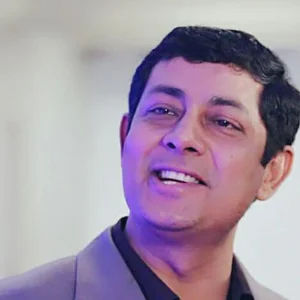
“If government policies support well, India can become one of the lowest cost aluminium producers in the world” ~ Satyavrat Singh, CEO, Uniseven Engineering & Infrastructure Pvt. Ltd.
- Category
- Interview
- Date
- Source
- AlCircleNews
- Edited By
- Beethika Biswas
Q: Please elaborate us on the services offered by Uniseven Engineering & Infrastructure Pvt. Ltd. to the aluminium sector.
A: Uniseven Engineering & Infrastructure has a unique business model whereby it represents a large number of equipment technology and EPC solution providers in India and in many countries abroad. Uniseven is currently active with its services from Australia to Brazil along with its different partners from various parts of the world. The key strength of Uniseven is its domain knowledge of the every element of the metal value chain and a large network of domain specialist across the world to support its endeavours.
Q: How does Uniseven contribute towards bringing in advanced technologies into the aluminium sector?
A: As far as the advanced technologies in the aluminium sector are concerned, most of our partners are industry leaders in their respective fields. To start with when we talk of bauxite, alumina and primary aluminium, we work with Chalieco which is one of best cost-effective solution providers in the industry. In addition to it, we align with a number of equipment and automation service providers like Outotech, NKM Noell, Befesa, Stas and Continuous Properzi, to cater to the various elements of the value chain. When we talk of downstream production we work with industry leaders such as Presezzi for extrusion business, Danieli for flat rolled product business and Mecatherm for recycling of metals. We also have a bunch of support or ancillary partners for all kind of consumables and accessories as well as raw materials that are supplied to the entire aluminium value chain.
Q: How does Uniseven Engineering plan to contribute towards energy economy in the aluminium sector in India?
A: As for the energy economy is concerned, we are glad we have Chalieco on board with us that provides one of the most energy efficient technology for alumina refining and aluminium smelting. They have the technology to refine various types of bauxite efficiently and in smelting technology they have been able to reach sub 12000 kilowatt hour DC power consumption. This is in spite of the difficult and variable raw material supply quality in China. To supplement that we have also partnered with Cronus Technology of Norway which has a unique and patented heat recovery system that helps in energy reduction in aluminium technology in the tune of 500 kilowatt hour per tonne of primary aluminium production. When we look at downstream sector, Presezzi in the extrusion business has been able to achieve at least 30% reduced energy consumption in the extrusion process in comparison to any other extrusion press in use today. Uniseven is thoughtful about resource utilization, especially energy economy and would like to continuously offer improvement in products and processes they offer to their customers.
Q: What are the factors that will drive India as an aluminium producer and consumer in 2019?
A: If government policies support well, India can become one of the lowest cost aluminium producers in the world. We know Utkal Alumina as one of the lowest cost alumina producers in the world. We have abundant low temperature bauxite in the country and if bauxite reserves are made available to the producers, they can produce alumina at a very low cost. We also have large coal reserves in India, though not of a very high quality. The country has the potential to produce one of the lowest cost thermal power with all necessary environmental protection using modern technologies. India has a qualified and efficient work force to serve the sector. Using the latest Chinese technologies we can put up our refineries and smelters at a very low cost, capex wise. This coupled with the availability of bauxite and coal we can produce alumina and aluminium at a reasonably lower cost.
Q: What could be a possible strategy to enhance aluminium consumption in the domestic market?
A: We all know that the aluminium consumption is linked to the economic growth and prosperity of a country. India is one of the fastest growing economies in the world and normally as a standard, base metal consumption of a country grows twice the rate of its GDP growth. So we would expect the aluminium consumption in India to grow by 15%-16% in the next 10-15 years till it reaches the global average per capita aluminium consumption rate. We are going to see a shift in consumption trends, which will align with the global trends where the major consumption comes from the transport and packaging. Currently our biggest consuming sector is the power sector because of electrification and rapid urbanization, and with the growth of GDP more aluminium would be used in transport and packaging.
Q: Do you see the India’s bauxite mining issues and raw material scarcity in the alumina refineries reaching some solution in 2019?
A: As for the bauxite mining issues, it is unfortunate that the government could not act decisively at an early stage. Only 25% of India’s total mineral resources have been explored till date. So there is a huge potential for further exploration of bauxite over the 3.7 billion tonne that has already been discovered. From the industry prospective we need to do responsible mining not only from the point of view of the environments but also to help the landowners and the communities around the mining site. So the government and the industry need to act hand in hand with a commitment to develop bauxite mining and once it happens, it is going to help the domestic aluminium industry in a big way. Not only it is going to solve the scarcity of bauxite, but, eventually it can help India become another Australia or Brazil, a major exporter of alumina and aluminium.
Q: What are the biggest challenges and opportunities coming up in the global aluminium market in 2019 and ahead?
A: The current global economic uncertainty throws a challenge to the aluminium and the entire base metal industry. We are aware that global economy has a cyclic growth and it has experienced a long period of growth already; about a decade long up cycle. By end of this year or January next year the US will also complete a decade of upward growth, possibly the longest when we look at the global scenario. At this juncture, the industries, investors and business owners are apprehensive about the next move and everybody has taken a cautious approach as per investments and expansions are concerned. I would say this fear is impacting the market fundamentals and it is expected that the industry will experience reduced economic activity and slower economic growth, which is going to impact the aluminium industry as well. We are not sure how long would it take to bounce back.
However, the advantage aluminium has as a commodity is that it is the greenest metal of all. If we look at all base metals, aluminium would continue to grow, may be not at 5% but at a slower rate of 3 to 4% annually as the demand for the metal remains solid.
Q: What is your outlook for the aluminium industry in 2019?
A: We are already half way through 2019 and we have seen the industry settling down after a year of supply disruptions, punitive sanctions, tariff worries and trade wars. Prices are currently at a lower level and demand growth is slow. We expect the industry to grow at a rate of 3 to 3.5 per cent for the entire year.

