“Every restriction on the purchase of RUSAL's low-carbon products drives our industry towards higher prices, threatening jobs and punishing families struggling with the ever-increasing cost of living,” Chairman of the En+ Board of Directors
- Category
- Interview
- Date
- Source
- AlCircle.com
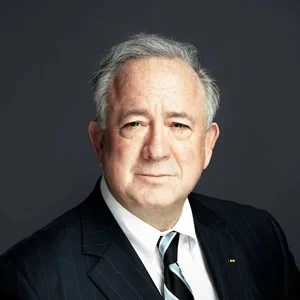
Christopher Bancroft Burnham, formerly the Company’s Senior Independent Director and former Undersecretary General of the United Nations, was appointed Chairman of the En+ Board of Directors in March 2022.
Burnham is the Chairman and Chief Executive Officer of Cambridge Global Capital, LLC, headquartered in Washington, D.C. He co-founded Cambridge after a distinguished government, diplomacy, banking, and private equity career. Burnham is a globally recognised expert in the implementation of accountability and transparency and the implementation of best practices in government, corporations, and inter-governmental organisations, having served as Under Secretary General for Management of the United Nations, Under Secretary of State for Management (acting), and Assistant Secretary of State for Resource Management and Chief Financial Officer of the U.S. Department of State.
In addition, Burnham is the former Vice Chairman and Managing Director of Deutsche Asset Management, where he co-founded and led Deutsche Bank’s direct private equity group, RREEF Capital Partners, the bank’s re-entry into private equity after an eight-year absence. He also chaired Deutsche Bank’s asset management governance committee in Germany.
AL Circle: What are the key trends shaping the global aluminium industry in 2024, and how is Rusal positioned to respond to these trends?
Christopher Burnham: Geopolitical tensions are affecting the global economy, disrupting supply chains and end markets, and impeding the vital progression of our industry to decarbonisation. Every restriction on the purchase of RUSAL's low-carbon products drives our industry towards higher prices, threatening jobs and punishing families struggling with the ever-increasing cost of living.
Meanwhile, global economic uncertainty, high inflation and the constant threat of recession continue to put pressure on the demand for aluminium worldwide. Despite these headwinds, aluminium consumption increased in 2023 to 70.2 million tonnes, up 1.7% from the previous year, buoyed by China, where consumption increased to 42.8 million tonnes, 4.9% higher than last year's figure.
China's decarbonisation efforts have increased demand for aluminium, a key material for renewable energy-related manufacturing, ranging from electric vehicles to solar panels.
Aluminium consumption in the rest of the world (excluding China, the "RoW") in 2023 contracted 2.8% y-o-y and amounted to 27.4 million tonnes, echoing numbers previously seen in 2015 and 2016. Demand was supported mainly by sectors with a particular focus on green transformation, principally the automotive and electrical industries. Only these two areas contributed to consumption growth in 2023.
Technological innovation, supply chain resilience, circular economy initiatives and digitalisation are shaping the future direction of the global aluminium industry as stakeholders adapt to changing market dynamics and consumer preferences, striving for sustainability.
RUSAL is strategically positioned to respond effectively to these key trends, as our commitment to sustainability is ingrained in our operations, and our footprint is global. With more than 99% of our aluminium manufactured using hydropower, RUSAL leads the industry in low-carbon production. This dedication to reducing environmental impact while meeting market demands sets RUSAL apart.
RUSAL benefits from a diversified operational footprint and efficient supply chain management, ensuring resilience in the face of geopolitical tensions and disruptions. Our ability to adapt swiftly to changing circumstances, along with our vertically integrated structure, guarantees uninterrupted supply to customers worldwide.
Innovation is at the heart of aluminium industry development and it is at the heart of RUSAL's operations. The Company invests significantly in research and development to enhance production processes, improve product quality, and develop advanced solutions to meet evolving customer needs.
At RUSAL, our leadership is characterised by a relentless pursuit of excellence, a commitment to sustainability, and a dedication to driving positive transformation in the global aluminium industry. We are confident in our ability to navigate the challenges and opportunities that lie ahead, delivering value to our stakeholders and shaping a more sustainable future.
AL Circle: Why is sustainability becoming increasingly important? What initiatives is Rusal undertaking to minimise its environmental footprint and promote sustainable practices throughout its operations?
Christopher Burnham: Total direct emissions from the global aluminium sector have been steadily rising over the past decade, driven by increasing production, even with the emissions intensity of aluminium production moderately declining during the same period by about 1.7% per year on average, driven largely by the declining energy intensity of alumina production. The average rate of decline was highest from 2014 to 2019 and has slowed considerably since then. The aluminium sector was directly responsible for almost 270 Mt of CO2 emissions in 2022 (a 1.7% increase in 2021), and if indirect emissions from electricity consumption are included, that number jumps to around 1 Gt of CO2.
At RUSAL, sustainability is not just a priority but also a core value that guides every aspect of our operations. Throughout its entire supply chain, the Company remains committed to reducing environmental impact, preserving the climate and natural resources, and enhancing social infrastructure in areas of our responsibility. RUSAL's dedication to these principles has been recognised by EcoVadis sustainability ratings, which placed RUSAL among the top 8% of global suppliers for its exemplary environmental, social, and corporate governance practices.
In 2023, RUSAL continued its journey towards a circular and low-carbon economy by certifying the industry's lowest carbon footprint for its ALLOWW INERTA aluminium and increasing the share of recycled materials to almost a third. RUSAL production facilities today recycle, reuse or sell to third-party consumers about 80% of their industrial by-products and waste, and they will continue these efforts.
The Company actively engages with stakeholders, including communities, governments, and industry partners, to promote sustainability and foster collaboration. All of these initiatives reflect RUSAL's unwavering commitment to sustainability and responsible business practices.
AL Circle: What are Rusal's efforts in technological know-how, research, and development? How is your offer different from that of your competitors?
Christopher Burnham: RUSAL invests in world-class, cutting-edge developments, realising that new engineering and digital solutions optimise business processes, ultimately increasing competitiveness.
The Company continues to develop its unique inert anode technology. This innovative approach significantly reduces the level of greenhouse gas emissions during the electrolysis process - both direct and indirect energy emissions (Scope 1 and 2) are reduced to just 0.01 tonnes of CO2-eq. per tonne of aluminium. Compared to the industry average of 12.5 tonnes CO2e, this shows a substantial reduction in environmental impact.
The Company never rests on its existing solutions, constantly developing new applications of recycled alloys to respond to ever-evolving end user needs and customer requirements. It recently announced the increase in the share of recycled content in its primary equivalent foundry alloys (PEFA) to 25-30%. The new product is in full alignment with OEM requirements, meeting both the need for a low carbon footprint and recycled content.
RUSAL creates new opportunities for companies to strengthen their potential in a low-carbon circular economy, which is based on an adaptive, safe, and inclusive value chain, as well as advanced technological solutions. The Company offers a wide range of low-carbon foundry alloys, including exclusive patented alloys. More than a hundred of RUSAL's customers, including industry leaders in producing automotive components around the world, also receive RUSAL's exceptional technical support services for their own production.
The Company has also been successfully running several R&D projects with top global automotive parts suppliers on proprietary alloys. The creation of new AlZn alloy introduces an effective tool for the largest international automotive companies and manufacturers of auto components in achieving strategic development goals, both from the point of view of optimising the cost and strength of parts and from the point of view of the environmental agenda.
AL Circle: Given the current geopolitical landscape and trade dynamics, how does RUSAL navigate challenges in accessing crucial markets and resources, and what strategies are in place to mitigate risks?
Christopher Burnham: RUSAL's vertically integrated structure provides a solid foundation for navigating geopolitical challenges and trade dynamics. Through diversified supply chains, efficient resource management, geographic diversification, adaptive market strategies, and long-term partnerships, the Company effectively mitigates risks and maintains resilience in a complex and dynamic global landscape.
By sourcing materials from multiple regions and maintaining strategic partnerships, RUSAL mitigates risks associated with geopolitical tensions or trade disruptions. With control over upstream operations, including mining and refining, the Company optimizes resource allocation and production processes.
Despite the challenges, RUSAL continues to support its customers thanks to its ability to manage innovative supply chain solutions. Building and maintaining solid partnerships with customers, suppliers, and industry stakeholders is integral to RUSAL's risk mitigation strategy. These relationships foster trust and collaboration and are based on shared objectives.
Events in recent months and years show that RUSAL takes its leadership in the aluminium industry seriously. The recent crisis in the Red Sea is a striking example; disruptions in metal supply from Asia threatened to cause stoppages at dozens of production sites in Turkey and Europe. RUSAL, with its unique logistic facilities, was there to deliver the necessary volumes of missing metal.
AL Circle: What is Rusal's opinion on sanctions against Russian aluminium in Europe and the USA?
Christopher Burnham: The inconvenient truth for our competitors is the fact that we are doing our utmost to keep the global aluminium industry in balance, maintaining its focus on reducing emissions to net zero, while competitors are capitalising on the geopolitical situation to cynically drive up the price of aluminium for their own benefit, regardless of the harm to the planet and global economy, not to mention consumers and jobs across the world.
The main victims of this unfair competition would be small and medium-sized European downstream companies, which are an important part of the European economy and are responsible for 70% of turnover. Downstream SMEs employ directly over 200,000 people or ~92% of the total workforce in the European aluminium industry. They are the ones who will face shortages and higher prices and be forced to buy higher carbon aluminium from companies using coal-fired smelters. Similar effects were noticed in the USA after introducing 200% tariffs on Russian aluminium.
Also, production of primary aluminium in Europe is decreasing – Europe imports almost 90% of its aluminium. Imposing sanctions against Russian aluminium means the EU immediately cut the supply of some 500 thousand tonnes of metal annually. Chinese and Middle Eastern companies cannot quickly substitute these volumes and are not equal in quality, transport costs, safety, or carbon footprint. Any ban on Russian aluminium, given it is the largest external source of low-carbon aluminium in the world, works actively against decarbonisation and the green energy transition.
AL Circle: Looking ahead, what do you envision as Rusal's most significant opportunities and challenges in the coming years, and how does the company plan to capitalize on the former while addressing the latter?
Christopher Burnham: The global shift towards sustainability presents a significant opportunity for us. With our expertise in low-carbon aluminium production and commitment to environmental stewardship, we are well-positioned to meet the increasing demand for sustainable products.
Advances in technology offer the potential to enhance efficiency and productivity across our operations. By investing in innovative technologies and solutions, we will optimize processes, reduce costs, and maintain our competitive edge.
The focus will be maintained at preserving the strategic partnerships with customers, suppliers, and industry stakeholders to enhance market presence, expand our global footprint, and drive mutual growth. To mitigate risks associated with market volatility and geopolitical uncertainties RUSAL will maintain a diversified product portfolio, customer base, and geographical presence.
RUSAL remains focused and dedicated to our nearly 57,100 employees scattered across more than a dozen countries. We will continue prioritizing the well-being of our employees, their families, and the residents in the regions in which we operate, with a particular emphasis on our stewardship of the environment and the living conditions of our employees, their families, and their neighbours. We leverage our strengths, we embrace innovation, while maintaining agility in response to challenges. We are confident in our ability to navigate this evolving landscape, fraught with the challenges listed above, to achieve sustainable growth and success for our greater Rusal community in the coming years.
AL Circle: Lastly, could you share any insights into Rusal's long-term vision and strategic priorities for maintaining its position as a global leader in the aluminium industry?
Christopher Burnham: RUSAL continues to navigate and adapt to the evolving business landscape by exploring new markets and pioneering innovative products. Drawing upon extensive experience in overcoming obstacles and high quality of strategic solutions in diverse conditions, the Company charts a course for continued success.
Despite the inevitable hurdles and uncertainties that require navigation, RUSAL remains steadfast in its pursuit of its long-term goals. RUSAL’s collective commitment to serving customer needs and addressing challenges with unwavering determination is central to the Company’s corporate philosophy. This dedication drives RUSAL’s team to deliver exceptional value to customers worldwide, a commitment that resonates deeply with our valued partners.

