"Bathco is saddened to see several of its long-standing partners in Europe shutting down, and see this situation as an opportunity to reboot the industry in Europe on a more sustainable basis", Andreas Schwarz, CEO of Bathco Group.
- Category
- Interview
- Date
- Source
- AlCircle.com
- Edited By
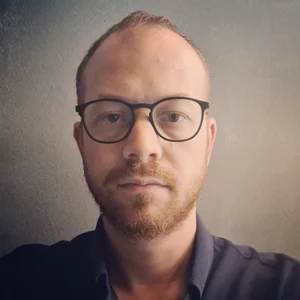
- Andreas Schwarz, CEO of Bathco Group
Andreas Schwarz is the CEO of the Bathco Group, a leading solutions provider in the aluminium industry. With a background in trading functions at Rio Tinto Alcan, Andreas has extensive experience in the industry and has held positions in China, Southern Africa, and Zurich. As CEO of Bathco, he has led the company to new heights and overseen its expansion into new markets worldwide for the last 15 years.
AlCircle: What are the core values and drivers that Bathco followed to establish its reputation as one of the aluminium industry's leading service providers?
Andreas Schwarz: Bathco has always been highly focused on the aluminium industry and has, over the years, proven its reliability and its strength of innovation.
We have built a circular economy around various by-products in the aluminium industry as well as the supply and management of raw materials and energy-saving equipment. We are also marketing low-carbon aluminium.
The next step is to offer comprehensive packages whereby we supply major raw materials to a smelter and offtake main by-products and metal. We manage time-critical raw material inventories on-site. This simplifies smelters' processes and reduces costs by streamlining procurement services and providing a single point of contact for the smelters.
AlCircle: How do you define sustainability from Bathco's point of view? What are the sustainable measures Bathco has implemented while serving the aluminium industry?
Andreas Schwarz: It is worth underscoring that sustainability is at the core of Bathco's business model. Our activities are rooted in recycling by-products to avoid landfilling while producing equipment to reduce the carbon footprint of aluminium smelters.
Our primary raw materials are by-products:
The electrolytic bath from which the name of our company is derived is a by-product of the primary aluminium process.
We move the material from bath-generating aluminium smelters to bath-consuming smelters or smelters needing a bath balance in their process.
We produce and market chemical additives to enhance the aluminium recycling process—the secondary aluminium process benefits from our products.
As stated above, we have started to market low-carbon aluminium.
With our strong global supplier/customer network and contacts, we have a unique ability to move materials most efficiently and reduce transport distances, emissions and costs.
In addition to by-products, as an OEM, we produce and market equipment to suppress GHG emissions from aluminium smelters. We also offer solutions to reducing energy consumption in the primary aluminium industry.
AlCircle: Bathco being a global leader in the Bath Material market, how do you forecast the global aluminium industry for 2023?
Andreas Schwarz: There need to be more concrete projects for new aluminium capacities outside China, which will likely lead to a geographical imbalance sooner rather than later. We have seen a step back from unabated globalization to a more regionalized economy, resulting in trade barriers. Sometimes, it will not be easy to compensate for local or regional supply shortages. Overall, we expect a stable LME but with widely differing premiums, depending on regional availability and other influencing factors.
AlCircle: How would you rate Bathco's performance for the year 2022? In what areas could improvements have been made?
Andreas Schwarz: Especially in 2022, we have increased the scope of our services, which allows us to offer a more comprehensive service to the smelters, supplying raw materials, taking by-products, and now also metal. The year was ground-breaking for the future of the company.
At the same time, Bathco, like the industry as a whole, must do even more for sustainability. Namely, change to renewable energy, as well as to renewable raw materials in the process. These issues have a long way to go for the industry and, therefore, for Bathco.
The bespoke commercial solutions we developed with our customers during 2022 allowed us to re-invest in their businesses and social programs.
Something we are proud of and will continue to expand in 2023. This “shared growth” philosophy underpins our long-term customer relationships.
AlCircle: What are your insights on the Chinese aluminium industry for 2023? Would power rationalization and net-zero drive impact China's primary aluminium production in the short term?
Andreas Schwarz: China will not (want to) continue to produce aluminium as a raw material for the rest of the world. This, combined with the limited availability of power, and the need to change from fossil-based to renewable electricity, will make it likely that China will continue to slow down capacity increase and, at one point, halt expansion altogether. This may be a mid-to-long-term view rather than a short-term one.
AlCircle: Can Bathco be said to have suffered any impacts from the shutdown of the European aluminium smelters and the production cuts?
Andreas Schwarz: We are saddened to see several of our long-standing partners in Europe shutting down. Due to the strongly diversified business we run, the impact for us is limited.
However, this situation is an opportunity to reboot the industry in Europe on a more sustainable basis. For example, grid stability becomes an issue with the shift to renewable electricity. The aluminium smelters could be a solution to this by applying power modulation, for instance, with the concept as is applied at Trimet Essen, the “virtual battery”. Through our sister company MetSol, we, too, offer power modulation solutions and allow the smelter to manage and optimize electricity costs.
AlCircle: In order to produce more low-carbon aluminium, what measures need to be taken by the aluminium industry? Will it increase the price of aluminium considering the long term and short term?
Andreas Schwarz: As a first step, the aluminium industry has to embrace change with a much more open mind than in the last 140 years. Aluminium will be produced with renewable electricity going forward. This is something that the process is still being prepared for. We must adapt innovative concepts like the virtual battery or our next-generation Pot control system APC+ much faster to achieve net zero. In light of the vast amounts of electricity used by our industry, we may also have to start investing more into power production, renewable, of course, ourselves, rather than using "grey" power from the grid.
The last few decades were characterized by short-term cost- and profit optimization and a focus on shareholder value. We must understand and accept that a new era has dawned and that we, as corporate citizens, are now expected to do our parts in addressing the global problems.

