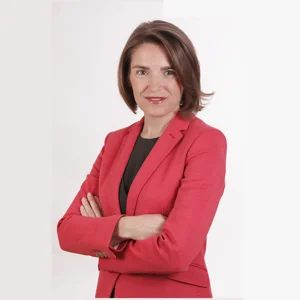
“At Alcoa, we innovate. We are recognized leader in sustainable practices across all three of our segments, and we’re defining what it means to be a sustainable aluminium company”, Rosa M. García Piñeiro, Vice-President - Alcoa Sustainability, President - Alcoa Foundation
- Category
- Interview
- Date
- Source
- AlCircle.com
Rosa M. Piñeiro García is Global Sustainability Vice-president for Alcoa and President of the Alcoa Foundation. Previously, she served as President of Alcoa Spain.
During her 21 years in the company, she also served as Director of Regional Affairs and Sustainability for Europe and as Director Environment, Health and Safety (EHS) for the European Region and the Primary Products business in Europe.
Rosa joined Alcoa in 1999 to work as an Environmental Engineer for the San Ciprian Smelter and Refinery in Spain. In 2001, she moved to the Corporate EHS Audit Department, working with the North American and European Audit Teams first in Pittsburgh and then in Madrid. In 2003, she moved back to San Ciprian to take over the Environmental Department as Environmental Manager for the Smelter and the Refinery. Rosa was appointed Director of Regional Affairs and Sustainability in 2012, coordinating and overseeing government interactions in the different countries where Alcoa has interests and sustainability activities across Europe.
Rosa serves in the Advisory Board of the School of Mining Engineers of Madrid since 2014.
She holds a master’s degree in Industrial Engineering from University of Vigo (Spain), a master’s degree in Environmental Engineering from Escuela de Organización Industrial - University of Madrid (Spain), an Executive MBA from the Haute École de Commerce - University of Geneva (Switzerland) and a master’s degree in Commodity Trading - Geneva School of Business (Switzerland). Of Spanish nationality, Rosa speaks English, Spanish, Portuguese and French.
AlCircle: Could you please share the journey of your most revolutionary aluminium smelting technology that emits oxygen and eliminates greenhouse gases?
Ms Rosa M. Piñeiro García: At Alcoa, our history harkens back to the very discovery of the aluminium smelting process, invented in 1886 by Charles Martin Hall. His invention made aluminium a part of our daily lives, and his innovation would eventually lead to the creation of the company that became later known as Alcoa.
It’s with that spirit of innovation that Alcoa discovered an innovative process that eliminates all direct carbon dioxide emissions from the traditional smelting process, emitting only oxygen. Developed at our Alcoa Technical Center outside of Pittsburgh, the process has been creating small batches of aluminium without direct CO2 emissions since 2009.
In 2018, Alcoa entered into a 50-50 partnership with Rio Tinto to ramp up the technology to a commercial scale, so it can be used for retrofits or the construction of new smelters. That joint venture company, known as ELYSISTM, plans to eventually license the technology and offer it for sale in 2024.
In December, ELYSIS announced that construction has been completed on a new Research & Development in Center in Quebec and announced earlier in 2020 the sale of metal to Apple for use in the 16-inch Macbook Pro. (Apple is a non-equity investor in the ELYSIS partnership.)
AlCircle: What inspired you to initiate the process of producing low carbon/green aluminium?
Ms Rosa M. Piñeiro García: At Alcoa, we innovate. We are a recognized leader in sustainable practices across all three of our segments, and we’re defining what it means to be a sustainable aluminium company.
Aluminium is a sustainable material due to its inherent properties, however, it is highly energy-intensive to make from virgin materials. As part of our efforts to lead the industry, we started to reduce our carbon emissions well before climate change was on the public’s agenda.
The Paris accord in 2015 set the tipping point for regulators, public administrations, private corporations and final customers to focus on the need to produce and consume low carbon products. In 2016, Alcoa launched its SustanaTM line of differentiated products to help our customers meet their own set goals. Today, the Sustana portfolio of products is the most comprehensive in the aluminium industry.
We know consumers around the world continue to care about sustainability and are demanding transparent value chains. Further, tighter legislation around emissions will push producers and manufacturers worldwide to focus on decarbonizing their supply chain and processes.
Our strategic priority to Advance Sustainably is a key driver to secure long-term returns for our stakeholders.
AlCircle: Please brief us about ELYSIS™ and its plans to scale up and commercialize your revolutionary smelting technology.
Ms Rosa M. Piñeiro García: Formed back in 2018, the ELYSIS™ joint venture aims to commercialize the process that eliminates all direct carbon dioxide emissions in the smelting process, replacing those emissions with pure oxygen, by 2024. Benefits of the new technology include:
- The ELYSIS™ technology addresses the global trend towards producing low carbon products, from mobile phones to cars, planes and building materials.
- The new process will reduce operating costs of aluminium smelters while increasing production capacity when compared to a same-sized smelting cell. It could be used in both new and existing aluminium smelters.
- In Canada alone, ELYSIS™ technology has the potential to reduce GHG emissions by 7 million tons, the equivalent of removing 1.8 million cars from the roads.
- ELYSIS™ will also sell next-generation anode and cathode materials, which will last more than 30 times longer than traditional components.
In December 2020, construction was completed on the ELYSIS™ Industrial Research and Development Center in Saguenay-Lac-Saint-Jean, Québec, Canada and full-scale research and development work begins during the first half of 2021 with 25 trained technical experts.
AlCircle: Do you think low carbon aluminium has fueled the demand for this lightweight metal in the end-user sector?
Ms Rosa M. Piñeiro García: Consumers, businesses and governments are all demanding increased accountability to help address climate change, and that includes reducing global carbon emissions across all parts of the global supply chain. Investors also seek assurance that they are investing in companies that will deliver a sustainable, long-term return.
Aluminium is widely used in applications that have been growing in demand and are expected to continue to grow, like mobility, housing and food preservation. Low carbon aluminium competes well with other materials and is gaining market share as it decarbonizes. Besides, the fact that is fully recyclable to its original condition makes it a material of choice for final users.
As part of this general demand, the rise in low-carbon aluminium availability is gaining global traction as companies aim to provide more sustainable options to their end-users.
Alcoa is proud to lead the way in the progressing low-carbon aluminium market through our involvement in the ELYSIS™ joint venture, our SUSTANA™ product line and continuous operational improvements.
AlCircle: Please brief us on your sustainable brand Sustana™ and its products EcoSource™, EcoLum™ and EcoDura™.
Ms Rosa M. Piñeiro García: With control of the entire aluminium value chain, we are uniquely positioned to deliver Sustana™, our sustainable product line, which can provide advantages for customers who want to improve their environmental footprint.
The family of products includes the world’s first and only low-carbon alumina brand, EcoSource™, which was launched in 2020. It provides assurance of no more than 0.6 tons of carbon dioxide equivalents (CO2e) per ton of alumina, two times better than the industry’s average of 1.2 tons of CO2e. Alcoa’s measurement includes direct emissions from the Company’s bauxite mining and alumina refining processes and indirect emissions from the energy consumed in those processes.
Ecolum™ is primary aluminium with no more 4.0 Mt of CO2e per ton of aluminium produced, including indirect and direct emissions, from the entire production process, all the way back to bauxite mining to final cast products.
Our other aluminium product, EcoDura™, is produced with a minimum of 50% recycled content, using significantly less energy than what it takes to produce only virgin aluminium.
All Sustana™ products can be sourced from Alcoa facilities certified by the Aluminium Stewardship Initiative (ASI), a global nonprofit with the industry’s most comprehensive third-party certification of sustainable manufacturing practices, addressing social, environmental and governance criteria. Alcoa can sell bauxite, alumina and aluminium with ASI’s Chain of Custody standard, providing validation and traceability of responsible production, sourcing and stewardship of aluminium.
AlCircle: Please share your views on the London Metal Exchange’s plan for a separate low carbon aluminium trading platform.
Rosa M. Piñeiro García: Alcoa participated in the LME’s consultation on responsible sourcing, and we support initiatives that will improve transparency related to ESG metrics in commodity supply chains. Implementing these sustainable guidelines over the next year can increase the market’s awareness while instilling confidence for those who transact using LME brands.
It is important, however, that any changes to the LME Brand requirements do not create a two-tiered Aluminum contract. A policy that would set a specific standard for carbon emissions could limit innovation in the industry and disincentivize producers to manufacture aluminium with emissions far below any proposed standard. Carbon calculations should consider the impact of emissions throughout the production cycle, including bauxite mining, alumina refining, smelting and casting. Furthermore, carbon emissions are only one element in measuring ESG practices and what can define sustainably produced materials.
AlCircle: Do you think low carbon aluminium can help the world recover from the current economic disruptions caused by the COVID-19 pandemic?
Rosa M. Piñeiro García: The global markets in which we compete are increasingly driven by significant challenges, including population growth, urbanization, climate change and resource scarcity. Those trends will continue as the world emerges from the pandemic, and aluminium will be a key material to address those items.
In this environment, it is even more relevant for private corporations to demonstrate responsible production, including third-party assurances of socially responsible operations that respect the rights of the hosting communities and contribute to their socio-economic development. Today, Alcoa has 13 operations certified to these standards through the Aluminium Stewardship Initiative, and we plan to certify more of our assets as we continue to move forward.

