“As part of the 50th anniversary celebrations, IAI will spotlight the industry's products, people and progress as part of demonstrating how aluminium is shaping a better tomorrow”, Miles Prosser, Secretary General, International Aluminium Institute.
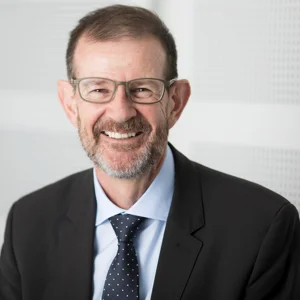
On the 50th anniversary landmark of the International Aluminium Institute, we are really glad to get an interview from Mr Miles Prosser discussing the role in guiding the global primary aluminium sector toward a more sustainable future.
AlCircle: How would you describe the journey so far?
Mr Miles Prosser: Over the past fifty years, some things have remained constant while other aspects of the journey have seen some major changes.
The IAI has always been focused on sustainability issues – this was present right from the start, along with the idea of building a forum where our members can collaborate to get things done. The specific nature of the sustainability issues may have changed, but our desire to promote aluminium and assist the industry on its sustainability journey hasn't changed.
On the other hand, what is considered the key sustainability issues have changed significantly. For example, when the IAI was formed, global warming was not understood and society did not consider greenhouse gas emissions a significant issue. Today we're all thinking about society's impact on the planet in a way that we weren't 50 years ago.
AlCircle: What is the road ahead to celebrate the 50th anniversary?
Mr Miles Prosser: As part of the celebrations, the IAI will spotlight the industry's products, people and progress as part of demonstrating how aluminium is shaping a better tomorrow.
And since the milestone is fifty years, we've decided to go "50:50:50", so from January onwards, we're shining a spotlight on 50 products that show the superiority of aluminium; 50 people who demonstrate the diversity and achievements of the aluminium industry; and 50 key moments that show the progress the industry has made.
The 50 People series will run throughout 2022, celebrating the resilience and ingenuity of past and present individuals who have made the industry what it is today. Individuals can nominate themselves or colleagues via a dedicated page set up by the IAI.
We're also calling for suggestions for the 50 key moments in the history of the aluminium industry, and these should be submitted here by March 31st (2022).
Another aspect of the celebrations is our focus on our statistics. Over the years, our members, analysts, journalists and other aluminium sector representatives have benefitted from a wealth of credible and robust statistics, datasets and modelling. These have remained the backbone of the Institute, so it's no wonder that we're dedicating time to this.
Significantly, later in May, we plan to formally commemorate our official founding at an in-person Board meeting. It was at such a meeting, 50 years ago, that the IAI was officially formed. In 1972 they did not have a global pandemic to deal with, but we hope the current pandemic will ease enough for our members to travel to experience this historic moment.
AlCircle: How do you think IAI will help in achieving a more sustainable approach towards the environment?
Mr Miles Prosser: IAI is the only body that enables the global aluminium industry to collaborate, and it's the singular body that promotes aluminium compared to other competing materials. Aluminium has so many advantages. For example, when it comes to reducing greenhouse gas emissions its use in motor vehicles lightens the load, thereby increasing fuel efficiency. It is also almost infinitely reusable. Around 75% of the almost 1.5 billion tonnes of aluminium ever produced is still in productive use today! We've been tracking this with comprehensive global data and material flow analysis, so we know that even more aluminium will be recycled in the future.
However, the production of new aluminium also contributes to CO2 emissions, so we must take a lead in reducing the carbon intensity of our primary metal. Recently we launched GHG reduction pathways for the industry, consistent with the Paris Agreement aims. It's a huge undertaking. Under the 1.5 Degrees Scenario, the carbon intensity of direct emissions and electricity, and the thermal energy emissions from alumina, aluminium casting and mining, all need to be reduced by between 93% and 98% by 2050, compared with 2018 levels. This would result in total greenhouse gas emissions from the aluminium sector of 53 million tonnes in 2050. Comparing that with today's figure of 1.1 billion tonnes it would be an achievement to be truly proud of.
AlCircle: With the increased need for environmentally sustainable solutions in almost all the verticals (transportation, infrastructure, energy, and food security), where do you think IAI stands on a global level?
Mr Miles Prosser: Aluminium will continue to be a very important element in enabling and supporting environmentally sustainable solutions in all those sectors you mention and more. As an industry, we must facilitate this by taking action to continually improve our sustainability performance.
We also predict demand for aluminium products will grow by 81% by 2050 - driven by aluminium's suitability in many applications - so a huge investment in technology and a commitment from the whole value chain is required. And that's where the Institute's role becomes indispensable because although many of our members are in direct competition with each other, through the IAI, they have a forum to work together towards a shared vision.
It's also worth remembering that the IAI has always existed to promote solutions to sustainability issues. For example, we have facilitated long-term research in the management and utilisation of bauxite residue. So it's not simply about diving into the issues of the day and abandoning other parts of the ESG balance. We have to deal with Greenhouse gases with sincerity and urgency, but we must also remain committed to the work we've been doing on other aspects of sustainability.
AlCircle: With the industry already moving towards a greener and more sustainable approach, do you think the quality or the outcome of the product will be affected as a result?
Mr Miles Prosser: Many aluminium producers are already pioneering solutions that reduce their environmental footprint without compromising product quality. Aluminium companies are developing technologies such as inert anode electrolysis and automatic sorting of recycled aluminium alloys, as well as broad-scale investment in technologies such as renewable electricity generation and electrification of thermal processes. At the International Aluminium Institute, we're focused on creating pathways and fostering collaborative partnerships that enable such innovations to be trialled and tested while maintaining, or advancing further, the quality of our products.
Part of our role at IAI is to raise awareness of these success stories and their positive impact and engage with suppliers, customers, governments, and other stakeholders so that these technologies are implemented as quickly and efficiently as possible. When it comes to emissions reduction, we can't afford to "wait and see", but we believe quality and sustainability can and should go hand in hand. We will continue to support our members with scientifically rigorous and transparent data, to help them produce not only a more sustainable product but a better quality one too.

