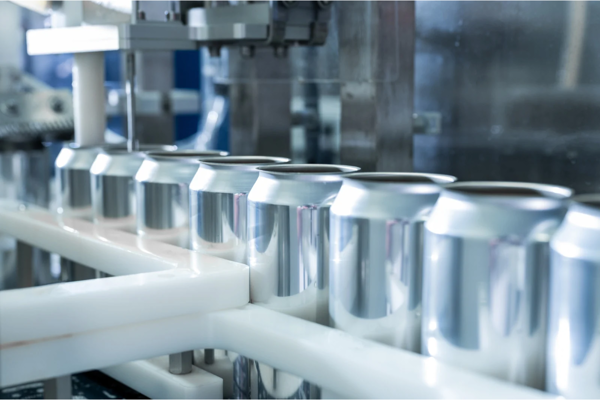
New Zealand-based aluminium beverage can manufacturer Recorp is weighing further production investment as it strengthens its presence in Australia. With its present operating facility in South Auckland, producing around 550 million aluminium cans annually, the company is exploring the possibility of opening a second production line as it looks to expand its customer base across the trans-Tasman market. Recorp entered the Australian industry in August 2026 with its 16,000-square-metre facility in Manukau, South Auckland. Operations at the plant commenced in November 2024, boosted by an investment of NZD 115 million (USD 62.89 million). Its current production line has the manufacturing bandwidth of up to 1,850 cans per minute, reinforced by eight bodymakers and two decorators. The equipment...
Australian bauxite producer VBX Limited has expanded the development scope of its Wuudagu bauxite project in Western Australia, following an updated Mineral Resource Estimate of 143.2 million tonnes and improved metallurgical recoveries. As a next step in the course, the company is assessing a mining and beneficiation rate of 8–9 million tonnes per annum (MTPA), up from 6 MTPA, as it advances the Definitive Feasibility Study (DFS). The update was provided by VBX’s Chairman George Lloyd in an address at its Annual General Meeting on November 20, 2026, accompanied by details of a completed AUD 4.5 million (USD 2.98 million) placement. Explore the production, demand and consumption forecasts of bauxite and alumina in our report: "Global Bauxite & Alumina Market Forecast to 2036:...
Grow with
AL Circle

Kaiser Aluminum Corporation announced that its Board of Directors has declared a quarterly cash dividend payment of USD 0.24 per share on the Company's outstanding common stock. The dividend will be payable on August 15th 2011 to shareholders of record at the close of business on July 25th 2011.
BS reported that Mr B L Bagra acting CMD and director finance of Nalco said that the company would choose the partner for its ambitious USD 4 billion Indonesian aluminum smelter project in the next fortnight.
Aluminum Bahrain's participation as a sponsor and exhibitor in Aluminum China 2011 provides an ideal platform to promote the company's products globally expand its customer base across Asia as well as position Bahrain as an attractive economic destination for international investors.
Being an industrial enterprise, whose activities and processes pose inherent potential risks Dubai Aluminum Company is conscious of the need to safeguard the environment and to protect the safety and health of both employees and the residents of surrounding communities. The company is equally committed to absolute quality in the products and services offered to customers across the world. This is reflected in DUBAL's corporate certification to several major international quality standards, two of which have been renewed recently following audit based visits by assessors from the certification body Lloyd’s Register Quality Assurance LRQA.

Amcor Flexibles Europe & Americas, a division of Amcor and a supplier of flexible packaging has invested EUR 6.7 million to expand and upgrade its Singen converting facility in Germany to meet the requirements of the pharmaceutical industry. The investment will extend the production capacity for pharmaceutical packaging. Singen is an aluminum foil rolling and converting plant that features integrated mills. It delivers superior quality aluminum-based packaging materials to the food and pharmaceutical customers across the globe.

The preliminary snapshot of the June trade figures doesn't include bauxite imports but they recorded consecutive fresh all time highs above 4 million tonnes in both April and May. Cumulative January to May imports of 17.3 million tonnes were up by 56% YoY. In other words, China is swapping one aluminum raw material dependency for another. This is important for Western aluminum producers such as Alcoa who have long argued that China's explosive production of the light metal is not sustainable. Indeed, the company pointed out on its Q2 conference call that 40% of China's alumina refineries are dependent on imported bauxite and that 20% to 30% of its own bauxite mines use underground mining techniques in stark contrast to the rest of the world.

The emergence of China as the single biggest buyer of both raw materials was an underlying driver of the changes to pricing in both markets. But while the country continues to suck in huge amounts of iron ore to feed its ever expanding steel sector it seems to be moving towards self sufficiency in alumina. Alumina imports have slumped this year. June's tally of 70,000 tonnes was the lowest monthly total in a decade. There can always be something of the one off in any one month's figures, particularly for what is a bulk commodity. But June's reading is part of a strengthening trend. Alumina imports slid by 16% last year and the drop has steepened this year with H1 imports slumping by 57% to 1.02 million tonnes. That tallies with a tectonic shift in China's domestic alumina supply demand...
The pricing revolution in the alumina market is gathering momentum, even if it hasn't grabbed the headlines in the same way as that in the iron ore market. The pricing of alumina, the intermediate material in the production of primary aluminum is being forcibly decoupled from the metal price also in favor of index prices. The cast of producers forcing the pace of change is almost identical with BHP Billiton and Rio Tinto global heavyweights in both iron ore and alumina. Simply switch Alcoa in alumina for Vale in iron ore to complete the big three in each market.
Aleris declared that it has inked 5 year deal with Airbus at the Paris Air Show to supply a wide range of aluminum alloy sheets and plates for Airbus’ worldwide programs. Aleris will manufacture the required products at its modern facilities in Duffel, Belgium and Koblenz, Germany where sophisticated manufacturing technologies are used to produce aircraft sheet. The company will produce plates at its new plate mill being constructed in China. The mill construction is scheduled for completion at the end of 2012.
Aluminum Bahrain has delivered another progress its sales figures for H1 2011 rose by 4.3% from H1 2010 to 445,370 tonnes ahead of the company's own forecast for the period and exceeded the sales figures from the previous year with 18,305 tonnes.
Sales at Aluminium Bahrain (Alba), which owns the world’s fourth-largest aluminum smelter, edged up 0.8 percent in the second quarter, the company said. Alba said sales were 228,357 tons in the second quarter, up from 226,539 tons in the prior-year period. It said production was unaffected by the unrest. “Our sales and production figures prove that progress can be accomplished despite the prevalence of severe challenges,” Alba Chief Executive Laurent Schmitt said in a statement. “We are confident that with the support of our loyal and dedicated employees, Alba is well-placed and remains optimistic with a positive outlook for the remainder of 2011.” For the first half of 2011, Alba said sales stood at 445,370 tons, up by 18,305 tons from the prior-year period. It cited a more focused...
At MCX, Copper for delivery in August tumbled by 0.29% or INR 1.25 at INR 433 per kilogram where as aluminum ended flat at INR 111.2 per kilogram. While Lead weakened by 0.99% or INR 1.2 at INR 120.55 per kilogram, Zinc rose by 0.72% or INR 0.75 at INR 105.25 per kilogram and Nickel increased by 1.6% or INR 16.9 at INR 1069.9 per kilogram. At Comex, the Copper futures for most active September contract settled higher by 0.01 cent or 0.27% at USD 4.4035 per pound last night. Three month delivery copper on LME ended higher by USD 165.5 or 1.74% at USD 9685.5 per tonne. Lead ended higher by 3% to USD 2752 per tonne and nickel rose by 2.73% to USD 23,735 per tonne. Aluminum ended flat at USD 2480.5 per tonne and zinc rose by 2.3% to end at USD 2,325 per tonne.

Japan Metal Bulletin reported that Chinese secondary alloyed aluminum output will increase by 6.7% to 5.17 million tonnes in 2011 from 2010. According to Beijing Antaike Information Development, the growth slows due to slower domestic demand growth. Antaike expects Chinese government's fiscal and financial policy impacts on the demand under higher inflation and severe power availability.
Kang Sheng announced that the company has signed “Investment Promotion Agreement” with Anhui Jin An economic zone administration committee. It plans to build a production base in Anhui Jin An economic zone administration committee, and the total investment will be one billion.
Some of the world’s largest buyers of aluminium reacted with disappointment on Friday to a long-awaited decision by the London Metal Exchange to change its warehousing rules. General Motors, one of the world’s largest automakers, and Novelis, a leading aluminium processor, told the Financial Times that the LME’s move to double the rate at which the largest warehouses must deliver metal did not go far enough. The controversy has sparked a fierce debate in the metals community, pitching consumers against Wall Street banks and traders who own warehousing companies.
State-run National Aluminium Co Ltd (NALCO) , India's No. 3 producer of aluminium, has further cut aluminium prices by 3,000 rupees ($67.4) a tonne in the local market following a drop in global prices, a top company official said on Friday. The revision, which is effective immediately, reflects the changes in London Metal Exchange (LME) rates, NALCO's commercial director Ansuman Das told Reuters. London aluminium has fallen more than 7 percent since the beginning of June to $2,482 per tonne. NALCO had last month cut prices by 5,000 rupees per tonne, besides offering a 4-day discount of 2,000 rupees per tonne across all products from June 27. Das said the basic price (ex-works) of standard aluminium ingots would now be 139,200 rupees per tonne.
STOCKS Total exchange stocks were at 4.743 million tonnes at the end of June, equating to around 39 days of demand. Of the end June total, some 4.488 million tonnes were held in LME warehouses, down from 4.691 million a month earlier. LME inventories reached a record high of 4.712 million tonnes around mid-May, but a concerted downtrend became evident later that month and continued through June. Total visible stocks, including latest International Aluminium Institute (IAI) unwrought stocks were 6.316 million tonnes, down from 6.538 million a month earlier. Estimated aluminium stocks at the Japanese ports of Yokohama, Nagoya and Osaka rose to a seven-month high of 225,400 tonnes at the end of May. The increase reflected delayed deliveries and a rise in imports, an official at trading house...
PRICES Aluminium prices ended June at $2,532 a tonne, down from $2,675 the previous month. After an early high of $2,695, the market tended to have a downwards bias through to the end of the month as global demand worries weighed. In early May, the market hit $2,803, its highest since August 2008. The month's low of $2,482 was recorded on June 27 as investors remained cautious over continuing uncertainty about the debt crisis in Greece and U.S monetary policy. Attempts to rebound from there ran out of steam around the $2,600 mark and prices retreated on worries that the euro zone debt crisis was spreading to Italy and Spain. According to the latest Reuters poll in January, aluminium cash prices are expected to average $2,484 a tonne in 2011 compared with $2,173 last year.