“We also believe that aluminium is an important component for a growing and greener society and are fully committed to this industry for the long term”, Jean-Denis Carrier, Global Director for Aluminium & Alliances at Hatch
- Category
- Interview
- Date
- 02 April 2022
- Source
- AlCircle.com
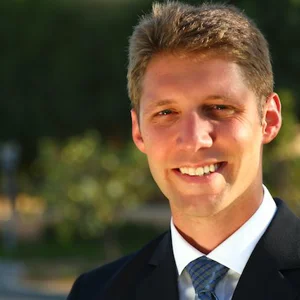
Mr Jean-Denis Carrier is passionate about the development and delivery of aluminium smelter projects and technologies for over 20 years. He currently is the Global Director for Aluminium & Alliances at Hatch where he leads one of the largest technical teams in the aluminium industry. Mr Carrier’s career has taken him from North America via North Africa to the Middle East, where he was previously the Regional Director for the Middle East & North Africa (MENA) for Hatch’s portfolio in the region for the Aluminium, Minerals and Infrastructure industries. This role included the realization of several large execution projects as well as long-term service agreements with Hatch’s key clients in the region.
Mr Carrier is a chartered Civil Engineer holding an Executive MBA from INSEAD. Throughout his career, he has built a reputation for major project deliveries with excellent safety records, ahead of schedule and within the original budget.
AlCircle: How do you visualize the year 2022 for the global aluminium industry keeping in mind the sector is countering operational cost and environmental and sustainability challenges? (Bauxite, Alumina, Aluminium)
Mr Jean-Denis Carrier: Despite just starting, we can already see that 2022 will be a year to remember, with the prices of both aluminium and alumina showing very strong increases but also volatility.
This is turning out to be a very positive year so far for the producers who have a good handle on energy and alumina pricing while others are left in a difficult position. This is obvious for aluminium producers from Europe who are deeply feeling the increase in energy prices and are often forced to stop operations while many other producers are having record profits.
There are not many large projects in construction at the moment and smelter or refinery restarts and creeps are responsible for most of the production increases. This will only go so far with regards to filling future metal needs.
From the environmental perspective, we feel that the vast majority of aluminium producers are now planning that a reduction in carbon emissions will play a very important role in their future success. This being said, we feel a certain hesitation in building large new smelters at the moment given the announced arrival of the inert anode in this decade as well as due to the cost of renewables to power smelters. Producers want to increase their profitable production but only if the carbon footprint can be acceptable; this is a challenge we are eager to tackle.
AlCircle: We are increasingly hearing about Hatch in the Aluminium industry in the past few years with involvements in projects & studies in many parts of the world. What do you feel Hatch is doing differently to create this success?
Mr Jean-Denis Carrier: Hatch believes in maintaining a sustainable growth of our teams to ensure we can keep the quality of our services at the very highest level. We do not aim to be the biggest if it means that we need to compromise on quality.
We also believe that aluminium is an important component of a growing and greener society and are fully committed to this industry for the long term.
During the difficult market conditions of the past five (5) years, we have kept investing in our differentiated technical skills while many of our competitors and clients have reduced their teams over that period. We have also increased our presence with our clients over the same period.
The combination of our patient investment in our team members, client engagement and systems have enabled us to be in the pole position once the pricing has improved and the appetite to invest has returned. Even in the difficult times, we have received great mandates from clients that were seeking to improve their cost positions by improving existing assets.
AlCircle: How would you rate your performance for 2021 concerning the aluminium industry projects and also in general?
Mr Jean-Denis Carrier: Our year 2021 has been very positive across the board and we are extremely proud of it.
Firstly, and due to close cooperation with our client and contractors, we have managed to maintain an excellent safety record on all of our aluminium projects. This felt even better given the hardships of the covid pandemic.
Secondly, after a worrying 2020, we have felt a very strong recovery in new projects during 2021 and which continues to this day. Fortunately, we were well prepared for the market return and have managed to deliver well on these new mandates. The technical expertise which we have developed over the years is now well recognized by the industry both in alumina and aluminium and that has attracted challenging mandates.
Interestingly, we are seeing a much better geographic distribution of new projects and exciting opportunities arising in markets that haven’t been active in a long time. Not only do we get to grow with our key clients but we are also more engaged globally, which was one of our objectives for 2021 and going forward. We are also very pleased that the mandates are coming from bauxite mining all the way to secondary transformation.
AlCircle: Can you tell us more about your track record in designing and building cost-effective, Greenfield and Brownfield Bayer refining installations?
Mr Jean-Denis Carrier: Hatch has been involved in the design and construction of refineries in Australia, South-East Asia, the Middle East, and South America & North America over the past two (2) decades.
For the last two (2) refineries built in the Middle East and one in Australia, they have been built using the proprietary Hatch-Outotec (HOT) high-temperature digestion technology which has enabled higher recovery rates and improved business case.
We are especially proud of the latest implementation with Al Taweelah Alumina (EGA) which has already significantly exceeded its nameplate capacity and has been ramped up in record time. As bauxite deposits grade decline over time, we are confident that the HOT tube digestion technology will have a greater role to play in the future of the industry.
Our offer in the design and construction of alumina refineries doesn’t stop at the technology, however. We have been assisting clients all over the world in the development and implementation of new facilities and retrofits, whether it is for the red side, white side or residue management. On the latter, we have done significant work in residue filtration for our clients which should help reduce the risk of residue storage going forward.
AlCircle: Hatch has been involved in many smelter projects over time. Can you tell us more about the recent ones?
Mr Jean-Denis Carrier: Hatch has been involved in smelters dates many decades, but some of the key projects which we have been associated with have been Aluminerie Alouette Phase 2 (Largest Smelter in the Americas), Usine Jonquière AP60 (Highest Amperage – PMI Project of the Year 2014) and recently EGA’s Al Taweelah Potlines 1,2 & 3 Extension.
We have also performed countless brownfield upgrades and restarts of facilities in all aspects of the aluminium value chain. The studies that we have performed have also set the tone for many more facilities.
AlCircle: Hatch was named as one of Canada's Best Diversity Employers for 2022. Could you share your journey on it?
Mr Jean-Denis Carrier: Hatch’s vision for diversity and inclusion builds on our core values, including the belief that we are entrepreneurs with a technical soul. Entrepreneurship speaks to a mindset, a way of thinking and acting like an owner, and a passion to pursue goals others might not have the courage to take on. Building from our core as engineers, scientists, and technologists, we use our skills and this mindset to tackle the world’s greatest challenges. A diverse workforce allows us to unlock the complete potential of our team who will improve our clients’ businesses; thereby shaping the future of the world we live in, contributing in a meaningful way to society’s advancement, and creating positive change.
Our commitment to diversity and inclusion intends to enable that positive change. We are proud that our organization is home to 9,000 employees who—regardless of gender, ethnicity, race, sexual orientation, disability, and way of thinking—are celebrated and their unique strengths harnessed to create outcomes that leave a positive legacy in the communities we serve and call home.
AlCircle: What will be HATCH’s primary focus in terms of investment in technology, expansion and R&D?
Mr Jean-Denis Carrier: Hatch has been involved globally in the alumina and aluminium industry for some time. From a geographic perspective, we aim to be where we can add the most value so it will vary from time to time. We feel there is an appetite for new facilities mostly in the Gulf, South-East Asia and possibly South America so these will be important markets for us. We also believe that many companies will choose to upgrade their facilities instead of building new ones, mostly in older markets such as Europe and North America. We intend to be in all these markets.
With regards to technology and R&D, we want to invest in complementing our clients, not competing with them. Often this will mean growing niche skills such as advanced numerical modelling and process modelling as a tool for developing innovative solutions for the industry. Having this expertise is also a good way for us to help our clients with Industry 4.0 transformation.
Finally, it is very clear that decarbonization will be an area where we will invest as we want to be part of solving this important challenge. This will encompass areas ranging from renewable energy, hydrogen, carbon capture, and process energy efficiency to name a few initiatives. Once again, we are confident that some of our differentiated skills are paramount to succeeding in the push for decarbonization.
