您想继续阅读英文文章还
是切换到中文?
是切换到中文?

THINK ALUMINIUM THINK AL CIRCLE

On November 15, announcements emerged from low-carbon aluminium maker Hydro's headquarters that the company will now aid Watt Electric Vehicle Company (WEVC) in manufacturing their flagship electric vans. The commercial electric van startup will be exploring the feasibility of the Norwegian giant's recycled and low-carbon aluminium.
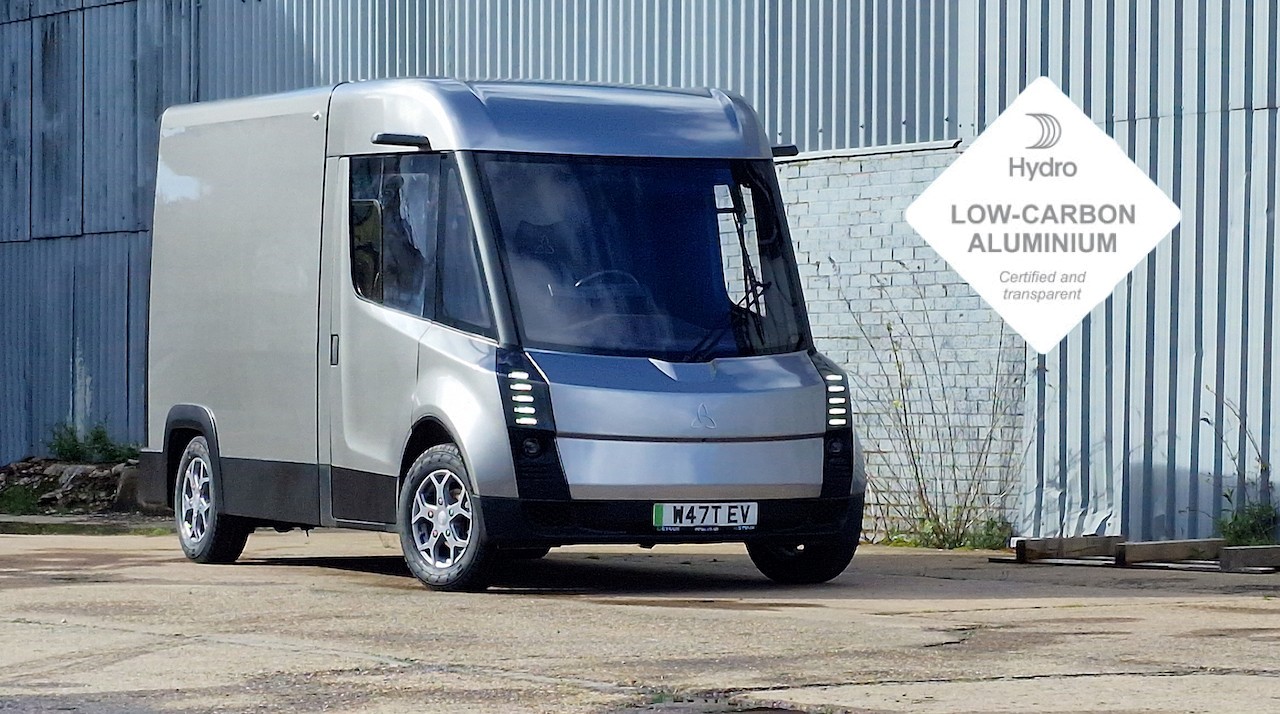
Hydro produces its low-carbon aluminium using renewable energy from the power grid and flaunts a CO2 footprint of 4.0 kg per tonne in comparison to the conventional 16.7 kg average CO2 emissions. Hydro and WEVC are determined to use the former's recycled aluminium for materialising low-carbon electric vans in the UK.
This would be fundamental in levelling down the carbon footprint of its eCV1 electric van by a whopping 50 per cent. Also, the company has decided to return the aluminium in use to Hydro after each vehicle reaches its respective demise.
The executive vice president of Hydro Extrusions, Paul Warton, implied: "Cutting the embedded carbon footprint of an electric light commercial vehicle in half is a huge step forward for more responsible manufacturing."
WEVC, a company based in the scenic region of Cornwall in southwest England, has developed a cutting-edge electric van that is both lightweight and eco-friendly. The van has been designed using a clever combination of aluminium and composite materials, and a working prototype has already been built. Excitingly, WEVC plans to produce a small fleet of test vehicles for potential customers in 2024, with series production set to commence in late 2025.
According to CEO Neil Yates, the company is committed to producing entirely recyclable vans that are built to last for 20 years. By prioritising sustainability and longevity, WEVC is paving the way towards a more sustainable and responsible future for the automotive industry.
"What makes this so attractive to the fleet buyers that we're engaged with now is this concept of longevity, recyclability and lower carbon," Yates pointed out.
WEVC has managed to raise only a modest amount of funding from investors, in the single-digit millions of pounds, unlike several other electric vehicle (EV) startups that have collectively raised billions of dollars but have since struggled. The company now plans to initiate a fresh funding round in 2024, with the aim of raising double-digit millions.
WEVC's plan is to invest in a small manufacturing facility in the UK with a production capacity of 5,000 vans annually. The startup intends to become profitable from 2026 onwards.
If you are intrigued by the use of aluminium in the transportation sector, please have a look at AL Circle's specially formulated report, Future of Aluminium in Transportation Sector. But if the recycling sector is your area of interest, go through AL Circle's report, World Recycled Aluminium Market Analysis.
Responses







_0_0.jpg/500/0)