您想继续阅读英文文章还
是切换到中文?
是切换到中文?

THINK ALUMINIUM THINK AL CIRCLE

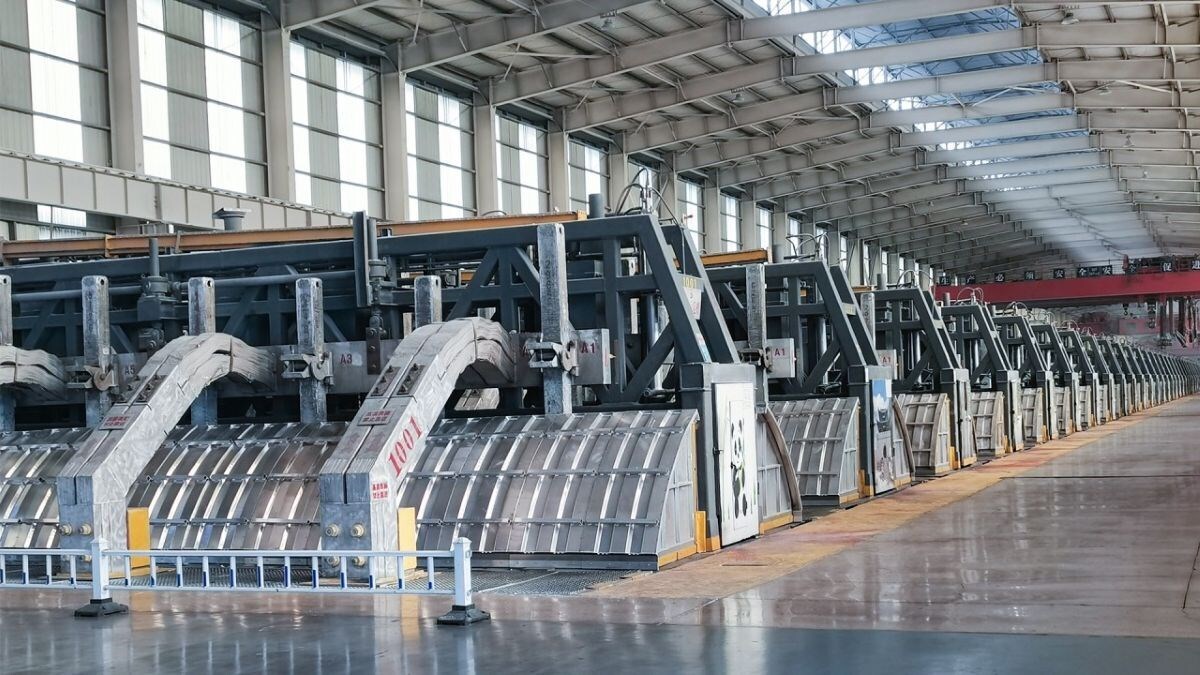
After remaining dormant for nearly three years, the Slovalco aluminium smelter in Žiar nad Hronom is once more at the centre of Slovakia’s industrial debate. Prime Minister Robert Fico assigned great priority to the plant’s revival, warning that without cheaper electricity, heavy industry, aluminium in particular, might disappear from Europe.
{alcircleadd}Explore- Most accurate data to drive business decisions with Outlook 2026 insights across the value chain
The Slovalco halt and restart plans
Slovalco’s annual production output was 160,000 tonnes of aluminium. In 2022, Slovalco laid off most of its 450 employees, citing the onus on high electricity charges. Its primary aluminium production came to a standstill in early 2023, ending more than 70 years of uninterrupted operations. Owners Norsk Hydro and Penta made the decision, founded on the same electricity cost problem that made smelting unaffordable and unsustainable throughout Europe. While recycling and anode production continued, the core furnaces were shut down, leaving the site practically dormant.
Presently, the Prime Minister has decided to reverse the action. “Europe needs [a production of] some 6-7 million tonnes; everything else is imported from other countries. This plant was capable of producing 17-20 per cent of that European output, which was roughly up to 200,000 tonnes of aluminium,” noted Fico.
He declared a long-term memorandum of cooperation with Slovalco was expected to be signed by the end of January, to build a support framework, to last around ten years. However, Fico has acknowledged the scale of the challenge in rebooting all of the furnaces, as that would require an estimated investment of EUR 100 million, along with long-term arrangements to secure power at competitive prices.
Plan A: EU, Plan B: State
Fico has decided to appeal directly to the EU and the European Commission President, Ursula von der Leyen. Since carbon costs embedded in electricity prices have pushed aluminium production beyond economic viability, he plans to request an interim suspension of emissions trading regulations, such as the ETS, for energy-intensive industries. The issue was also discussed recently with Czech Prime Minister Andrej Babiš.
Fico has made it clear that if Brussels does not approve, national subsidies would be considered, although he acknowledges the financial burden it would place on public finances.
Also read: Aluminium’s strategic moment: Global economies act when India hesitates
Market conditions and political concerns
Market dynamics may now be more favourable than during the shutdown. Close to record highs, Aluminium prices have exceeded USD 3,000 per tonne, while electricity prices remain considerably below their 2023 peak. Slovalco’s management has indicated that, with financing and power contracts in place, production could resume within a few months.
Still, opposition voices have questioned the push. They have criticised the strategic priority being assigned to Slovalco while other factories are undergoing lay-offs with little state intervention, and Slovakia’s underused environmental fund.
Additionally, the shutdown did not trigger immediate losses in 2022, as the company posted record profits by selling surplus electricity instead of aluminium. While it reported a loss in 2023, it returned to gaining a profit of almost EUR 5 million, which is now fuelling debate over whether taxpayers should fund a restart.
Reopening and running the Slovalco smelter depend on various factors. One such major condition is the EU’s approval for a temporary waiver of the ETS regulations on Slovakia.
The ETS cost is calculated as — Quantity (metric tonnes) X Embedded Emissions (tCO2e/tonne) X Carbon Price (Euro per tonne). Slovalco's production output, if exempted from ETS charges, would include LME as well as premiums. However, if the EU does not move, then adding ETS with LME and premiums would result in highly steep costs. Moreover, restarting after 3 years of dormancy, Slovalco is likely to face strong competition in the market. The question lies in whether the European supply chain would benefit by making a temporary exemption so the smelter is soon fully functioning with its original maximum output capacity of 200,000 tonnes?
Image for referential purposes only (source: https://www.linkedin.
Don't miss out- Buyers are looking for your products on our B2B platform

Responses