您想继续阅读英文文章还
是切换到中文?
是切换到中文?

THINK ALUMINIUM THINK AL CIRCLE

The US Department of Energy (DOE) will reward nine domestic projects to fast-track the commercialisation of technologies that can support combining more solar electricity into the power grid.
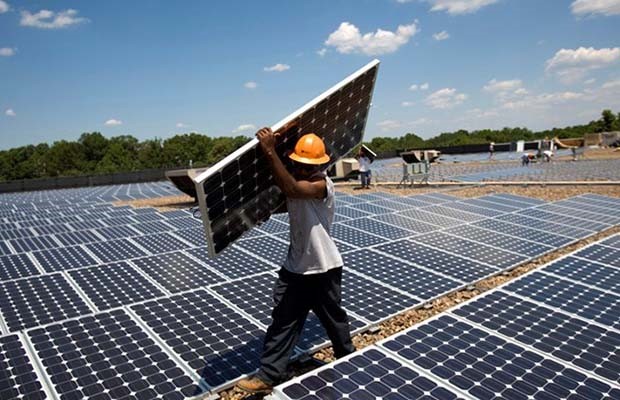
DOE will allocate $14 million of funding as part of an attempt to incentivise the domestic manufacturing across the solar industry supply chain, succouring to certify that US-made hardware is used to deploy large quantities of solar.
The projects will aim at spheres such as the development of a connector that anticipates and safeguards arc fault that can cause electrical fires in PV systems, as well as a 1MW inverter for utility-scale solar systems that eradicates the need for a transformer.
The revolutionary module manufacturer, Silfab Solar has secured $3 million towards enhancing scale-up aluminium backsheets for silicon modules alongside technology developer SunFlex Solar. The module producer also bagged funding for another project that focuses on increasing the assembly yield by integrating a non-contact electroluminescence inspection tool developed by Tau Science before the cell-to-cell interconnection and module lamination.
The DOE will also help AccuSolar in its efforts to develop a new racking system for floating solar installs. It is expected that the project will diminish the cost of floating solar so that it is similar or less than ground-mount plants.
All these combined projects will part up to a wider DOE programme announced in 2020 that grants a total of $ 45 million to advance US solar manufacturing and grid technologies.

The majority of the funding will be utilized to create a public-private consortium focused on grid integration technology.
Jennifer Granholm, Energy Secretary, said: “To flip the switch on climate change, we need a grid that’s chock full of renewable energy that’s also cheap and accessible. The universities, small businesses and national lab behind these projects are building the critical components of America’s future grid, making it more resilient on our way to a 100% clean power system.”
Responses