您想继续阅读英文文章还
是切换到中文?
是切换到中文?

THINK ALUMINIUM THINK AL CIRCLE

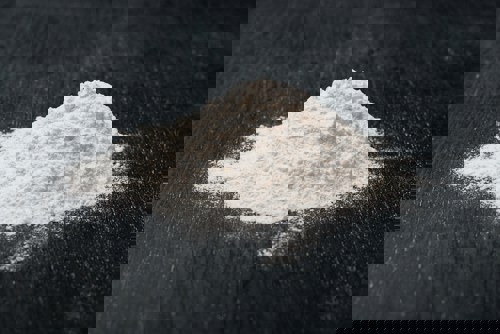
Scientists at the Ural Federal University have introduced a ground-breaking modification to the Bayer technology, significantly enhancing the efficiency of aluminium oxide (alumina) extraction from bauxite, the primary raw material for aluminium production.
_0_0.jpg)
In traditional processing, alumina extraction rates typically reached 80-85 per cent. However, this innovative approach now permits the extraction of 95-98 per cent of alumina from bauxite while simultaneously reducing the generation of red mud, a byproduct of bauxite processing, contributing to sustainable and environmentally friendly production.
According to Andrei Shoppert, Associate Professor at the Department of Non-Ferrous Metallurgy at UrFU, "For every tonne of bauxite, the standard Bayer process produces 0.7 to 1 tonne of red mud. This means that for every tonne of bauxite we process, almost the same amount of red mud is stored in the sludge fields. Our process allows us to reduce the red mud emission to 300 kg per tonne of bauxite. In addition, the alumina recovery rate increases significantly – up to 98 per cent, compared to 80-85 per cent for conventional processing."
Red mud is a byproduct of the chemical treatment of crushed bauxite with alkaline solutions to extract alumina, and its primary hazards are its high alkalinity and the presence of heavy metals and other harmful substances.
Andrei Shoppert adds, "In the Sverdlovsk region, for example, there are two alumina refineries. During their operation since the middle of the last century, more than 100 million tons of red sludge have accumulated. It can be a source of man-made disasters, as was the case in Hungary in 2010. In addition, if the sludge is too dry, its particles can be carried by the wind and pollute the environment."
The Bayer process, the most widely used method for alumina production from bauxite, commences with the fragmentation of bauxite into smaller fractions for easier processing through hydrometallurgical techniques. The crushed bauxite is then placed in steel reactors and mixed with an alkaline solution. After mixing and pressurisation at 230°C for several hours, alumina is extracted into the solution, leaving behind a solid residue referred to as red mud. The resulting solution is sent for aluminium hydroxide precipitation, followed by calcination to produce alumina powder, a crucial component for aluminium production.
To enhance the Bayer technology, scientists integrated the electrolytic reduction of iron compounds, which improved the leaching efficiency by eliminating stubborn minerals containing iron alongside aluminium. Furthermore, they reduced the loss of alumina along with silicon by pre-siliconising the bauxite at temperatures ranging from 95-120°C.

The scientists are committed to further refining the process to prevent the formation of red sludge during electrolysis, a technique that utilises an electric current to reduce chemical compounds.
The research, supported by the Russian Science Foundation (Project No. 22-29-01515), also involved collaboration with scientists from the Vernadsky Institute of Geochemistry and Analytical Chemistry at the Russian Academy of Sciences.
Responses