您想继续阅读英文文章还
是切换到中文?
是切换到中文?

THINK ALUMINIUM THINK AL CIRCLE

Blister packages for pharmaceuticals usually consist of aluminium and plastic layers. As a result of their multi-material composition, discarded packages are typically landfilled, although metallic and polymeric fractions can be recycled if they are separated.
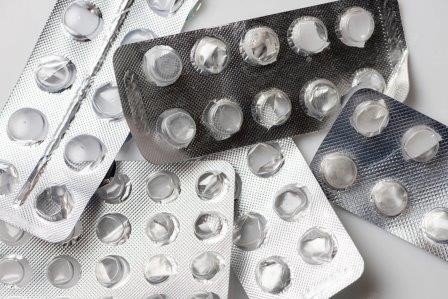
The separation of aluminium and plastic from pharmaceutical blister packaging is quite difficult to separate due to heat-sealed together with a type of glue, thus recycling is primarily avoided.
A group of engineering students at the National University of Singapore (NUS) developed a chemical recycling method to separate plastic from aluminium and restore the components. Following this, both the aluminium and plastic can be returned to the recycling companies.
The Green Doctors Programme was spawned in August 2021 after a pharmacist from the National University Hospital (NUH) approached the NUS Department of Civil and Environmental Engineering with a need to diminish medical waste.
About 200,000 medicine strips are used up every month by regularly prescribed medicines at NUH.
Sophia Ding, founder of the Green Doctors Programme and final-year civil and environmental engineering student at NUS, said that Singapore throws out five million strips a month. The process of chemical recycling involves adding chemicals to waste materials so that they can break down their original structures.
In order to separate plastic and aluminium, the Green Doctors Programme developed a formula earlier this year after three months of research. With medicine strips provided by NUH, the ten students from the chemical, environmental and mechanical engineering departments tested and optimized their solution.

"There were only two research papers on recycling medical blister packaging. So it was very difficult for us to come up with the methodology ourselves because we had to infer and go into the roots of the materials," Ding added.
"And we had to think about the technology that goes behind heat-sealing, and how to separate the layers without doing much harm to the original materials. If all medicine strips in Singapore were to be recycled, 16 tonnes of plastic and 2 tonnes of aluminium could be saved each month.”
Responses






_0_0.jpg/500/0)