您想继续阅读英文文章还
是切换到中文?
是切换到中文?

THINK ALUMINIUM THINK AL CIRCLE

Domestic aluminium producers are working together with planning think-tank Niti Aayog and Bureau of Indian Standards (BIS) to determine standards for scrap usage. This was done at the background of exponentially growing aluminium scrap imports and random applications of scrap.
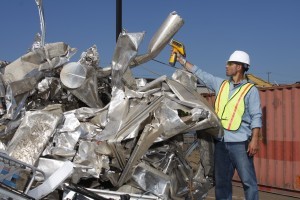
Aluminium scrap imports to India are growing at a never before rate in 2019 fuelled by US-China trade tensions. A benign import duty of 2.5 per cent has not been able to offer enough support to domestic producers. With European Union (EU) opting for strict circular economy norms and China restricting its scrap imports rules, more aluminium scrap is getting diverted to the Indian markets and other south Asian countries.
“Scrap imports in this fiscal have moved up eight per cent during the June quarter. While the hike in volumes of inbound scrap shipments worries us, we are more concerned about its usage. More scrap is entering into electric wires and kitchen utensils apart from their uptake by alloy ingot makers and this is a disturbing trend. To check its unwanted applications, we are engaging Niti Aayog and BIS to frame standards for scrap”, an industry source said.

According to US Geological Survey statistics, US aluminium scrap exports to China dropped 29% to 223,000 tonnes during January to June 2019 from 315,000 in the same period of 2018. While India imported 129,000 tonnes of aluminium scrap from the U.S. in the first six months of 2019, up 74% from 74,100 tonnes in the same period of 2018. A substantial volume of scraps was also exported from the U.S. to South Africa during the same period.
According to CRISIL Research, consumption of recycled aluminium in India increased at a robust 17-18 per cent in the last three years through fiscal 2019 due to growing use in in automobile and housing parts. This, in turn, led to a surge in aluminium scrap imports to 1.35 million tonne in fiscal 2019 from just 0.7 million tonne in fiscal 2014. This is also driven by limited availability of quality scrap in domestic market, said Prasad Koparkar, senior director at CRISIL.
Responses