您想继续阅读英文文章还
是切换到中文?
是切换到中文?

THINK ALUMINIUM THINK AL CIRCLE

The Americas plays a significant role in global aluminium production; in 2022, it contributed 5 million tonnes. The region is home to three of the largest primary aluminium producers worldwide, where Canada ranks fourth, the USA ninth, and Brazil fifteenth. The Americas is also home to the fifth largest exporter of bauxite, the primary material used in aluminium production, as well as the third largest alumina producer.
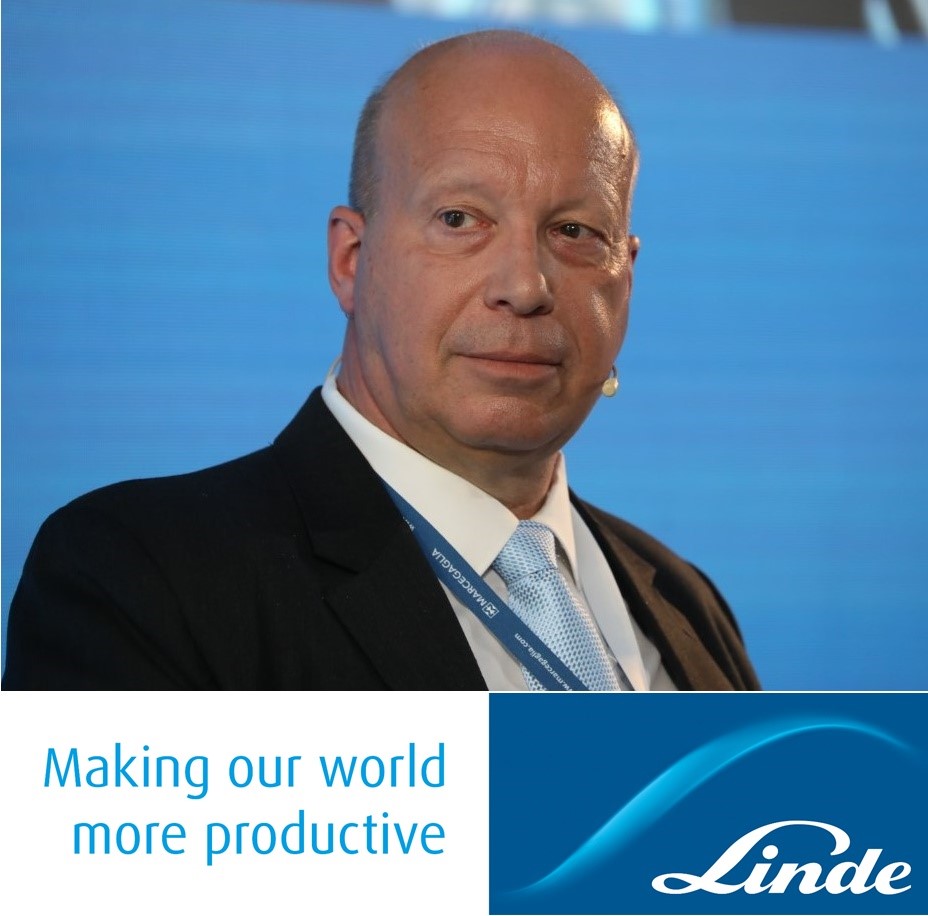
Joachim von Schéele, Global Director Commercialization, Linde plc
Commitments to achieve substantial decarbonization across metal-producing industries have focused on energy efficiency and the use of hydrogen as a fuel. The average total carbon footprint (Scope 1, 2, and 3) of global aluminium production is approximately 12 tons of CO2e per tonne of aluminium. The main part of this carbon footprint originates from primary operations, particularly from electricity production, which might take a long time and a huge effort to address. However, in remelting and recycling, there are great opportunities for immediate decarbonization.
CO2 emissions from the cast house are almost entirely tied to the fossil fuel used to heat the furnaces. To reduce the carbon footprint, there are basically only two routes available: to reduce the energy consumption and to reduce the specific CO2 emission, i.e., g CO2 per kWh.
Oxyfuel
Removing nitrogen from the process, using oxyfuel technology, will effectively reduce energy consumption, thereby reducing CO2 emission by 35%. Avoiding the nitrogen ballast in the furnace atmosphere will, in addition to the fuel saving, increase the heat transfer to the metal in the furnace by about 40%, resulting in a 40% increased melt rate. Obviously, this will reduce the CO2 emission even more per ton of melted aluminium.
Early attempts to apply oxyfuel in the aluminium industry suffered from the fact that these installations operated with burners with very high flame temperatures, which created hot spots and thereby increased dross formation. However, hot spots can be avoided by using Flameless Oxyfuel, which combines the two benefits of fuel savings and melt rate increase, but at a low flame temperature. The features of Flameless Oxyfuel technology are described here, together with results from numerous full-scale installations in aluminium melting furnaces.
Low-temperature oxyfuel (LTOF)
LTOF is based on Linde’s Flameless Oxyfuel technology platform, and it has successfully opened the market for oxyfuel in the aluminium industry during the last 15 years. Linde´s LTOF technology uses a volume combustion regime, where the combustion products are recirculated back into the flame, thereby reducing the flame temperature very effectively. The combustion gases are effectively dispersed throughout the furnace, ensuring more effective and uniform heating even with a limited number of burners installed. This takes place without loss of efficiency concerning fuel savings and melt rate increase.
Results from the more than 50 installations of LTOF in the aluminium industry show it can:
These benefits can be obtained without
Hydrogen ready
A feature of the LTOF technology, which is becoming increasingly important, is that it is ready for using hydrogen as fuel. An LTOF system designed for a conventional fossil fuel can rather swiftly be converted into hydrogen, completely or with a mix of fossil and hydrogen fuels. LTOF has a peak temperature below the temperature for the formation of thermal NOX, supporting the reduction of NOX emissions. Repeated tests and evaluations have confirmed that this feature is also maintained when using hydrogen as fuel.
For hydrogen combustion, Linde carried out a series of tests where Al-Mg alloys were melted in different atmosphere compositions due to variations in fuel type and burner set-up. The pilot-scale tests were done together with Hydro, Alcoa, and SINTEF, among others. The results showed that combustion of hydrogen in an oxyfuel configuration leads to clearly less oxidation on liquid Al-Mg alloys than hydrogen in an air-fuel configuration. The tests also showed that as little as 5% CO2 in the furnace atmosphere significantly suppresses oxidation. Hydrogen dissolution into the metal will most likely increase with the increased H2O concentration in the atmosphere. With state-of-the-art degassing technologies, this should not be an issue, but it must be verified in full-scale operation.
Going carbon neutral with hydrogen
LTOF is the stepping stone to the carbon-free melting of aluminium with the radical reduction of CO2 emission with fossil fuels and the fact that the technology is completely hydrogen-ready. Accordingly, LTOF not only provides short-term fuel savings and the potential for increased melt rates but also paves the way for carbon-neutral aluminium melting. Moreover, as LTOF also reduces NOx emissions even when using hydrogen as fuel, this transition can take place without any negative trade-offs. Full-scale production tests with LTOF and hydrogen are planned with multiple aluminium-producing companies.
Linde has announced significant capital projects as part of its continuous investment towards a greener economy. In Niagara Falls, New York, Linde is constructing a 35 MW PEM electrolyser to produce green hydrogen. This new plant will be Linde's largest electrolyser globally, doubling the company's green liquid hydrogen production in the United States. In Mexico, Linde plans to start a 4 MW electrolyser by 2024 to produce green hydrogen. Meanwhile, Linde's Brazilian subsidiary, White Martins, achieved certification in 2023 for the first Green Hydrogen produced on an industrial scale in South America, with a capacity of more than 150 tonnes per year. As a global leader in the production, processing, storage, and distribution of hydrogen, Linde is playing a key role in the clean energy transition. Linde has the largest liquid hydrogen capacity and distribution system in the world, operates the world's first high-purity hydrogen storage cavern, and has pipeline networks totalling approximately 1,000 km globally. We've also installed over 200 hydrogen fuelling stations and 80 hydrogen electrolysis plants worldwide.
Responses