您想继续阅读英文文章还
是切换到中文?
是切换到中文?

THINK ALUMINIUM THINK AL CIRCLE

Maritime battery systems developer EST-Floattech has secured a substantial investment of €4 million from the Energy Transition Fund Rotterdam and its existing shareholders, including Rotterdam Port Fund, PDENH, Ponooc, and Yard Energy. For the aluminium housing, insulation material, electronic components, and the racks in which the battery cells are installed, EST-Floattech is working with Dutch partners.
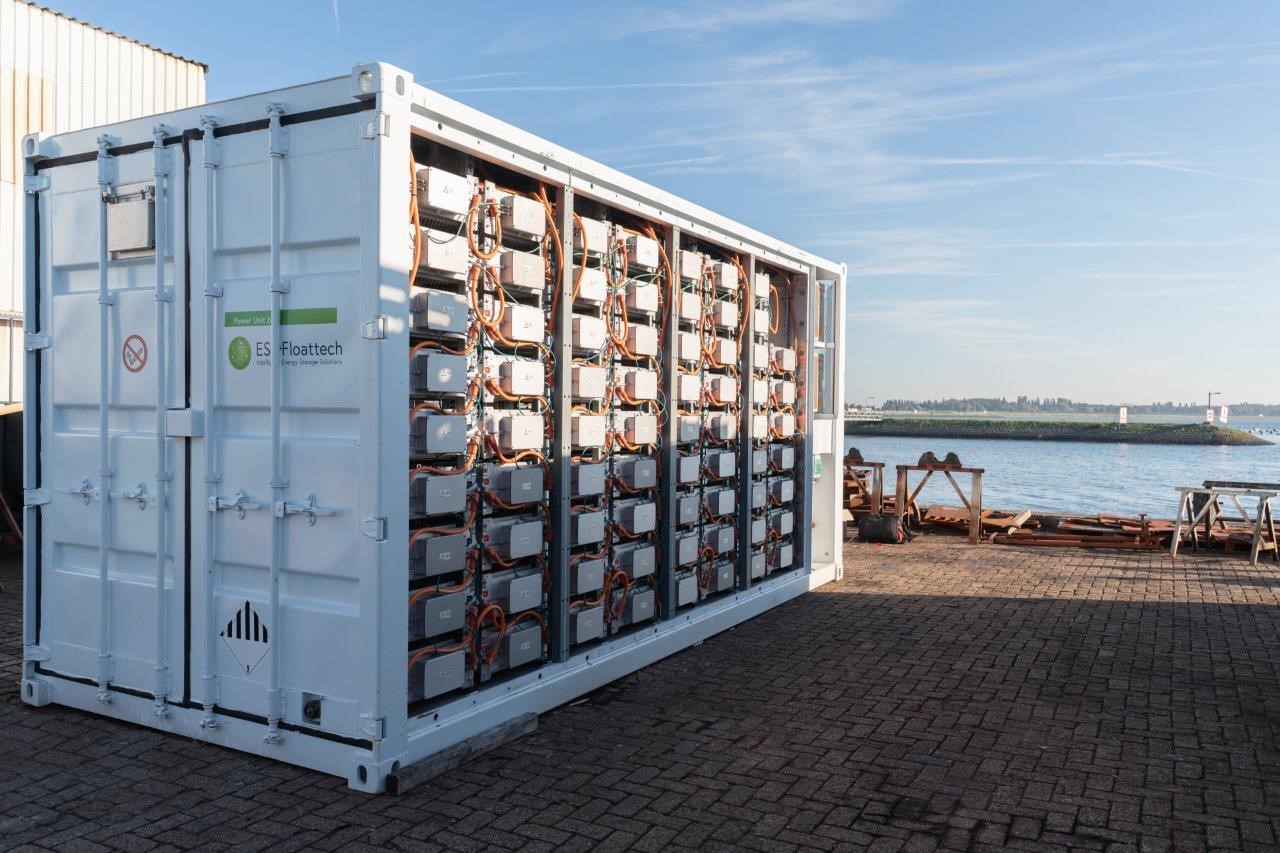
The investment will allow EST-Floattech to continue to grow nationally and internationally. The company focuses on market leadership in Northwest Europe and is working with battery manufacturer DuraPower to access Asia and Oceania. EST-Floattech also plans to focus on larger vessels in the future.
About the investment
EST-Floattech specialises in crafting top-tier lithium-ion battery systems designed for the electric and hybrid propulsion of inland vessels, ferries, yachts, and other maritime applications. Enhanced by our proprietary software, these systems deliver substantial benefits in reducing CO2 emissions, cutting fuel expenses, mitigating noise pollution, and improving air quality.
The Energy Transition Fund Rotterdam has pledged an investment of 3 million euros, marking its inaugural venture into maritime battery technology. Concurrently, the current shareholders collectively inject 1 million euros into the company. Chantal Zeegers, the Alderman for Climate, Building, and Housing in Rotterdam, made the announcement.
Joep Gorgels, CFO and CBDO of EST-Floattech, said, "The investment of Energietransitiefonds Rotterdam and the current shareholders in EST-Floattech not only brings new capital, which helps us take the next step towards growth, it also shows that the Netherlands believes in the power of innovation and sustainable energy. With InnovationQuarter, we have added a new partner, and together with Ponooc, Yard Energy, Rotterdam Port Fund, and PDENH, we continue to build a future in which we contribute to making the maritime industry more sustainable."
Chantal Zeegers, the Alderman for Climate, Building, and Housing in Rotterdam, added, "Rotterdam attracts companies that dare to invest in the energy transition. We are seeing this with EST-Floattech. Their innovative battery technology for ships contributes to the reduction of CO2 emissions in a sector where there is much to be gained. It is incredibly nice that through the Energietransitiefonds Rotterdam we can support companies like this."
As the Energy Transition Fund Rotterdam fund manager and an investor in the Rotterdam Port Fund, InnovationQuarter has played a pivotal role in this investment. The Rotterdam Port Fund, a private investment fund with a focus on fostering innovation within the port sector, has been instrumental in bringing about this transaction. This collaboration underscores the strong partnership within the South Holland maritime cluster.
EST-Floattech's active participation in this ecosystem is notable, given its numerous Rotterdam-based clients, including industry leaders such as Damen and KOTUG. EST-Floattech contributes significantly to reducing emissions and enhancing sustainability in maritime operations by providing high-quality lithium-ion battery systems for electric and hybrid propulsion.
This investment aligns seamlessly with the objectives outlined in the Regional Maritime Agenda 2030 and the Regional Energy Strategy for Rotterdam/The Hague. The emphasis on innovation in electrification reflects the region's commitment to driving sustainable growth and fostering a greener, more efficient maritime industry.
The electrification of shipping and its importance
The electrification of shipping carries significant societal implications. In the Netherlands, inland and maritime shipping contribute 16.5 per cent of the country's CO2 emissions. Furthermore, the volume of goods transported by water will surge in the coming years. The EU has set ambitious targets, aiming for a 50 per cent increase in transport via inland waterways and shorter sea routes by 2050 compared to 2015. International shipping is also anticipated to experience substantial growth, with a projected volume increase of over 200 per cent between 2023 and 2050.
Despite the pressing need for decarbonisation, only 1 per cent of the global fleet is electrified. The maritime sector must transform significantly to achieve net zero emissions by 2050. Since January 1st, 2024, the European CO2 emissions trading system EU-ETS has been implemented for larger ships, with smaller vessels expected to be included by 2026. The escalating costs associated with CO2 emissions are making electrification an increasingly attractive option within this rapidly expanding market.
EST-Floattech is uniquely positioned to capitalise on these opportunities as the second-largest player in this sector. Their expertise in developing high-quality lithium-ion battery systems for maritime applications aligns perfectly with the growing demand for electrification solutions.
Responses






_0_0.jpg/500/0)