您想继续阅读英文文章还
是切换到中文?
是切换到中文?

THINK ALUMINIUM THINK AL CIRCLE

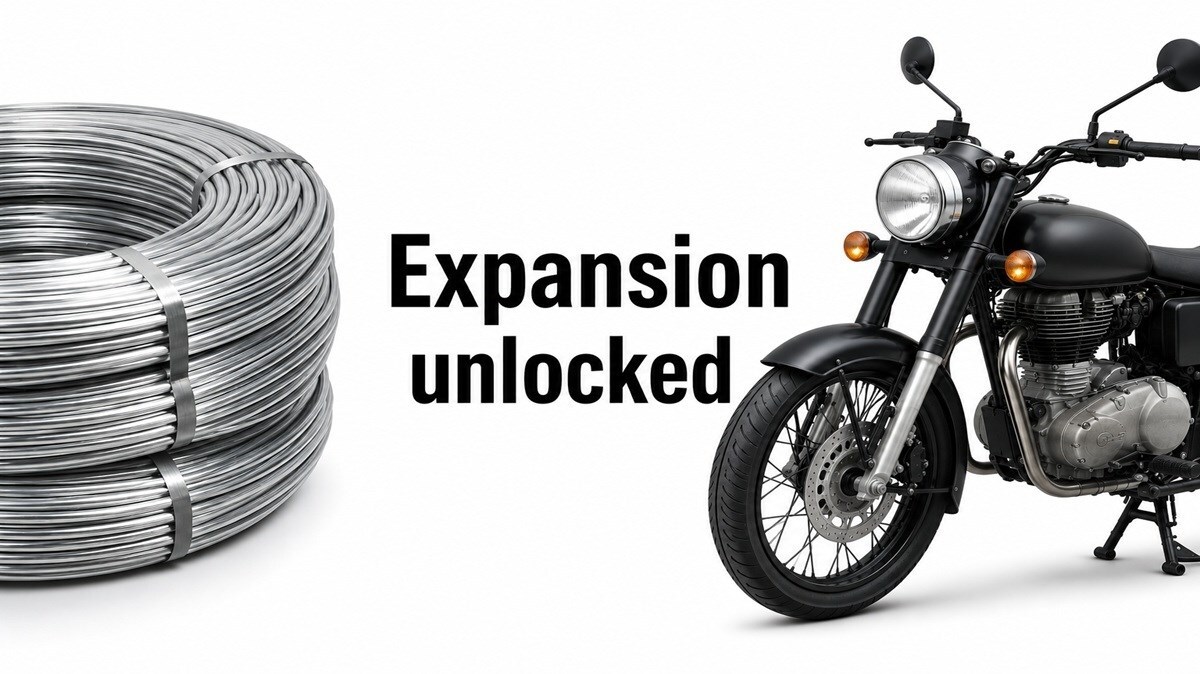
The image used in this article is generated with an AI tool and does not depict any real-time moment
Gujarat-based Baheti Recycling Industries Limited is steadily advancing towards solidifying its position in India’s secondary aluminium market by diversifying into higher-value aluminium wire rods and reaching out to the automotive supply chain. As new capacities are being developed alongside direct supplies to automotive original equipment manufacturers (OEMs) to companies like Royal Enfield and Bajaj Auto Limited, the company is now transitioning from a conventional scrap recycler to a broader aluminium solutions provider.
{alcircleadd}Delve deeper into the recycled aluminium and secondary aluminium market with our World Recycled ALuminium Market Analysis Industry forecast to 2032
Mainly converting imported aluminium scrap into alloy ingots and deoxidisers for industrial applications, the company reported robust financial and operational growth in FY26. Revenue surged from INR 5.2 billion (USD 54.3 million) in FY25 to INR 7.25 billion (USD 75.73 million), representing a year-on-year growth of about 39.4 per cent. Net profit also climbed sharply from INR 180 million (USD) to INR 270 million (USD), marking a 50 per cent increase.
The management noted that sustainable EBITDA margins for the recycling industry generally range between 7 per cent and 10 per cent, while long-term growth is expected to be driven primarily by higher volumes and improved product mix.
Pricing structure and Middle East conflict create openings
The core operations of Baheti rely heavily on imported aluminium scrap, with almost 80 per cent sourced from the UK, Europe and the US. These raw materials are processed into aluminium alloy ingots and deoxidisers that are used across varied sectors like the automotive, electrical and steel sectors.
Despite fluctuations in the London Metal Exchange (LME) aluminium prices, the management stated that relatively stable profitability could be maintained due to its pricing structure. Scrap purchases and finished product sales are both linked to LME benchmarks, enabling a natural hedge against commodity volatility.
The company also benefited from supply disruptions in the global aluminium market triggered by geopolitical tensions in the Middle East. Reduced availability of primary aluminium reportedly encouraged buyers to seek dependable secondary aluminium suppliers.
Baheti maintained inventory levels with excess stock to sustain for about 30-40 days, thereby enabling it to open supplies as and when OEM customers faced procurement challenges.
Management noted that vendor onboarding timelines, which previously stretched up to six months, were reduced to nearly one month during the supply crunch, helping the company secure new automotive business opportunities.
To look for buying or selling leads of aluminium scrap, visit our B2B marketplace.
Exploring expansion into OEM supply
One of the company’s major strategic developments during FY26 was its entry into direct supply arrangements with leading automotive manufacturers, such as Bajaj Auto Limited, TVS Motor Company and Royal Enfield.
According to management, Baheti supplied nearly 250 tonnes to Bajaj Auto, 150 tonnes to TVS Motor and about 100 tonnes to Royal Enfield during March alone. These orders were reportedly renewed in May, signalling the possibility of longer-term business relationships.
The company stated that securing vendor approvals from automotive OEMs took nearly four to five years of capability development in specialised aluminium alloys. Management believes direct OEM supply offers stronger margins and improved payment cycles compared to the traditional trader-led business model.
Baheti is now planning to expand the supply base to additional automotive customers such as Maruti Suzuki India Limited, Honda Motor Corporate Limited, Hero MotoCorp Limited, and Yamaha Motor Corporate Limited.
Capacity expansion and wire rod project
For FY27, Baheti is scaling up production capacity through the addition of five new electrical furnaces in order to meet the rising demand. Once operational, the total capacity is likely to rise to 38,000 tonnes annually.
Moreover, the company is commissioning a solar power facility, expected to become operational by the end of May 2026, as part of efforts to improve energy efficiency and sustainability.
Along with its recycling operations, Baheti is entering the aluminium wire rod segment through a phased investment of around INR 250 million (USD 2.6 million) at its Dahegam facility. Phase 1 is expected to add 12,500 tonnes of annual capacity and generate revenue potential of approximately INR 2.5 billion (USD 26 million).
Following completion of Phase 2, total wire rod capacity could reach 25,000 tonnes annually, creating an estimated revenue opportunity of INR 5 billion (USD 52.2 million). The new business segment is expected to improve the company’s EBITDA margins by 1-2 per cent.
Potential customers for the wire rod segment include industrial players such as Tata Steel, ArcelorMittal and Jindal Steel.
Policy and automotive demand back Baheti’s FY27 outlook
Baheti entered FY27 with an order book of nearly INR 2 billion (USD 20.9 million), excluding the wire rod business. Management expressed confidence that existing capacities alone could support revenue crossing the INR 10 billion (USD 104.45 million) mark in the near future.
The company also expects favourable regulatory support through India’s Extended Producer Responsibility (EPR) norms, which mandate increasing recycled content usage over the next few years.
With stronger OEM collaborations, forward integration into wire rods and rising focus on sustainable aluminium sourcing, Baheti Recycling appears to be positioning itself as an emerging player in India’s evolving circular aluminium economy.
Must read: Key industry individuals share their thoughts on the ALuminium LeaderSpeak 2026

Responses






_0_0.png/500/0)