您想继续阅读英文文章还
是切换到中文?
是切换到中文?

THINK ALUMINIUM THINK AL CIRCLE


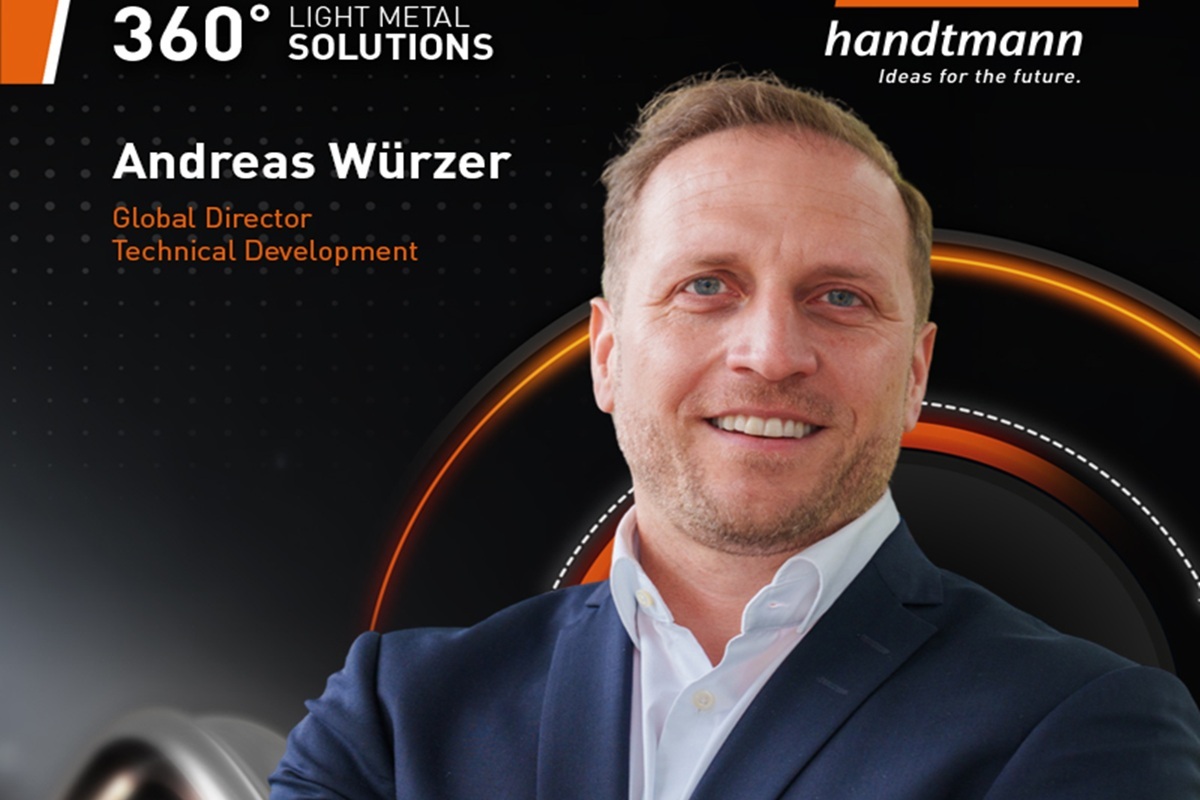
In an interview with Andreas Würzer, Global Director Technical Development at Handtmann, where has clearly stated that automotive will remain the primary demand driver for aluminium casting in the short and mid‑term, driven by electrification, structural lightweighting and the increasing adoption of integrated cast architectures. Also, material substitution will continue to drive the demand growth for aluminium die casting, according to Mr Würzer. Interestingly, even though passenger cars sell in Europe is likely to decline, the share of die cast aluminium per vehicle will continue to rise. To know more such interesting insights into the aluminium die casting market from Andreas Würzer, continue reading the interview.
AL Circle: Can you tell us briefly about your products and services with a focus on aluminium casting solutions.
Andreas Würzer: Aluminium cast components only fulfil their purpose when they operate reliably, produce economically and perform consistently in their final application. This is exactly what our 360° approach is designed for. It guides customers from the first idea to a production ready component and provides a stable, seamless process chain.
Our holistic product design opens new avenues for functional and economic optimisation. It ensures feasibility for series production and accelerates decision making through digital validation, saving costs before investing in hardware. Prototypes are manufactured entirely in house, enabling fast response times and close interaction with engineering. Necessary design adjustments during simultaneous engineering process can be implemented efficiently. Additively manufactured sand molds further shorten development cycles.
Because every component faces specific loads and material requirements, we develop and optimise tailored light metal alloys that provide the right balance between strength, weight and sustainability.
The core of any foundry lies in the casting process itself. With locking forces ranging from 840 to 6,100 tonnes, we produce aluminium castings for global large-scale production. Large structural castings and complex geometries are becoming increasingly important.
Finishing transforms a raw casting into a ready-to-install component. This includes CNC machining, surface treatment, heat treatment, complete finalisation and stringent quality assurance.
By combining our five core competencies – product design, prototyping, light metal alloys, high pressure die casting and finishing – customers benefit from an end-to-end value chain that significantly enhances process reliability, quality and speed.
AL Circle: With lightweighting gaining urgency across automotive ICE, EVs, aerospace, consumer electronics and renewable energy, how do you assess the growth potential of the aluminium die casting market in 2026 and beyond?
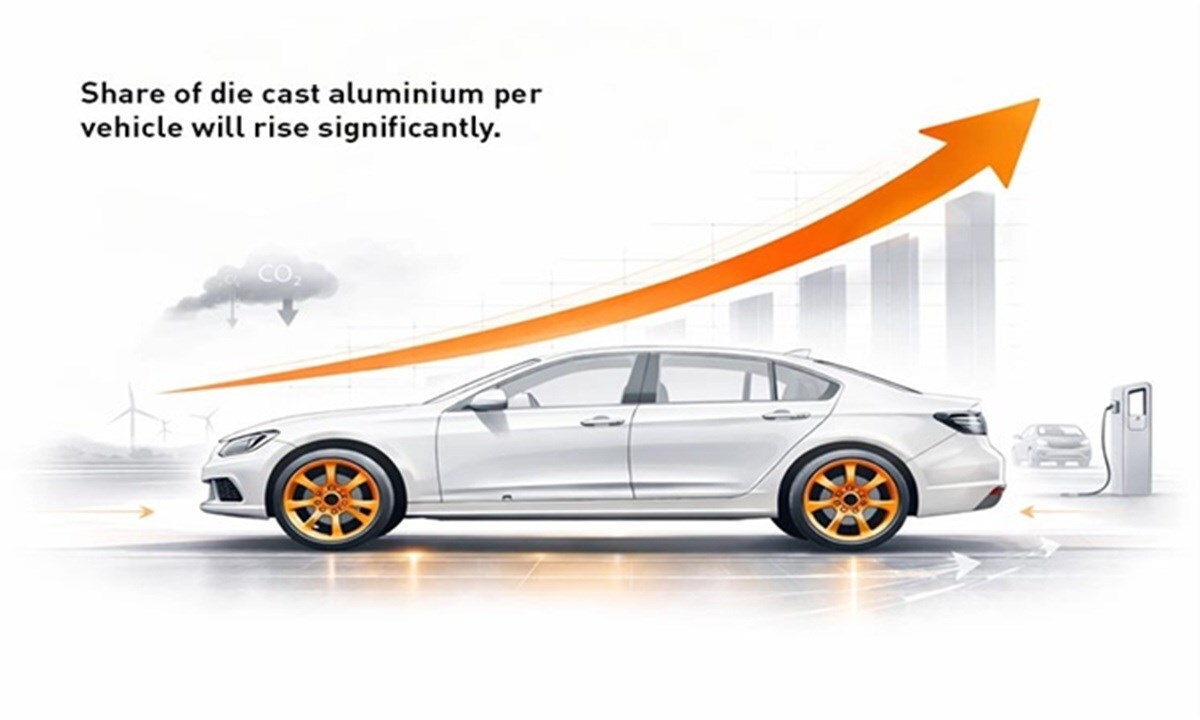
Andreas Würzer: Lightweighting continues to accelerate across all mobility sectors, but our focus is clearly on the automotive industry. While the total number of passenger cars sold in Europe is expected to decline, the share of die cast aluminium per vehicle will continue to rise significantly. This development is driven by the need to reduce CO₂ emissions, extend EV range and improve overall vehicle efficiency.
For aluminium high‑pressure die casting, this creates significant growth potential. Traditional materials and multi‑stage manufacturing processes are increasingly being replaced by large, integrated aluminium castings. Combining multiple parts into a single casting not only reduces weight, but also lowers complexity, improves stiffness and enhances overall vehicle performance. That is why functional integration is becoming a key driver in current and future programs.
Customers are looking for solutions that ensure consistent quality at scale while also providing technical support in design, simulation, alloy development and manufacturability assessments. This combination of high‑volume capability and engineering expertise will be essential for capturing growth in 2026 and beyond.
Aluminium die casting will continue to gain relevance as material substitution accelerates, integrated structures become more common, and customers focus increasingly on performance and efficiency improvements.
AL Circle: Digitalisation and automation are transforming every stage of aluminium manufacturing, including casting. How have smart technologies reshaped operational efficiency, quality control and decision- making at your facilities?
Andreas Würzer: Digitalisation is a strategic priority for Handtmann. We invest in an internal consulting and expert team dedicated to data analytics and digitalised production operations, further enhanced by AI. This provides the foundation for technologies that strengthen process stability, efficiency and transparency across our foundry operations.
Smart systems already play a decisive role in predictive maintenance and predictive quality. By analysing real‑time machine and process data, we can anticipate deviations before they occur and make targeted adjustments. This increases uptime, stabilises production parameters and supports faster, more informed decision‑making.
Digital quality observation throughout the casting and finishing processes reduces scrap, ensures consistent part performance and accelerates feedback loops between production, quality and engineering. As a result, both operational efficiency and product reliability benefit directly from these technologies.
For us, digitalisation is not only an efficiency lever, but a key enabler for stable high‑volume manufacturing, deeper process understanding and long‑term customer value.
AL Circle: Aluminium casting is an energy-intensive process, with electricity consumption averaging around 2.3 kWh per kg of cast product. What concrete measures are you implementing to reduce energy intensity and improve overall process efficiencies with a view on more sustainable solutions?
Andreas Würzer: Reducing energy intensity in aluminium casting begins long before production. For us, sustainability starts at the very first engineering step. By designing lightweight components that require less material, we lower energy demand throughout the entire lifecycle and reduce the overall CO₂ footprint of the component.
Across our HPDC operations, scrap reduction, higher recycling rates and a clear CO₂ roadmap directly support lower energy intensity. Our focus lies on minimising material input, optimising melt efficiency and continuously increasing the share of secondary aluminium.
At the production level, several concrete measures are already implemented. We continuously improve energy efficiency and increase the share of green electricity in our energy mix. Digital quality monitoring helps stabilise casting parameters and thereby reduces scrap. At the same time, it has a direct impact on energy consumption, as stable processes and less rework lower the overall use of resources.
Handtmann’s climate strategy sets clear milestones: a 50 per cent CO₂ reduction by 2030 and climate‑neutral operations across all light‑metal foundries by 2039. Certifications according to ISO 50001 and ISO 14001 underline this commitment. Increasing recycling rates, developing more sustainable alloys and expanding the use of green power are key elements of this roadmap.
Overall, our approach combines product design, process efficiency and material circularity to achieve more sustainable solutions in aluminium high‑pressure die casting.
AL Circle: Could you highlight some of the key milestones and technological or operational achievements your company has accomplished in aluminium casting over the past few years?
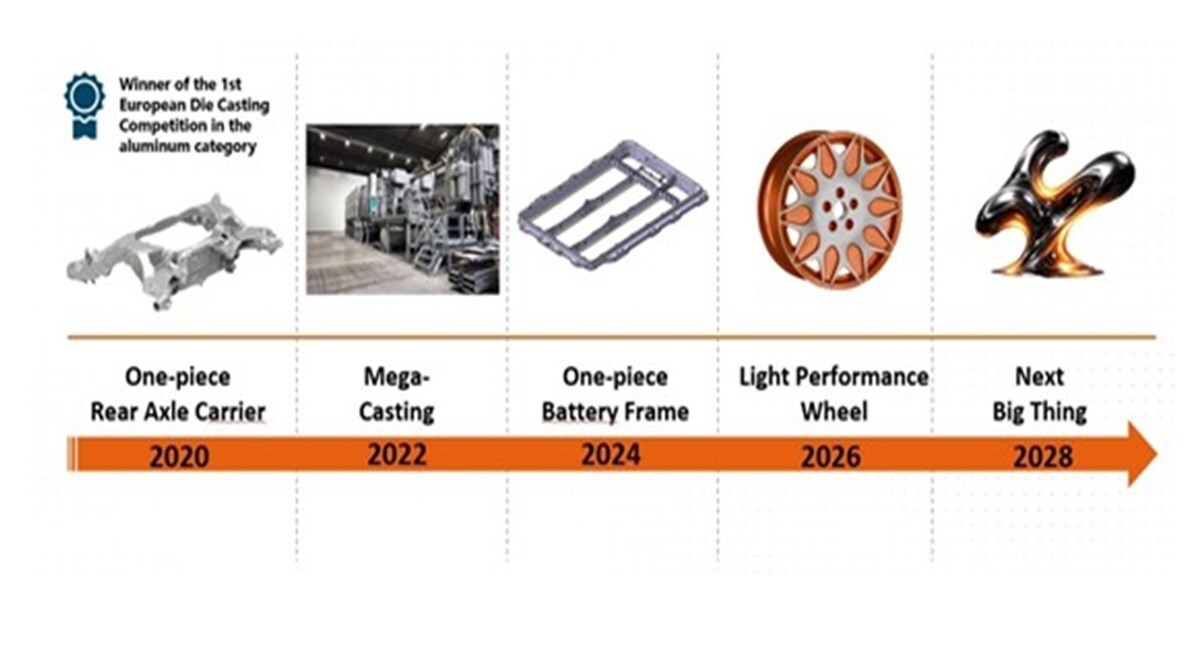
Andreas Würzer: Over the past years, Handtmann has reached several important milestones that reflect both technological progress and a clear strategic direction in aluminium high‑pressure die casting. In 2020, we achieved a breakthrough with the development of a one‑piece rear‑axle carrier, which also won the first European Die Casting Award in the aluminium category. This marked a major step forward in structural casting capabilities.
Building on this, in 2022, we became the first supplier in Europe to invest in megacasting, establishing the complete ecosystem required for it, including a 6,100‑tonne die casting machine, suitable logistics concepts and large‑scale quality assurance. This enables stable production of large structural castings with high functional integration at series volume.
By 2024, we further strengthened our position with the development of a one‑piece battery frame. This component demonstrates how functional integration, lightweighting and high‑pressure die casting come together to support next‑generation EV architectures.
2026 marks the introduction of the Handtmann light performance wheel. It was showcased for the first time at Euroguss in January. The key innovation is the use of high‑pressure die casting, a process never before used for aluminium wheels and now opening entirely new design and performance possibilities. The project combines our material expertise with advanced casting and design capabilities, opening a completely new product category for Handtmann.
With an eye on 2028, we are already working on the next major innovation step — the “Next Big Thing.” While details are still under development, the focus remains on pushing the boundaries of aluminium casting technology and delivering solutions that offer tangible performance and efficiency benefits for our customers.
These milestones all reflect the same strategic approach: combining design thinking with deep process expertise to create forward‑looking solutions in aluminium casting. They also underline our role as a 360° light metal solution partner, offering customers an integrated value chain from development to series production.
AL Circle: As sustainability becomes a central pillar of the aluminium value chain, collaboration is emerging as a powerful enabler. Could you share one or two instances where strategic partnerships have delivered tangible sustainability outcomes?
Andreas Würzer: Partnerships form an essential pillar of our sustainability and innovation strategy. One strong example is our collaboration with Cevher, where we jointly developed lightweight aluminium HPDC wheels. These wheels enable a weight reduction of 20–30 per cent, support measurable CO₂ savings and demonstrate how combined development capabilities can open entirely new product segments in high‑pressure die casting.
In addition, we collaborate closely with machine manufacturers and quality‑assurance specialists to achieve maximum efficiency and accuracy in our foundry operations. These partnerships help us scale new technologies faster, optimise process stability and implement advanced inspection and measurement systems that ensure consistent, resource‑efficient production.
AL Circle: Which end-user industries do you expect to be the primary demand drivers for aluminium casting products in 2026 and the years ahead, and why?
Andreas Würzer: Automotive will remain the primary demand driver for aluminium casting in the short and mid‑term, driven by electrification, structural lightweighting and the increasing adoption of integrated cast architectures. As OEMs continue to optimise platforms for efficiency, range and performance, demand for advanced aluminium casting solutions will remain strong.
In addition, industries shaped by automation and electrification, such as robotics, industrial automation and AI‑driven machinery are increasingly relying on lightweight, high‑precision aluminium castings. These applications require components that combine stiffness, functional integration and effective thermal management within compact geometries, which aligns directly with the strengths of high‑pressure die casting.
Meanwhile, the growing adoption of large structural castings (megacasting) across global OEMs is opening entirely new use cases for aluminium. As more manufacturers explore integrated structures beyond traditional body‑in‑white applications, aluminium will continue to expand its role far beyond the core automotive segment.
AL Circle: There is a growing shift towards secondary aluminium casting for sustainability, but it brings certain challenges related to impurities, metal cleanliness and compositional control. How are modern cast houses and foundries strengthening their capabilities to manage these complexities while ensuring consistent quality?
Andreas Würzer: As the industry moves towards higher recycling content, maintaining metal cleanliness and compositional control becomes more complex. Our alloy development teams work with a clear system for different aluminium qualities - from primary to primary‑near and secondary materials - each with defined CO₂ limits. This approach ensures reliable and consistent material performance, even when using higher levels of recycled content.
We perform extensive batch validation in our in‑house materials laboratory to maintain consistent quality and mechanical properties in line with demanding structural requirements. In parallel, we collaborate closely with universities and scientific institutions to further improve secondary alloys and bring their performance as close as possible to primary materials.
A strategic cornerstone of this roadmap is our planned sustainable melting plant, designed to operate on green energy while enabling the controlled use of high‑recycling‑content alloys at industrial scale. This approach will allow us to produce stable, high‑quality secondary alloys tailored for high‑pressure die‑casting applications.
This combination of material science, clear CO₂ limits, rigorous validation and advanced melting technology ensures that rising recycling quotas go hand in hand with consistent, high‑performance casting quality.
AL Circle: Given the risks associated with extreme heat, high-pressure equipment and heavy materials, injury-related downtime remains a concern in die casting operations. How has technology helped improve workplace safety, and which innovations have played a decisive role in reducing downtime?
Andreas Würzer: Safety is the highest priority in our family-owned company, and technology plays a central role in achieving it. Automation and robotics systematically reduce hazardous manual operations in production, especially in areas involving extreme heat, high-pressure equipment and heavy parts handling.
Predictive maintenance further minimises risks by identifying potential equipment issues before they lead to failures or unsafe situations. This stabilises operations and reduces unplanned downtime.
In addition, we are continuously expanding automation across our material flow. The introduction of autonomous guided vehicles (AGVs) will significantly reduce the need for manual lifting and transport of heavy components, creating a safer and more ergonomic working environment for our employees.
AL Circle: What are your most successful markets right now? What are some challenges that you are facing in your established markets for aluminium?
Andreas Würzer: Automotive remains our strongest and most established market. At the same time, regional market dynamics are shifting: demand is increasingly moving from Europe to Asia, and in China, magnesium is gaining relevance in certain applications. As a global player with sites in Europe and Asia, Handtmann can adapt to these shifts and continue supporting customers across regions.
These developments underline the importance of flexible manufacturing footprints, strong local engineering and the ability to transfer material and casting expertise across markets. By combining our technological capabilities with regional presence, we remain well positioned to serve established customers while responding to evolving requirements.
AL Circle: What are some of the new markets you are targeting for expansion in the near future?
Andreas Würzer: Europe and China remain our core pillars and continue to be the strongest markets for our aluminium casting activities. These regions offer a high level of technological maturity, strong customer relationships and ongoing demand for advanced casting solutions.
At the same time, we are monitoring strategic opportunities in the USA and India. Both regions show promising growth signals, and we are assessing where our capabilities and technologies could best support future customer needs. By keeping our main focus on Europe and China while selectively exploring new markets, we ensure that any expansion is aligned with long-term demand and our strengths as a 360° solution partner.
AL Circle: As one of the biggest events on casting, and one of the first major events in 2026, how was Euroguss for you? Are you participating in any other similarly big events this year?
Andreas Würzer: Euroguss 2026 is not only the leading trade fair for the European diecasting industry, but also the strategic showcase where Handtmann presented its competencies as a 360° light metal solution partner. The event enables direct dialogue on key topics such as lightweighting, sustainability and high-integration structural components.
It was also the stage where we introduced our 360° solutions concept for the first time, shifting the focus from individual products to our five integrated competencies: holistic product design, high-speed prototyping, customized light metal alloys, innovative light metal casting and high- level finishing.
Euroguss 2026 marked the launch of several breakthrough innovations, including our Light Performance Wheel. Alongside this, we showcased advancements in megacasting, alloy development and digital process intelligence, further strengthening our role as a technology leader in aluminium die casting.
For Handtmann, Euroguss is a strategic milestone in reinforcing our European and international footprint. Throughout the year, we will continue to participate in selected industry events and customer technology days that align with our 360° partner strategy and support close collaboration across global markets. The event enables direct dialogue on key topics such as lightweighting, sustainability and high-integration structural components.